Worksheets
Investigating Forms of Energy
Total questions: 36
Worksheet time: 1hrs 15mins
The path through which an electric current can flow is a
light energy
reflection
closed circuit
pictionary
Energy of motion is called
mechanical energy
potential energy
thermal energy
closed circuit
A form of energy which our eyes can detect is called
sound energy
potential energy
electrical energy
light energy
Matter that light travels through is called
sound energy
medium
energy
electric current
The path through which an electric current cannot flow is called a(n)
open circuit
closed circuit
energy
medium
The bouncing back of light rays from a surface is called
sound energy
electric energy
closed circuit
reflection
The bending of light as it moves through one medium into another is called
refraction
reflection
mechanical energy
potential energy
The energy produced by vibrations is called
potential energy
sound energy
electric energy
medium
The energy related to the temperature of an object or a substance is called
thermal energy
electric energy
light energy
sound energy

Students made a data table showing their observations from an investigation.
Based on the data in the table, which of the following is the best conclusion?
Students observed a change in thermal energy.
Students observed a decrease in temperature.
Students observed a change color and mass.
Students observed a decrease in volume.

A technical drawing of an alarm clock is shown below. An alarm clock requires energy to work properly. Which of these is an example of how the parts of the alarm clock use mechanical energy?
The legs hold the clock upright.
The hands move around the face of the clock.
The glow-in-the-dark paint spots shine brightly at night.
The battery completes a circuit to power the clock.

The diagram shows a lamp, a candle and a wood block. The lamp demonstrates thermal energy because
energy moves in a circuit that powers the lamp.
allows us to see the candle and wood block.
temperature of the candle changes.
allows us to hear that is vibrating.

Many household appliances use or produce energy. Which of these correctly describes some of the types of energy these appliances use or produce?
Toaster
Electrical energy for power
Thermal energy toasts bread
Microwave
Electrical energy for power
Light energy turns the rotating plate
Blender
Mechanical energy spins the blades
Light energy makes loud noise
Lamp
Mechanical energy turns the switch
Sound energy lights the bulb

A ceiling fan uses and produces energy of all types.
Which of these is NOT a way that a ceiling fan uses or produces energy?
Fan blades use mechanical energy to turn and move air.
Light bulbs produce light energy.
Mechanical energy is used to pull the pull chains.
Fan blades use sound energy to light the bulbs.

What should students change so that all of the bulbs will light?
Remove bulbs A and B
Use only one battery, instead of two batteries
Connect the wire between bulbs A and B
Connect the batteries with like ends together

Which of the light bulbs shown will NOT light up if the circuit is used just as it is shown?
Light bulbs B and C only
Light bulbs A, D and E only
Light bulbs E, C and B only
Light bulbs A and E only

They brainstorm ways to light the bulbs in the circuit. Their list is shown.
I. Connect the wire between bulbs A and B
II. Move bulbs B and C next to bulb D
III. Remove bulb D
IV. Add a battery between bulbs A and B
V. Connect the batteries with unlike ends together
Which of the following ways will light all of the light bulbs in this circuit?
I and IV
I, III, and IV
II and IV
I and V

They brainstorm ways to keep the bulbs unlit. Their list is shown.
I. Cut the wire between bulbs B and C
II. Remove bulb D
III. Remove bulb C
IV. Remove one battery
V. Connect the batteries with like ends together
Which of the following ways will result in NONE of the light bulbs lighting in this circuit?
I and IV
III and IV
II only
V only

What needs to be done for only the red bulbs to light up?
Close switches W and X. Leave switches Y and Z open.
Leave switches W and X open. Close switches Y and Z.
Close switches W, X and Z. Leave switch Y open.
Leave switch W, X and Z open. Close switch

What will happen if switches X and Y are left open, while the other switches are closed?
All three bulbs will light.
The red bulbs will shine more brightly than the blue bulb.
Only the blue bulb will light.
Only one red bulb will light

Which of these correctly describes the energy that makes the carousel turn?
F
G
H
J

Which of these objects uses the same source of energy as the headphones?
A
B
C
D

Which of these is NOT an example of the bicycle using mechanical energy?
A
B
C
D

A lamp uses electrical energy to produce what two other kinds of energy?
A
B
C
D

What form of energy cause a hot-air balloon to rise into the air?
A
B
C
D

Which of the following could be used to complete the table?
A
B
C
D

What is happening in this picture?
Reflection
Refraction

What is happening in this picture?
Reflection
Refraction

Students often use a hand lens to make small objects appear larger. A hand lens makes objects appear larger because the lens-
increases the light’s strength
changes the color of the light
bends light passing through it
converts light energy to heat
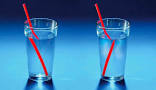
Which word best describes how light reacts when passing from air through water?
refraction
reflection
reconstroction
retraction
Light travels through air, water, glass and many other materials. What path does it travel to get from one place to another?
sideways
back and forth
straight
up and down
Light bends as it passes through a lens. This is called what?
Reflection
Diffraction
Refraction
Dilation


What happens to light passing through a hand lens that makes the image of the penny appear larger? The light is-
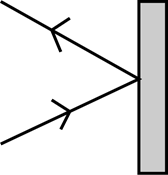
In the illustration, the light ray striking the object is-