

wayground logo

Free Printable Worksheets

NEW

Font size

S
M
L
XL
Worksheets

Mid Term Revision

Total questions: 40

Worksheet time: 13mins

Name
Class
Date
1.

Where does an offspring get its traits in asexual reproduction?

a)

From both parents

b)

From only one parent

c)

From neither parent

d)

There are no traits handed down

2.

In Leslie's family, two of the children have attached earlobes and one child has unattached earlobes. Which of these processes is responsible for the variety of traits in this family?

a)

Binary Fisson

b)

Sexual Reproduction

c)

Asexual Reproduction

d)

Regeneration

3.

Which of these occurs in asexual reproduction but not in sexual reproduction?

a)

Genes carry genetic information

b)

An offspring is made of cells

c)

The genetic information from two organisms combines

d)

An offspring inherits a set of traits identical to the parents
4.
What is an advantage of sexual reproduction?
a)
Allows genetic variation
b)
Only needs one parent
c)
Happens very quickly
d)
Offspring are exact copies of parent
5.
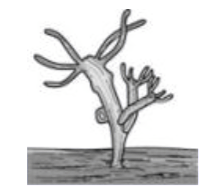
Many invertebrate animals, such as the hydra, reproduce asexually. What form of reproduction in this stage of the life cycle of the hydra is shown in the diagram? 
a)
binary fission
b)
budding
c)
fragmentation 
d)
vegetation propagation
6.

Which is NOT a form of asexual reproduction?

a)

binary fission

b)

meiosis

c)

budding

d)

cloning

7.

When a sea star breaks into fragments, each fragment develops into a new individual. This is an example of...

a)

regeneration

b)

parthenogenesis.

c)

binary fission.

d)

vegetative propagation.

8.

Amoeba use mitosis and produce two offspring that are identical to the parent. This is an example of...

a)

budding.

b)

binary fission.

c)

regeneration.

d)

parthenogenesis.

9.

Which of the following types of reproduction would result in the greatest genetic diversity in the offspring?

a)
b)
c)
d)
10.
A sperm cell unites with an egg cell to form a zygote. Which process is taking place? 
a)
Pollination
b)
Asexual reproduction
c)
Fertilization
d)
Vegetative propagation
11.

In telophase 2, cytokenesis result in

a)

2 haploid cells

b)

2 diploid cells

c)

4 haploid cells

d)

4 diploid cells

12.
In mitosis, the two resulting cells are
a)
different from the starting cell and identical to each other.
b)
different from the starting cell and different from each other.
c)
identical to the starting cell and different from each other.
d)
identical to the starting cell and identical to each other.
13.
Fruit fly body cells have 8 chromosomes. After mitosis, you would expect a resulting fruit fly daughter cell to have ...
a)
16 chromosomes.
b)
46 chromosomes.
c)
8 chromosomes.
d)
4 chromosomes.
14.
Why do we need meiosis?
a)
To double the number of chromosomes going into sex cells
b)
To halve the number of chromosomes going into sex cells
c)
To triple the number of chromosomes going into sex cells
d)
To not change the number of chromosomes going into sex cells
15.
The stages of mitosis in order
a)
Metaphase, Anaphase, Prophase, Telophase
b)
Prophase, Anaphase, Metaphase, Telophase
c)
Prophase, Metaphase, Anaphase, Telophase
d)
Anaphase, Prophase, Telophase, Metaphase
16.
A cat has a total of 38 chromosomes in its body cells.  How many in its gametes?
a)
38
b)
19
c)
76
d)
10
17.

When the two alleles of a particular gene are different, the tem used is...?

a)

heterozygous

b)

homozygous

c)

genotype

d)

phenotype

18.

A diagram used to predict the outcomes of a genetic cross is called a ...?

a)

karyotype

b)

Punnett Square

c)

Pedigree

d)

Venn diagram

19.

Dominant alleles are represented with a:

a)

capital letter

b)

lower case letter

c)

shape

d)

symbol

20.

An inherited disease can also be referred to as a ...

a)

karyotype

b)

pedigree

c)

genetic disorder

d)

phenotype

21.

The passing of physical characteristics from parent to young is called...

a)

Traits

b)

Alleles

c)

Heredity

d)

Hybrid

22.

A ___________ is the genetic makeup or allele combination.

a)

Phenotype

b)

Gene

c)

Genotype

d)

Homozygous

23.
T - tall and t = short
In the punnett square below, what belongs in the missing square
a)
tt
b)
Tt
c)
Bb
d)
TT
24.

A breeder crosssed two different purebred plants resulting in 338 offspring. He observed a recessive trait in 26 of the offspring. What is the ratio of dominant to recessive offspring in his results?

a)

12:1

b)

13:1

c)

14:1

d)

15:1

25.

In a batch of flowers, a breeder counted 552 showing the dominant trait & 92 the recessive trait. What is the ratio of dominant to recessive in the batch?

a)

5:1

b)

6:1

c)

7:1

d)

8:1

26.
Which sequence of complementary DNA bases would pair with this partial strand
ATG TGA CAG?
a)
ATG TGA CAG
b)
TAC ACT GTC
c)
GTA AGT GAC
d)
CAT TCA CTG
27.
Which of the following monomers are repeatedly joined together to form a strand of DNA?
a)
amino acids
b)
nucleotides
c)
fatty acids
d)
polysaccharides
28.
In a molecule of double-stranded DNA, the amount of adenine present is always equal to the amount of _________.
a)
cytosine
b)
guanine
c)
thymine
d)
uracil
29.
Which 2 molecules form the sides (backbone) of the DNA ladder?
a)
deoxyribose sugar and adenine
b)
deoxyribose sugar and a hydrogen bond
c)
deoxyribose sugar and the nucleus
d)
deoxyribose sugar and phosphate
30.
What are the three components of a nucleotide?
a)
sugar, hydrogen, nitrogen base
b)
sugar, oxygen, nitrogen base
c)
sugar, phosphate, nitrogen base
d)
sugar, phosphate, protein
31.
The following picture must be
a)
DNA because it's double stranded
b)
RNA because it's single stranded
c)
DNA because it's single stranded
d)
RNA because it's double stranded
32.
The process by which the genetic code of DNA is copied into a strand of RNA is called
a)
translation
b)
transcription
c)
transformation
d)
replication
33.
The process of making proteins on the ribosome based on instructions from messenger RNA is called
a)
transcription
b)
transformation
c)
translation
d)
molecular biology
34.
Changes is DNA sequences that affect genetic information are known as
a)
replications
b)
mutations
c)
transformations
d)
translations
35.
In the energy pyramid here, which organisms have the most energy available?
a)
Producers
b)
Carnivores
c)
Herbivores
d)
Top Predator
36.
Which level will contain plants?
a)
A
b)
B
c)
C
d)
D
37.
Trophic levels are represented by 
a)
squares
b)
circles
c)
pyramids
d)
lines
38.
Which animal is not the apex predator but, a predator to a mouse?
a)
hawk
b)
rabbit
c)
snake
d)
grass
39.
Why is a shark a carnivore.
a)
because it eats seaweed
b)
because it eats dead animals
c)
because it eats sand 
d)
because it eats other animals
40.
An organism that gets energy from breaking down dead organisms, non-living material or waste is a(an) ___________.
a)
producer
b)
consumer
c)
decomposer
d)
autotroph
