
NEW
Font size
S
M
L
XL
 Worksheets
Intro to atoms
Total questions: 31
Worksheet time: 29mins
Name
Class
Date
1.
what is the center of the atom called?
a)
Proton
b)
Neutron
c)
electron
d)
Nucleus
2.
What charge does a proton have?
a)
positive
b)
negative
c)
neutral
3.
What charge does a neutron have?
a)
positive
b)
negative
c)
neutral
4.
What charge does an electron have?
a)
positive
b)
negative
c)
neutral
5.
There are equal numbers of ___ and ___ in an atom (if it's neutral)
a)
protons and neutrons
b)
protons and electrons
c)
neutrons and electrons
6.

What two particles are in the nucleus of an atom?
a)
protons and electrons
b)
electrons and neutrons
c)
protons and neutrons
7.

What subatomic particle(s) would be found orbiting the nucleus?
a)
Neutrons only
b)
Electrons only
c)
Protons and Neutrons
d)
Protons and Electrons
8.
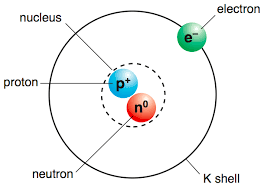
Which subatomic particles contribute the most to the mass of an atom?
a)
Protons, Neutrons, Electrons
b)
Protons only
c)
Protons and Electrons
d)
Protons and Neutrons
9.

the central region of an atom where its neutrons and protons are is its
a)
nucleus
b)
electron cloud
c)
core
d)
center
10.

What are the 3 subatomic particles that make-up the atom?
a)
protons, neutrons, and isotopes
b)
neutrons, isotopes, and electrons
c)
positives, negatives, and electrons
d)
protons, neutrons, and electrons
11.
all matter is made of what
a)
energy
b)
atoms
c)
electrons
d)
compounds
12.
an atom with atomic number 6 would have how many protons
a)
6
b)
12
c)
3
d)
cannot be determined
13.

What part of the atom is the arrow pointing to?
a)
nucleus
b)
proton
c)
electron shell
d)
electron
14.

Which part of the atom is being pointed to in the diagram?
a)
Proton
b)
Neutron
c)
Electron
15.

Which part of the atom is being pointed to in the diagram?
a)
Proton
b)
Neutron
c)
Electron
16.

Which part of the atom is being pointed to in the diagram?
a)
Proton
b)
Neutron
c)
Electron
17.
What is the atomic number equal to?
a)
# of protons
b)
# of electrons
c)
# of Neutrons
d)
# of protons + neutrons
18.
All atoms are identified by how many __________ they have?
a)
protons
b)
electrons
c)
protons + Neutrons
d)
neutrons
19.
The mass of an atom's nucleus is equal to:
a)
protons
b)
electrons
c)
protons + Neutrons
d)
neutrons
20.
If you change the number of protons in an atom, you create an entirely different atom.
a)
True
b)
False
21.
The first energy level can hold up to how many electrons?
a)
8
b)
4
c)
2
d)
5
22.
True or False? Neutrons have a negative charge
a)
True
b)
False
23.
Which of the following is a neutrally charged subatomic particle found in the nucleus of an atom?
a)
Electron
b)
Proton
c)
Neutron
d)
Quark
24.
What is the atomic number for an element with three protons?
a)
2
b)
1
c)
3
d)
6
25.
Most of the mass in an atom is concentrated in the...
a)
electrons
b)
nucleus
c)
protons
d)
empty space
26.

How many neutrons does Nitrogen have?
a)
14
b)
7
c)
15
d)
18
27.
The atomic mass or mass number equals the number of...
a)
protons plus the number of electrons
b)
protons plus the number of neutrons
c)
protons
d)
neutrons
28.

a)
2
b)
8
c)
3
d)
13
29.
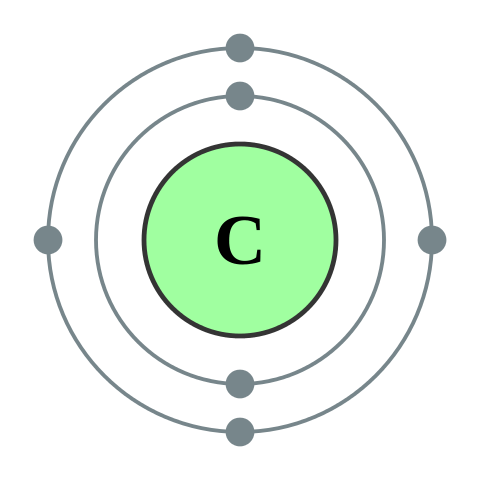
How many valence electrons does carbon have?
a)
4
b)
5
c)
6
d)
7
30.

a)
12
b)
7
c)
8
d)
14
31.
Valence electrons are the...
a)
Innermost electrons
b)
Middle electrons
c)
Outermost electrons
d)
Any electrons
Reset

