
 Worksheets
Solar System Test Review
Total questions: 50
Worksheet time: 37mins

Why is it hard to build a perfect scale model of our solar system?
The colors of the objects
The relative size and distance between objects
The composition of the objects
The shape of each object

The ________________ of the Sun causes the orbital motions of the objects in the solar system.
gravitational pull
chemical composition
brightness
ultra-violet rays

The sun is the anchor point of our solar system because of
the gas Hydrogen
its small density
its huge mass
its location
Which is needed to determine the amount of gravitational force between two objects?
distance and mass
weight and time
area and weight
What are the four outer planets?
Mercury, Venus, Earth and Mars
Jupiter, Saturn, Uranus, Neptune
Earth, mars, Jupiter, Saturn
Uranus, Neptune, Mercury, Venus
What are the terrestrial (inner) planets
Mercury, Venus, Earth, Mars
Jupiter, Saturn, Uranus, Neptune
Earth, Mars, Jupiter, Saturn
Uranus, Neptune, Mercury, Venus
All the space and the matter space contains
Space
Solar System
Universe
Sun
A(n) _____ is the curved path of an object around a point/object in space.
orbit
rotation
revolution
phase

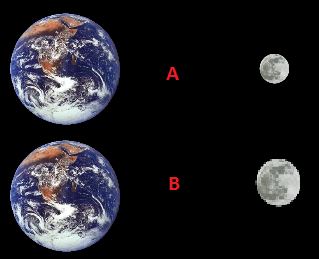
How would you describe the orbits?
Moving.
Nearly circular.(elliptical)
Revolving around each other.


Why does Mercury have the shortest year of all the planets?
It is a small planet.
It is closest to the sun.
It spins faster than any other planet.
It is the planet with the most temperature extremes.
What is a large round object in space that follows a path around the sun called?
Planet
Moon
Galaxy
Universe
What is it called when an object spins on a center point?
revolve
rotate
orbit
What is a large piece of rock or metal flying through space called?
Planet
Asteroid
Sun
Moon
What is a giant ball of light made of hot gas called?
Star
Planet
Asteroid
Galaxy

A planet has twice the mass of Earth and the same radius as Earth. If you were standing on this planet, the force of gravity would be…
twice that on Earth.
half that on Earth.
the same as on Earth.
four times greater than Earth's.
Anything with ____________ also has a gravitational pull.
mass
size
depth
light
Which of these statements are true about the outer planets?
The outer planets have many moons
The outer planets orbit in a different direction
The outer planets have higher densities
The outer planets have smaller diameters

What does this picture represent?
Our universe.
Planet Earth.
Our solar system
Our Milky Way Galaxy

Which of the 8 planets in our Solar System is farthest away from the Sun?
Earth
Jupiter
Neptune
Venus

Pluto is considered what?
A dwarf planet
A gas giant
The red planet
A moon

How can you tell the difference between moons and planets?
Moons are larger than planets
Moons orbit around the planets, and planets orbit around the Sun
Planets orbit around the moon, and moons orbit around the Sun
Moons orbit around the Sun and planets do not
Which is the largest planet in our solar system
Saturn
Uranus
Mars
Jupiter
What is happening to the ORBITS of our planets
They are Contracting (getting smaller)
They are Evaporating
They are Expanding (getting bigger)
They are Spinning
What is the hottest planet
Venus
Mercury
Mars
Saturn
How many planets are in our solar system (not including pluto)
9
8
10
7
Earth revolves around the sun, but it also makes one complete rotation. How long does it take Earth to make one complete rotation on its axis?
365 days
1 month
1 day
1 week
Polaris is also known as the...
Big Dipper
Little Dipper
North Star
South Star
How long does it take earth to revolve around the sun?
a month
a year
a day
3 months
How long does it take earth to rotate?
a month
a year
3 months
a day
The asteroid belt is located:
between the sun and Mercury.
between Jupiter and Saturn
between the sun and Mars.
between Mars and Jupiter
Which of the following are in our solar system?(pick more than one answer)
planets
multiple stars
moons
asteroids
comets
What are the characteristics of the inner planets in the solar system?
Giant balls of gas and ice
Hard and rocky
Very Large
Smaller
Have many moons
What are the characteristics of the outer planets in the solar system?
Giant balls of gas and ice
Hard and rocky
Very Large
Smaller
Have many moons
How can you tell the difference between moons and planets?
moons are smaller than planets
planets have life, moons do not
planets orbit around stars, moons orbit around planets
planets have rings

