
 Worksheets
Ecology review
Total questions: 34
Worksheet time: 19mins
Which of the following is abiotic?
A tree in a forest.
Wood from the tree on the forest floor.
A termite on the tree.
The soil the tree is growing in.
Which of the following is biotic?
Trees
Water
Air
Light
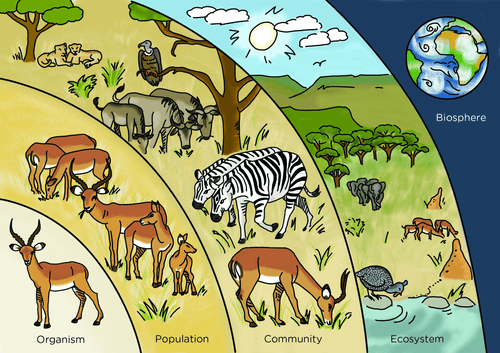
All the populations in an area make up a _____.
Habitat
Niche
Community
Ecosystem
There are birds that eat the food from between the teeth of alligators, leaving the alligators with clean teeth and the birds with a meal. What type of ongoing relationship is this?
Predator & Prey
Mutualism
Commensalism
Parasitism
An organism’s habitat is where it lives.
True
False

The study of how living things interact with one another and with their environment.
Biology
Botany
Ecology
Geology

A living relationship between two species in which one organism benefits and the other is harmed is called...
mutualism
commensalism
parasitism
niche


An organism that lives by breaking apart dead organic matter into simpler parts is...
herbivore
omnivore
decomposer
carnivore
An animal that eats other animals is a....
carnivore
omnivore
herbivore
decomposer
Animals that eat only plants are called:
herbivores
omnivores
carnivores
Animals that eat both plants and animals are called:
herbivores
carnivores
omnivores
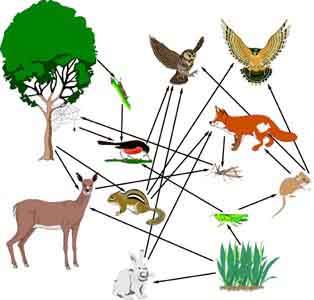

The rabbit in this food web would be considered a:
Decomposer
Producer
Secondary Consumer
Primary Consumer

The fox in this food web would be considered a:
producer and primary consumer
primary and secondary consumer
secondary and tertiary consumer
tertiary and quaternary consumer

Clown fish live among anemones, acting as a lure for the sea anemone's prey. The clown fish get protection and shelter from the anemone. This is an example of which type of symbiosis?
Commensalism
Mutualism
Parasitism

A bee and a flower work together to benefit each other. This is an example of a ______. The bee helps the flower by pollinating it and the flower helps the bee by providing it with nectar.
commensalistic relationship
parasitic relationship
mutualistic relationship


What is an invasive species?
an organism that IS native to an area and causes harm to the environment/humans
an organism that is NOT native to an area and causes harm to the environment/humans
an organism that is NOT native to an area and helps the environment/humans
an organism that IS native to an area and helps the environment/humans
Invasive species can have a major impact on the ecosystem.
TRUE
FALSE
Why do the populations of invasive species grow so quickly?
Invasive Species are native to an area.
Invasive species are prey to many animals.
Invasive species have no natural predators.
Invasive species keep the ecosystems in equilibrium.

What is a keystone species?
A species that helps to hold an ecosystem together
A species that lives in or around rocks
Keys and stones have nothing to do with ecology
A keystone isn't a living thing, it's just a stone

In the following food chain, which organism is a secondary consumer?
grasshopper
frog
python
eagle
How much energy is transferred to each level of organisms in an energy pyramid?
10%
25%
50%
75%

