
 Worksheets
Circuits & Magnetism Unit Review
Total questions: 32
Worksheet time: 29mins
What is the unit for potential difference?
Ohm
Volt
Watt
Ampere
What is the unit for current?
Ampere
Watt
Volt
Ohm
What is the unit for resistance?
Watt
Joule
Ohm
Volt
If the potential difference is 12 volts and the resistance is 5 ohms, what is the current?
2.4 A
60 A
0.417 A
17 A


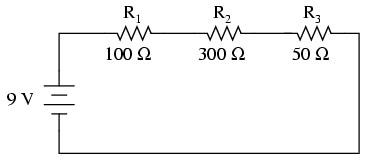
This is an example of a ______ circuit
Series
Parallel
Open
Dihexihedral
How do you calculate total resistance in a parallel circuit?
R1 + R2 + R3
R1 - R2 - R3
1/R1 +1/R2 + 1/R3 = 1/RT
R1 = R2 = R3
How to you calculate the total resistance in a series circuit?
R1 + R2+ R3
R1 - R2 - R3
1/R1 + 1/R2 + 1/R3
R1 = R2 = R3

What is the equivalent or total resistance (Re) across this circuit?
3 kΩ
10 kΩ
13 kΩ
18 kΩ

How would the equivalent resistance be determined?
1 / Req = (1/5) + (1/8) + (1/3) Ω
120 Ω
1.5189873 Ω
1 / Req = (1/5) * (1/8) * (1/3) Ω
the formula to find current when the values of V and R are known is
I = V2R
I = V/R
I = R/V
I=VR

What is the equivalent resistance of three 10,000 Ω resistors in parallel?
33,333 Ω
3.1*10^7 Ω
3.33333*10^14 Ω
3,333.3 Ω
have a high resistance when electricity flows through them.
insulators
Conductors
Resistance
superconductor
have low resistance when electricity flows through them.
insulators
Conductors
Resistance
superconductor
What is responsible for the Magnetic Field around Earth?
The Earth's crust
The Earth's molten iron core
The Earth's mantel
The Sun

If a glass plate is placed over a magnet and iron filings are sprinkled over the glass, a pattern will be visible. What does this pattern indicate?
The magnetic field
The electrostatic field
The piezoelectric effect
The chemical reaction of the magnet and the filings

How can a wire become magnetic?
point it north
add a resistor
heat it up
run a current through it

Electric charges always flow from _____ areas to _____ areas.
positive; negative
negative; positive
neutral; negative
neutral; positive
Certain materials respond to magnetic fields by becoming ______________ themselves. ____________ is one of these materials.
magnetic, Plastic
electronic, Iron
magnetic, Iron
electronic, Plastic
Electromagnets are considered to be:
Temporary magnets
Permanent magnets
Fast magnets
Slow magnets
Magnets are made of
brass, copper and aluminum
copper and gold
aluminum and zinc
iron, nickel and cobalt

