
 Worksheets
Civics 2nd 9 Weeks Exam Review
Total questions: 74
Worksheet time: 3hrs 54mins
Which American document is the basis of all U.S. national law?
Articles of Confederation
Magna Carta
Constitution
Declaration of Independence
What document protects the freedoms of American citizens?
Mayflower Compact
Declaration of Independence
Constitution
Missouri Compromise
Which phrase from the Declaration of Independence describes the source of government’s authority?
“We hold these truths to be self-evident, that all men are created equal.”
“Governments long established should not be changed for light and transient causes.”
“Governments are instituted among men, deriving their just powers from the consent of the governed.”
“These united colonies are, and of right ought to be, free and independent states.”
“Life, liberty, and property” were considered by John Locke to be
legal rights.
natural rights.
constitutional rights.
divine rights.
Which political philosopher’s ideology most influenced Thomas Jefferson’s draft of the Declaration of Independence?
John Locke
Montesquieu
Thomas Hobbes
Machiavelli
Use the information below to answer the question that follows.
Some Features of the Articles of Confederation
• Each state had one vote
• Laws required approval from 9 of the 13 states to pass
• Congress lacked power to tax citizens
• No national court system or national executive
• Amendments required approval by all 13 states
What was one argument that critics could make about the Articles of Confederation?
The national government had little power to get states to cooperate.
The power of the national government threatened states’ rights.
The large states could easily change the rules of government to their advantage.
The president had more power than the other branches of government.
Some Features of the Articles of Confederation
• No national court system or national executive
• Amendments required approval by all 13 states
• Laws required approval from 9 of the 13 states to pass
• Congress could raise money only by requesting it from the states
• No national army: States voluntarily sent troops when requested by Congress
What was MOST important to supporters of the Articles of Confederation?
respect for states’ rights
a strong national government
the influence of large states
an effective national military
Which of the following is a check the president has on the Supreme Court?
the power to nominate new members to the Supreme Court
the power to declare an action of the Supreme Court unconstitutional
the power to approve the new appointments to the Supreme Court
the power to veto decisions of the Supreme Court
What was the purpose of the constitutional provision for the creation of a system of “checks and balances” within the national government?
to ensure that no governmental branch becomes too powerful
to allow Congress to appoint officials of the Executive Branch
to allow the president the authority to veto the Supreme Court
to establish three branches of government
What is the purpose of the U.S. system of checks and balances?
to limit authority of government branches
to increase voter participation
to improve procedures for the legislature
to limit state powers
Which action correctly demonstrates a check on the authority of the executive branch?
a two-thirds vote by both houses of Congress that overrides a presidential veto
a majority of state legislature votes that reverses a federal mandate
a Supreme Court nominee being approved by a majority of state governors
a ruling by the judicial branch that overrides an action of the president’s Cabinet
Which governmental principle does this section of the U.S. Constitution enforce?
The President, Vice President and all civil Officers of the United States, shall be removed from Office on Impeachment for, and Conviction of, Treason, Bribery, or other high Crimes and Misdemeanors.
—Article II, Section 4, U.S. Constitution
checks and balances
majority rule
popular sovereignty
states’ rights
Which position leads the executive branch of the U.S. government?
President
Secretary of Defense
Senate Majority Leader
Speaker of the House
Why is the principle of separation of powers important in a democracy?
It limits the actions of each branch of government.
It prevents government leaders from serving for life.
It requires government duties to be completed quickly.
It requires that laws be written by each branch of government.
Why is it important for the President of the United States to have veto power over laws?
to check the power of Congress
to limit the influence of the Supreme Court
to ensure federal control over state governments
to allow for the selection of department secretaries
According to John Locke, if the government didn't protect the people's natural rights, what could the people do?
Overthrow the government
Petition the government for their rights
Nothing, the people don't have rights
The Magna Carta accomplished which of the following?
Limited powers of the king, allowed for trial by jury
Fair trial by juries
Taxes can't be raised without approval of nobles, all free men protected equally by law
All of these are true
We hold these truths to be self-evident, that all men are created equal, that they are endowed by their Creator with certain unalienable Rights....
What is the main idea of this passage?
Only citizens can enjoy the rights guaranteed by a government
Government is necessary to promote equality.
Government must equally distribute power among people
People have rights that cannot be denied by any government
How did Common Sense impact the way colonists thought about government?
They began to believe that they should be governed by the King rather than by Parliament.
They began to believe that it was not practical to be governed by England.
They began to believe that they should boycott laws with which they did not agree.
They began to believe that it was important to develop their own English style of government
How does natural law relate to John Locke's theory of Social Contract?
If the government breaks the social contract, the people have a right to rebel against the government according to natural law
Natural law says that people must abide by the social contract no matter what the king's actions are towards his people
Natural law has no relation to social contract
John Locke believed that all colonies should be free from tyranny under natural law
What was the benefit to the signers of the Mayflower Compact?
created self-government, which allowed a better, safer life
presented the rights of land ownership of the colonist
created the forerunner to political group in America
ensured the king's place as ruler of the colonies


What did the Colonists do after the Stamp Act?
Boycott British goods
Made their own goods
Decided they didn't need goods
Stopped paying all of their taxes
Which of the following was a complaint against the King?
Suspended trial by jury in many cases
He forced colonists to move back to England
He let the rich people not pay taxes
He had too much representation for the colonists
What are unalienable rights?
Rights that government cannot take away
Rights that government takes away
rights for aliens
Government is needed to promote equality

"Whenever any form of government becomes destructive of these ends, it is the right of the people to alter or abolish it and to institute new government."
What does this quote mean?
If a government is corrupt the people need to change it or make a new government
The people have no say in their government
The people have no power to change a corrupt government
It's the people's fault if the government is corrupt
The British government moved the army from the western lands into the cities. The law required colonists who were innkeepers of public officials to house and feed the British soldiers.
Stamp Act, 1765
Quartering Act, 1765
Tea Act, 1773
Declaratory Act, 1766
What did the Townshend Acts do?
put a restriction on storage for the colonists
give colonists in New York, Philadelphia, and Boston a curfew
taxed all imports into the colonies
taxed products made in the colonies
Punishment for the Boston Tea Party, including the closing of Boston Harbor and the removal of the legislature.
Proclamation of 1763
Intolerable Acts
Sugar Act
Townshend Act
A meeting held in Philadelphia in 1787 at which delegates from the states wrote the U.S. Constitution.
Congress
Constitutional Convention
First Continental Congress
The Northwest Ordinance
The "Age of Reason" in 17th and 18th-century Europe. Enlightenment thinkers emphasized using rational thought to discover truths about nature and society.
Enlightenment
The Great Compromise
The Federalist Papers
Republic
A series of essays written by James Madison, Alexander Hamilton, and John Jay in support of the ratification of the Constitution by the states.
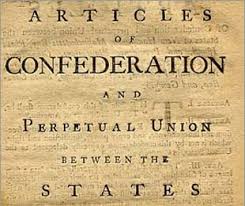
Articles of Confederation
Constitution
The Federalist Papers
The Great Compromise
The plan of government adopted at the Constitutional Convention that established a two-house Congress. In the House of Representatives, representation from each state is based on state population. In the Senate, each state is represented by two senators.
The Great Compromise
The Three-Fifths Compromise
The Federalist Papers
The Articles of Confederation
A law passed by Congress in 1787 that specified how western lands would be governed.
The Northwest Territory
The Northwest Ordinance
Republic
Constitution
A region of the United States bounded by the Ohio and Mississippi rivers and the Great Lakes. The region was given to the United States by the Treaty of Paris in 1783.
Republic
Ratify
Northwest Ordinance
Northwest Territory
A country governed by elected representatives.
Ratify
Enlightenment
Constitution
Republic
An agreement made at the Constitutional Convention stating that enslaved persons would be counted as three-fifths a person when determining a state's population for representation in the House of Representatives.
The Great Compromise
The Articles of Confederation
The Three-Fifths Compromise
The Federalist Papers

Easy SS.7.C.1.1 : The image below concerns government.
Which Enlightenment idea is represented by the image?
separation of powers
checks and balances
social contract
natural law
Easy SS.7.C.1.3
Which document addressed colonial concerns about English policies?
Declaration of Independence
Mayflower Compact
U.S. Constitution
Bill of Rights

