
 Worksheets
Electron Configuration Review
Total questions: 40
Worksheet time: 1hrs 8mins


What element is represented in this Bohr Model?
Carbon
Hydrogen
Aluminum
Lithium


How many dots would you put around carbon, a group 14 element?
4
6
8
18

This could be the dot diagram of
Mg
Cl
C
O

This is a correct dot diagram for neon (Ne)
true
false
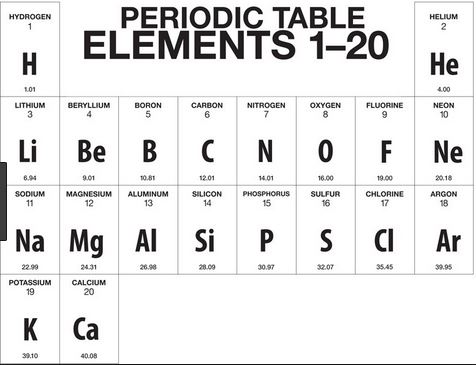
How many valence electrons does Aluminum Have?
1 Valence electron
2 Valence electron
3 Valence electron
4 Valence electron
5 Valence electron
How would you draw a Lewis dot diagram for Magnesium?


Which of the following shows a correct Lewis dot structure?


1s2 2s2 2p6 3s2

What does Pauli exclusion principle state ?
states that each electron occupies the lowest energy orbital available
states that a maximum of two electrons can occupy a single atomic orbital, but if only if the electrons have opposite spins
states that single electrons electrons with the same spin must occupy each-energy orbital before additional electrons with opposite spins can occupy the same orbitals
What does Hund's rule state?
states that single electrons electrons with the same spin must occupy each-energy orbital before additional electrons with opposite spins can occupy the same orbitals
states that each electron occupies the lowest energy orbital available
states that a maximum of two electrons can occupy a single atomic orbital, but if only if the electrons have opposite spins
1s22s22p63s23p64s23d10
How many electrons can the d sublevel(orbital) hold?
8
10
2
4
Which area on the periodic table represents the electrons in the "d" sublevel?
representative elements
columns 3-8
rare earth elements
transition elements
How many electrons can the s sublevel(orbital) hold?
8
10
2
4
How many electrons can the f sublevel(orbital) hold?
8
10
14
4
What does the Aufbau Principle state?
states that each electron occupies the lowest energy orbital available
states that a maximum of two electrons can occupy a single atomic orbital, but if only if the electrons have opposite spins
states that single electrons electrons with the same spin must occupy each-energy orbital before additional electrons with opposite spins can occupy the same orbitals

The distance between one point of a wave to the same point on the next wave.
frequency
wavelength
amplitude
crest
When you add energy to an electron, that electron can jump to a _____ energy level
higher
lower
The highest point on a wave.
frequency
wavelength
amplitude
crest
The lowest point on a wave.
frequency
wavelength
amplitude
trough
The height of a wave as indicated by #3.
frequency
wavelength
amplitude
trough
Order of the magnetic spectrum from lowest wavelength to highest.
Radio, microwave, infrared, visible light, ultraviolet, x-ray, gamma
Gamma, x-ray, ultraviolet, visible light, infrared, microwave, radio
Radio, microwave, visible light, infrared, ultraviolet, x-ray, gamma
Gamma, infrared, microwave, radio, ultraviolet, x-rays, visible light
What is the relationship between wavelength and frequency?
When wavelength is high, frequency is low.
When wavelength is high, frequency is high.
Wavelength and frequency are not related.
Wavelength and frequency are directly proportional.
When light acts as a particle, it is called a photon.
True
False
Which of the following sublevels would have electrons with the HIGHEST energy?
3s
3p
4s
4p
Which of the following sublevels would have electrons with the LOWEST energy?
4s
4p
4d
4f

