Wayground logo

Free Printable Worksheets

Font size

S
M
L
XL
Worksheets

Evidence for Evolution

Total questions: 21

Worksheet time: 23mins

Name
Class
Date
1.
The diagram shows fossils in different rock layers. Which of these statements about the age of these fossils is most likely correct?
a)
Fossil A and C are the same age
b)
Fossil B is older than fossil C
c)
Fossils A is older than fossil B
d)
Fossil D is older than fossil C
2.
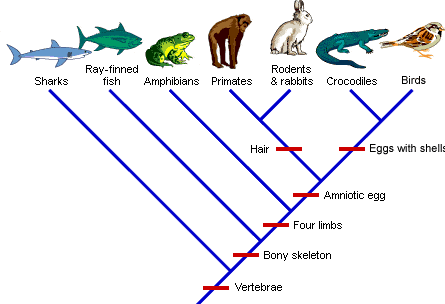
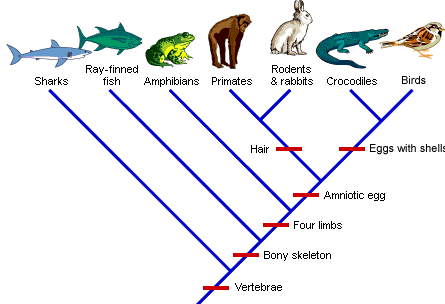
According to this cladogram, sharks are MOST closely related to which organism? 
a)
Amphibians
b)
Ray finned fish
c)
Crocodiles
d)
Birds
3.
Which two orgainsms have hair? 
a)
Sharks & Ray Finned Fish
b)
Primates & Rodents
c)
Birds & Crocodiles
d)
Rabbits & Birds
4.
Which species’ DNA is most similar to the DNA of the toothed whale? 
a)
Hippopotamus 
b)
Baleen Whale
c)
Grazing Mammals
d)
Camels
5.
A species is...
a)
a group of similar organisms that can breed 
b)
A group of organisms that live in the same place 
c)
A group of individuals that can breed and produce fertile offspring 
d)
A group of new offspring 
6.

A change in the inherited characteristics or traits of a population of species over time is ________

a)

evolution.

b)

development.

c)

growth.

d)

natural selection.

7.

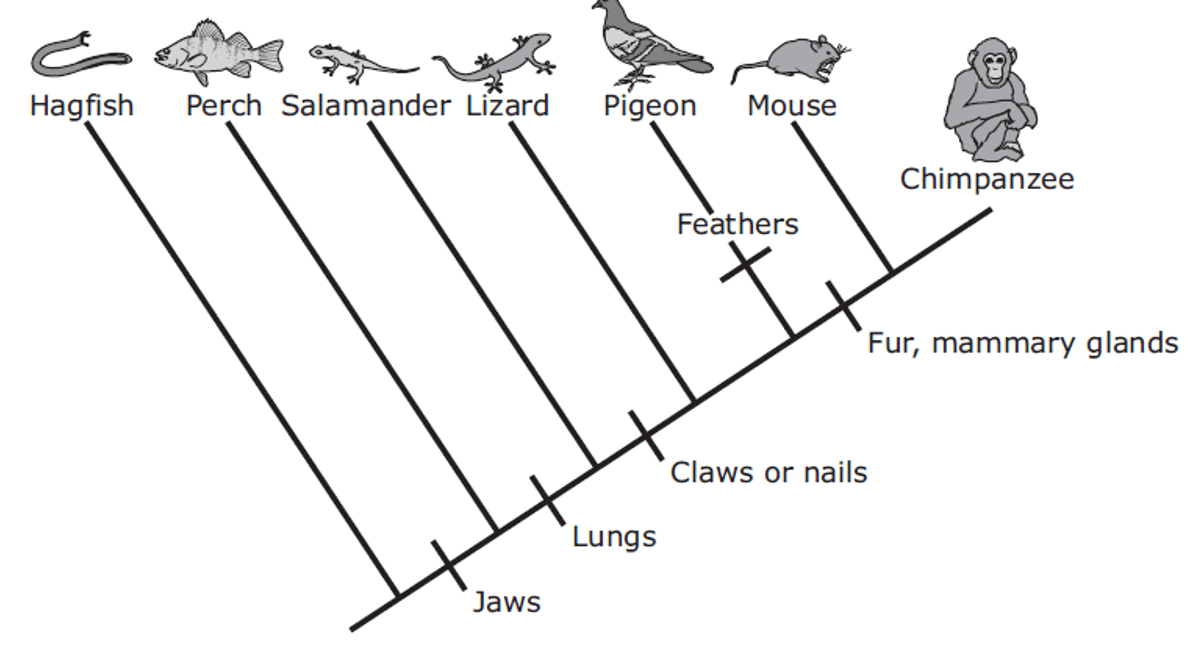
Which animals have amniotic eggs?

a)

Turtle and Tuna

b)

Turtle and Leopard

c)

Lancelet and Lamprey

d)

Tuna and Slaamander

8.
All the animals to the right of the hagfish would have the common characteristic of -
a)
Fur
b)
Claws or nails
c)
Lungs
d)
Jaws
9.
A common ancestor for both A and E could be at position __.
a)
1
b)
2
c)
3
d)
4
10.
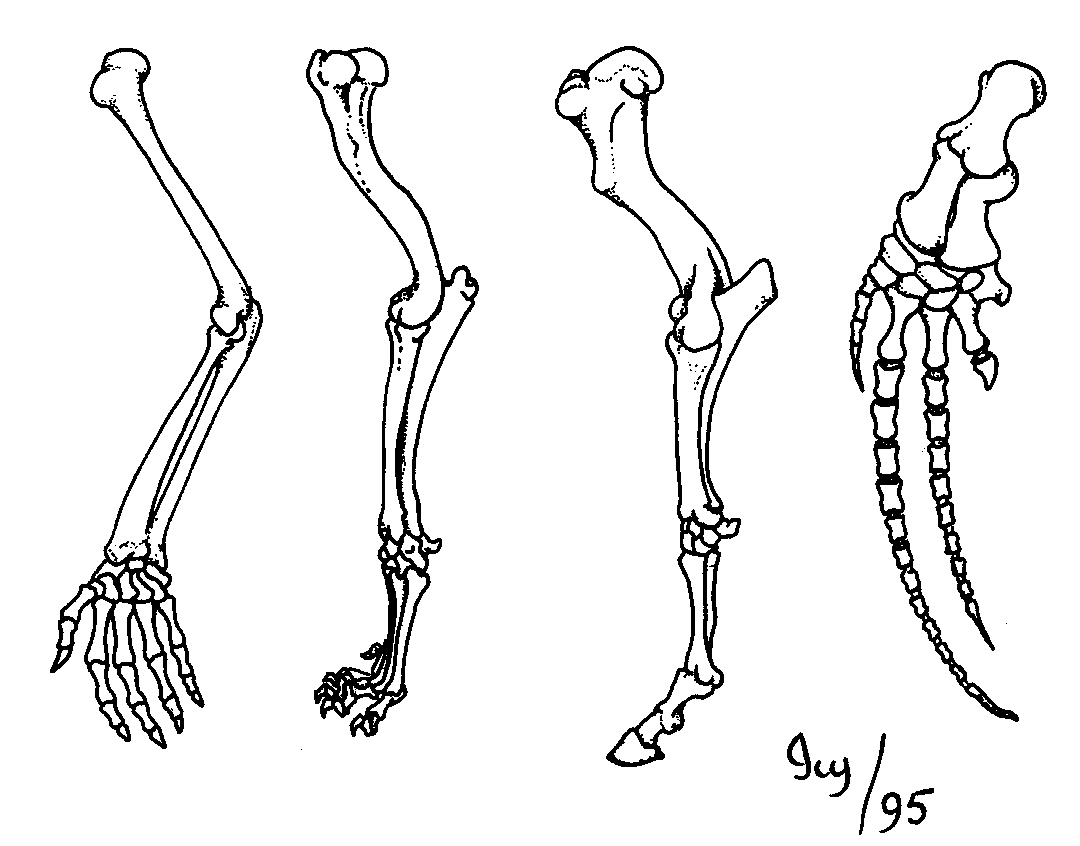
Structures with the same parts have different functions; suggests that organisms share a common ancestry
a)
vestigial structures
b)
homologous structures
c)
adaptive radiation
d)
fossil
11.
A fossil of an extinct dinosaur is found and the anatomy of the fossil shows similarities to that of a bird. What could this mean?
a)
This is purely by chance and isn't significant
b)
The extinct dinosaur and modern bird share a common ancestor
c)
All dinosaurs evolved into birds and that's why there aren't any dinosaurs alive today
d)
Dinosaurs choose to fly, and evolved into birds to escape predation and capture food
12.
Relative dating of rock layers tells us that the deeper we dig, 
a)
the younger the rocks get.
b)
the simpler the rocks get.
c)
the harder the rocks get.
d)
the older the rocks get.
13.
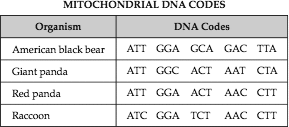
DNA analysis from these organisms would show they have
a)
identical DNA sequences.
b)
the same number of bones.
c)
similar DNA sequences.
d)
the same number of chromosomes.
14.

What conclusion can you draw from the fact that many modern whale species have vestigial pelvic and leg bones?

a)

The ancestors of whales may have been land mammals

b)

Whales could walk if they wanted to

c)

Whales are preparing to evolve into land animals

d)

Someday whales will be able to walk and will have legs
15.

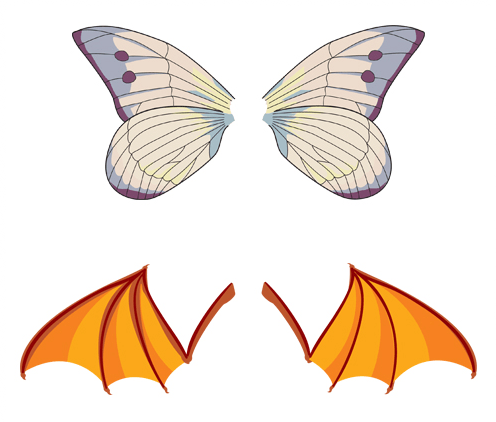
What is this an example of?

a)

Homologous structure

b)

Analogous structure

c)

Vestigial organs

d)

Functional adaption

16.

Which process of evolution is demonstrated below?

a)

Comparative anatomy

b)

Homologous structures

c)

Comparative embryology

d)

Vestigial structures

17.

Genome maps provide the DNA sequences of chromosomes. Some scientists have compared the genome maps of a hedgehog and a sloth. What do these genome maps allow the scientists to determine?

a)

The color patterns of the offspring of each species

b)

How much the size ranges of the two species differ

c)

The methods of protein synthesis that each species uses

d)

How closely related the two species are to each other.

18.

Scientists find the remains of an animal that has been extinct for a long time. What type of evidence is this?

a)

DNA analysis

b)

Comparative anatomy

c)

Fossil record

d)

Analogous anatomy

19.

Scientists tested a bat, a dog, a snake, and a human to see how their amino acids differed in a specific protein. This is a form of ...

a)

Evidence from molecular biology

b)

Analogous structure

c)

Fossil record evidence

d)

Evidence from vestigial structures

20.

Which list contains examples of vestigial structures in humans?

a)

None of the lists contain examples of vestigial structures in humans.

b)

Appendix, wisdom teeth, Coccyx (tail bones)

c)

Appendix, stomach, large intestine

d)

Brain, neurons, spinal cord

21.

What conclusions can be made based on this table shown?

a)

the American black bear and the giant panda are most closely related

b)

the giant panda and the red panda are most closely related

c)

the red panda and the racoon are the most closely related

d)

the giant panda and the racoon are most closely related