wayground logo

Free Printable Worksheets

NEW

Font size

S
M
L
XL
Worksheets

Thermal Energy

Total questions: 23

Worksheet time: 26mins

Name
Class
Date
1.
What would be the effect on the particles if more heat is supplied to the system?
a)
They would slow down
b)
They would stop moving
c)
They would speed up
d)
There would be no effect
2.
A high specific heat means...
a)
It heats up quickly with energy added
b)
It requires more energy to change temperature
3.
If I heat up 2 pans of water one has 100 mL in it and one has 1000mL. Which one heats up the fastest?
a)
100 mL
b)
1000 mL
c)
They both heat up at the same speed
d)
They cool down.
4.

The specific heat is the amount of energy needed to raise the temperature of one gram of a substance by one degree Celsius.

a)

True

b)

False

5.
Water has a specific heat of 4184 J/KgºC.  Wood has a specific heat of 1760 J/KgºC.  What material needs more energy to raise the temperature 1ºC
a)
Wood
b)
Water
c)
Both are the same
6.

What is defined as a measure of the average kinetic energy of the particles in a sample of matter?

a)

Temperature

b)

Heat

c)

Specific Heat

d)

Mechanical Energy

7.

_____________ is the form of energy that is transferred between systems or objects with different temperatures.

a)

Temerature

b)

Heat

c)

Specific Heat

d)

Mechanical Energy

8.

Which of the following is not a method for heat transfer?

a)

Radiation

b)

Insulation

c)

Conduction

d)

Convection

9.

How does heat energy reach the Earth from the Sun

a)

Convection

b)

Radiation

c)

Conduction

d)

Insulation

10.

A lava lamp is an example of which type of heat transfer?

a)

Conduction

b)

Convection

c)

Radiation

11.
What is the definition of CONDUCTION?
a)
When heat is transferred from objects like rays of light or electromagnetically.
b)
a  hot liquid or air that  expands, becomes less dense, and rises or becomes more dense, and sinks.
c)
When heat transfers from objects that are touching.
d)
When heat transfers through the heater or AC in your house.
12.

What is the definition of CONVECTION

a)

When heat transfers through waves.

b)

When heat transfers from objects that are touching.

c)

Heat transfer when a liquid or gas heats up, expands, becomes less dense and rises; or cools, becomes more dense, and sinks.

d)

Heat traveling from the sun

13.
Which of the following is an example of convection?
a)
A hair dryer is drying up your hair.
b)
When the AC or heater changes the temperature.
c)
When a car engine turns hot after being turned on.
d)
When you are making soup and the water is rising and lowering.
14.
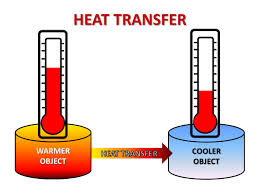
Heat transfers from an area of ____temperature to an area of ___ temperature.
a)
high to low
b)
low to high
c)
high to high
d)
It can travel high to low and low to high. 
15.
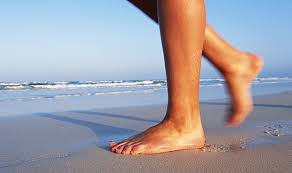
Walking on the warm sand sand with your bare feet demonstrates this type of heat transfer. 
a)
conduction
b)
convection
c)
radiation
16.
Johnny accidentally grabbed the handle of the hot pot.
a)
conduction
b)
convection
c)
radiation
17.

_________________ is the transfer of energy through or by electromagnetic waves.

a)

Conduction

b)

Convection

c)

Radiation

18.
An insulator is a material that:
a)
Transfers thermal and electrical energy
b)
Transfers electrical energy and slows thermal energy
c)
Slows electrical energy and allows thermal energy to pass
d)
Slows thermal and electrical energy from transfering
19.
A great conductor of energy is:
a)
wood
b)
plastic
c)
metal
d)
cloth
20.
What is NOT an example of an insulator in the kitchen?
a)
An oven mitt
b)
Pots and pans
c)
A wooden spoon
d)
A plastic measuring cup
21.
Mittens help keep your hands warm in winter because:
a)
They are conductors of heat.
b)
They are fuzzy.
c)
They are conductors of electrical energy.
d)
They are insulators.
22.

What is occurring between points B and C on the heating curve above?

a)

Melting

b)

Freezing

c)

Boiling

d)

Condensing

23.

Why doesn't the temperature increase between points B and C, and points D and E on the heating curve above?

a)

Heat isn't being added.

b)

Heat is being removed.

c)

The added energy is being used to cause a phase change.

d)

Time has stopped.