wayground logo

Free Printable Worksheets

NEW

Font size

S
M
L
XL
Worksheets

CA #4 Review

Total questions: 52

Worksheet time: 1hrs 2mins

Name
Class
Date
1.
Jack has a rock. The rock has a mass of 14g and a volume of 2cm3. What is the density of the rock?
a)
7 mL
b)
7 g/cm3
c)
28 g/cm3
d)
1/7 g/cm3
2.
What is the volume of Object X?
a)
10.0 cm3
b)
15.0 cm3
c)
20.0 cm3
d)
25.0 cm3
3.
Calculate the density of the cube.
a)
2 g/cm3
b)
4 g/cm3
c)
6 g/cm3
d)
8 g/cm3
4.

How does distance change the effort when using an inclined plane?

a)

as distance increases, effort decreases

b)

as distance decreases, effort decreases

c)

as distance increases, effort increases

d)

nothing, they both stay the same

5.

A family is moving from Pennsylvania to Connecticut. The movers are using a ramp to load boxes onto the truck. The advantage of the ramp is to reduce the—

a)

force needed to raise the boxes by increasing the distance the box is moved

b)

time needed to raise the boxes by reducing the distance the box is moved

c)

work needed to raise the boxes by increasing the distance the box is moved

d)

effort needed to raise the boxes by reducing the distance the box is moved
6.
Out of these which one is an inclined plane, that can make work most easier?
a)
1
b)
2
c)
both
d)
none
7.
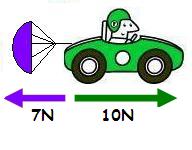
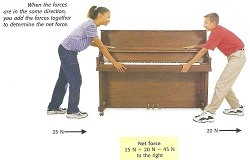
What is the net force?
a)
5 N
b)
45 N to the left
c)
5 N to the right
d)
45 N to the right
8.
Is it BALANCED? 
a)
Yes
b)
No
9.
This is an example of what kind of force?
a)
Balanced Force
b)
Pushing Force
c)
Gravity Force
d)
Unbalanced Force
10.
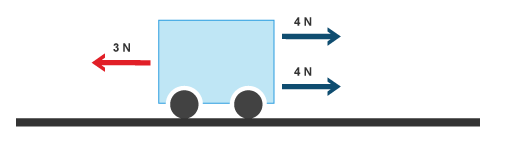
What is the net force?
a)
17 N Right
b)
3 N Right
c)
3 N Left
d)
17 N Left
11.

How do you find the net force of this image.

a)

Add up all the arrows

b)

Add a green arrow and the orange arrow.

c)

Subtract all the arrows.

d)

Add the green arrows and subtract the orange arrow.
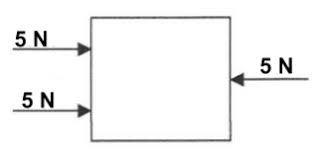
12.

Is the Net Force balanced or Unbalanced?

a)

Balanced

b)

Unbalanced

13.

If an object is moving, what does it have to be doing to still be considered a balanced force?

a)

moving at a constant speed

b)

be unbalanced

c)

stop moving

d)

slow down

14.
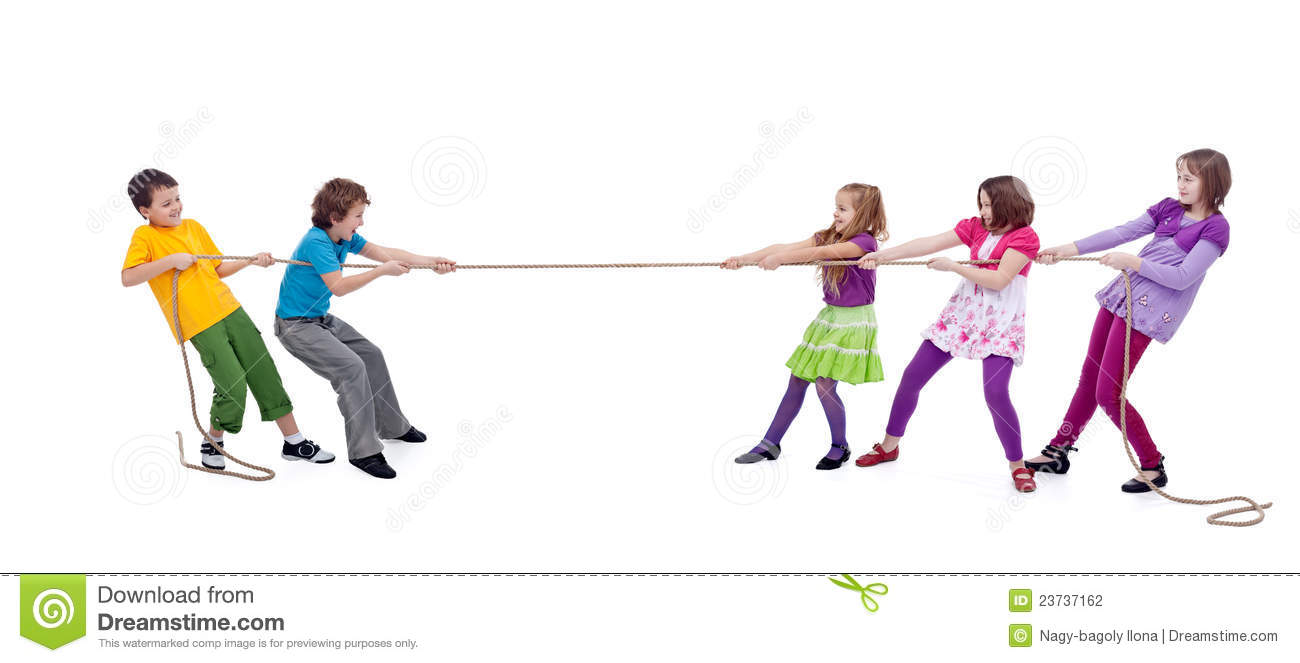
Is this a balanced or unbalance force?
a)
Balanced
b)
Unbalanced
c)
Neither one
d)
Both
15.

What is the net force in this example?

a)

200 N

b)

125 N

c)

50 N

d)

75 N

16.
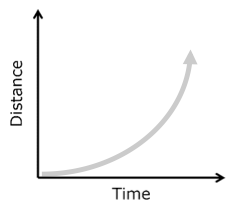
This graph demonstrates an object that is -
a)
Increasing speed
b)
At a constant speed
c)
Decreasing speed
d)
Stationary
17.
This graph demonstrates an object that is -
a)
Increasing speed
b)
At a constant speed
c)
Decreasing speed
d)
Stationary
18.
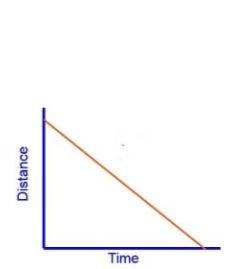
This graph demonstrates an object that is -
a)
Increasing speed away from the start
b)
Moving away from the start at a constant speed
c)
Decreasing speed toward the start
d)
Moving toward the start at a constant speed
19.
This graph demonstrates an object that is -
a)
Increasing speed toward the start
b)
Moving away from the start at a constant speed
c)
Decreasing speed away from the start
d)
Moving toward the start at a constant speed
20.
Which line represents an object moving at a faster speed?
a)
A
b)
B
21.
This graph demonstrates an object that is -
a)
At a constant speed
b)
Increasing speed
c)
Decreasing speed
d)
Stationary
22.

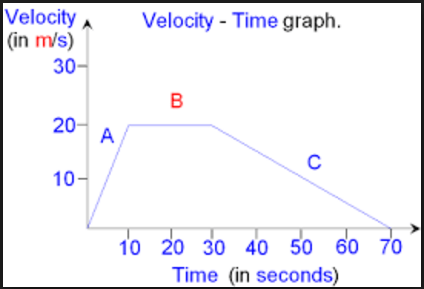
This is a velocity-time graph. What is the object doing in segment A?

a)

Speeding up

b)

Slowing down

c)

Constant Velocity

d)

Not moving

23.
Acceleration is
a)
increasing speed
b)
decreasing speed
c)
changing direction
d)
all of the above
24.
What is happening at E?
a)
Stationary
b)
Accelerating
c)
Fast steady speed; moving away from the starting position
d)
Steady speed; returning to start position
25.
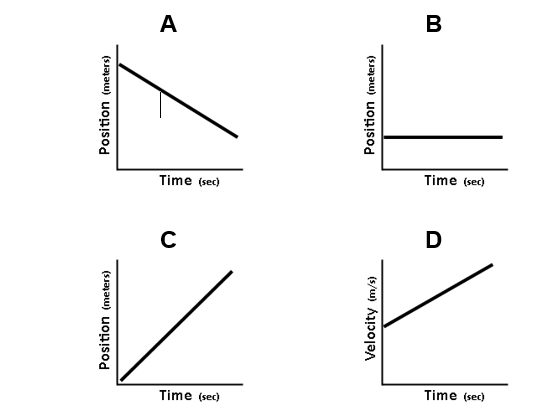
Which graph shows the object standing still?
a)
A
b)
B
c)
C
d)
D
26.

What is this line of this graph showing?

a)

moving away from starting point at a constant speed

b)

moving back towards the starting point at a constant speed

c)

acceleration (getting faster)

d)

deceleration (getting slower)

27.
What is the speed this motion?
a)
constant speed
b)
not moving
c)
speed increasing
d)
speed increasing at a constant rate
28.
What happened during C to D point?
a)
not moving
b)
increasing speed at a constant rate
c)
moving at a constant speed
d)
moving at 0 m/sacceleration
29.
What is the formula to calculate speed?
a)
S = t/d
b)
S = d/t
c)
S = d x t
d)
S = t x d
30.
A runner races in the 100 meter dash.  It takes her 10 seconds to finish.  What is her average speed?
a)
10 m/s
b)
1000 m/s
c)
100 seconds
d)
10 seconds
31.
Which is correct?
a)
speed = distance x time
b)
speed = speed divided time
c)
speed = Distance divide time
d)
Speed = time x speed
32.
What does this graph represent?
a)
Constant Speed
b)
Acceleration
c)
Not moving
33.
Shona cycles at an average speed of 8km/h. How far has she travelled if she cycles for 4 hours?
a)
55km
b)
32km
c)
43km
d)
32miles
34.

During which segment is the object decreasing speed?

a)

X

b)

Y

c)

Z

35.

During segment Y, the object is -

a)

Increasing speed

b)

Decreasing speed

c)

Stationary

d)

Moving at constant speed

36.

What is the object doing?

a)

Accelerating

b)

Not moving

c)

Moving backwards

d)

Having constant velocity

37.
What is the speed this motion?
a)
constant speed
b)
not moving
c)
speed increasing
d)
speed increasing at a constant rate
38.

The hand generator works by turning the handle which lights up the bulb. What energy transformation occurs as the handle is turned?

a)

Thermal to electrical

b)

Electrical to mechanical

c)

Mechanical to electrical to light

d)

Light to electrical

39.

What is the energy transformation that occurs in an electric pencil sharpener?

a)

mechanical energy to electrical energy

b)

electrical energy to mechanical energy

c)

radiant energy to sound energy

d)

chemical energy to mechanical energy

40.
Which of the following energy transformations occur when a lamp that is plugged into a wall socket is functioning correctly?
a)
Chemical to light
b)
Electrical to chemical
c)
Electrical to light
d)
Chemical to electrical
41.
What energy transformations take place when a battery-operated radio is in use?
a)
Electrical to chemical to light
b)
Sound to chemical to mechanical
c)
Chemical to electrical to sound
d)
Light to electrical to thermal
42.
what type of energy is stored in a battery?
a)
electrical
b)
chemical
c)
thermal
d)
mechanical
43.
According to the Law of Conservation of Energy, energy cannot be _________ or ____________. 
a)
destroyed, destroyed
b)
created, saved
c)
created, destroyed
d)
lost, found
44.
What kind of energy is represented in the picture?
a)
Thermal
b)
Chemical
c)
Sound
d)
Nuclear
45.

What type of energy transformation occurs, when a hawk eats a mouse and then uses the energy from the mouse to fly?

a)

mechanical energy to chemical energy

b)

thermal energy to mechanical energy

c)

chemical energy to mechanical energy

d)

mechanical energy to thermal energy

46.

Which object shows an energy transformation from electrical to mechanical?

a)
b)
c)
d)
47.

Which of the following is a disadvantage of using solar energy?

a)

releases carbon dioxide into the atmosphere

b)

reduces the need for electricity from fossil fuels

c)

produces energy only when the sun is shining

d)

is an unclean source of energy

48.
Which items would have this energy transformation: mechanical energy -> electrical energy?
a)
turning on a flashlight
b)
nuclear power plant
c)
windmill turning
d)
tanning bed
49.

The picture showing the energy conversion

Light → chemical

is:

a)
b)
c)
d)
50.

The picture showing the energy conversion

Chemical → light & heat

is:

a)
b)
c)
d)
51.

The picture showing the energy conversion

Chemical → heat

is:

a)
b)
c)
d)
52.
The picture shows a light bulb attached to a hand generator. What energy transformation occurs as the handle of the generator is turned?
a)
thermal → solar → light
b)
solar → light → electrical
c)
mechanical → electrical → light
d)
electrical → mechanical → light