wayground logo

Free Printable Worksheets

NEW

Font size

S
M
L
XL
Worksheets

chapter 7

Total questions: 34

Worksheet time: 38mins

Name
Class
Date
1.

Which of the following shape can be derived from a basic trigonal bipyramidal shape?

a)

PCl3

b)

CHCl3

c)

XeF2

d)

BrF5

2.

Which molecule has non-linear shape?

a)

BeCl2

b)

HCN

c)

CO2

d)

PF5

3.

PCl5 molecule has

a)

to be a non-polar molecules with non-polar bonds

b)

to be a polar molecule with polar bonds

c)

polar bonds and is a polar molecule

d)

polar bonds but is a non-polar molecule

4.

According to the VSEPR theory, which of the following molecules should be trigonal bipyramidal?

a)

PCl3

b)

XeF3

c)

SF6

d)

PF5

5.

The geometry of the SO3 molecule is best described as

a)

trigonal planar

b)

trigonal pyramidal

c)

square pyramidal

d)

bent

6.

Pi bonding occurs in each of the following species EXCEPT

a)

CO2

b)

CN-

c)

C6H6

d)

CH4

7.

Which of the following has a zero dipole moment?

a)

HCN

b)

NH3

c)

NO2

d)

PF5

8.

Of the following molecules, which has the largest dipole moment?

a)

CO

b)

CO2

c)

O2

d)

HF

9.

Which of the following elements could be capable of accepting an expanded octet?

a)

Carbon

b)

Nitrogen

c)

Aluminum

d)

Sulfur

10.
A charged particle that has gained or lost electrons is called a _____.
a)
molecule
b)
ion
c)
isotope
d)
element
11.
A cation is a ____ ion.
a)
negative
b)
positive
c)
neutral
d)
ficticious
12.
A anion will be a ____ ion.
a)
negative
b)
positive
c)
neutral
d)
ficticious
13.

Nitrogen, N, will form which of the following ions?

a)

N

b)

N-3

c)

N-5

d)

N+5

14.

Beryllium, Be, will ____ valence electrons when forming an ionic bond.

a)

lose 4

b)

gain 4

c)

lose 2

d)

gain 2

15.
In the compound aluminum oxide, which is the cation?
a)
Al+3
b)
Al
c)
O-2
d)
O
16.

Ionic bonds happen because of the ____ of valence electrons.

a)

sharing

b)

transfer

c)

keeping

d)

covering

17.

Boron, B, will ____ valence electrons when forming an ionic bond.

a)

lose three

b)

gain three

c)

lose 5

d)

gain 5

18.

Sulfur, S, will ____ valence electrons when forming an ionic bond.

a)

gain 1

b)

lose 1

c)

gain 2

d)

lose 2

19.
How many electrons are needed in the outer energy levels of an atom to be stable?
a)
2
b)
4
c)
6
d)
8
20.
Which of the following would produce an anion?
a)
Ca
b)
Al
c)
K
d)
F
21.
In the chemical formula for an ionic compound, which item is written first?
a)
positive ion
b)
negative ion
c)
subscript
d)
the female
22.
An ionic bond is the attraction between:
a)
oppositely charged ions
b)
similarly charged ions
c)
neutral ions
d)
neutral atoms
23.
Write the formula for barium + nitrogen
a)
Ba2N3
b)
Ba3N2
c)
BaN
d)
BaN3
24.
Write the correct chemical formula for Ag  and  Br -
a)
AgBr
b)
silver bromide
c)
Ag2Br2
d)
gold bromide
25.
Write the correct formula for an ionic compound formed from S2- and Rb1+.
a)
SRb2
b)
SRb
c)
Rb2S
d)
RbS2
26.
An anion in an ionic formula is/has
a)
usually a nonmetal.
b)
the positive ion.
c)
written first.
d)
lost electrons.
27.

What will be the charge of a bromine ion?

a)

+7

b)

-7

c)

-1

d)

+1

28.

Which element below would have a 3+ charge as an ion?

a)

nitrogen (N)

b)

boron (B)

c)

silicon (Si)

d)

argon (Ar)

29.
What two types of atoms make a covalent bond?
a)
2 Nonmetals
b)
1 Nonmetal and 1 Metal
c)
2 Metals
d)
2 Noble Gases
30.
How are covalent bonds explained?
a)
When one atom takes the other atom's electron
b)
When the atom shares an electron with an another atom
c)
When the two nucleus merge
d)
When the neutrons leave the nucleus
31.
In chemical compounds, covalent bonds form when
a)
the electronegativity difference between two atoms is very large.
b)
electrons are completely transferred between two metals.
c)
pairs of electrons are shared between two nonmetal atoms.
d)
two nonmetal atoms are attracted to each other by opposite charges.
32.
How are ionic bonds formed?
a)
When atoms share an electron
b)
When opposite charged atoms attract
c)
When one atom takes a proton
d)
When one atom takes a neutron
33.
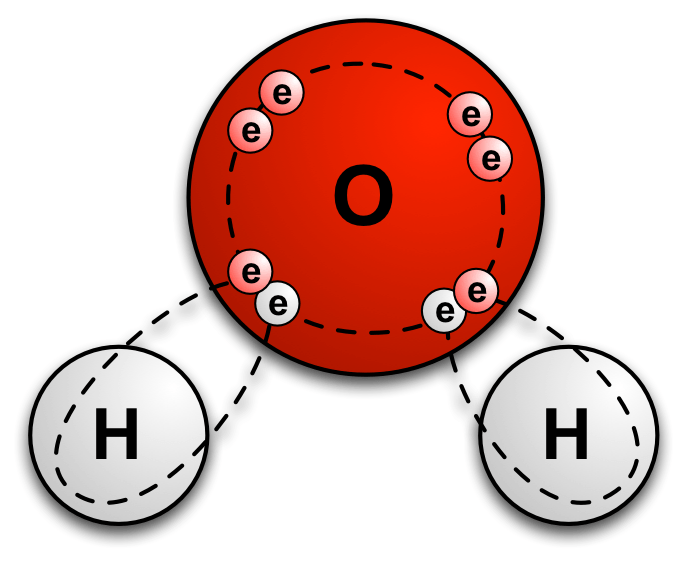
What would you name this molecule?
a)
SNa3
b)
H3O
c)
NaCl
d)
H2O
34.
What molecule is this?
a)
CO
b)
CO2
c)
C2O
d)
C2O2