
NEW
Font size
S
M
L
XL
 Worksheets
Covalent Bonds
Total questions: 25
Worksheet time: 19mins
Name
Class
Date
1.
How do covalent bonds form?
a)
Donating & receiving valence e- between atoms.
b)
Opposite slight charges attract each other between compounds.
c)
Scientists are still not sure how they form.
d)
Sharing valence e- between atoms.
2.
What two types of atoms make a covalent bond?
a)
2 Nonmetals
b)
1 Nonmetal and 1 Metal
c)
2 Metals
d)
2 Noble Gases
3.
Which of the following is NOT formed by a covalent bond?
a)
K2S
b)
H2O
c)
I2
d)
CO2
4.
Which of the following describes the strength of a covalent bond?
a)
Middle - Each atom shares an octet
b)
Middle - One atom gains an octet & the other loses.
c)
Weakest - it only forms because of another bond forming
d)
Strongest - each atom receives a "permanent" octet.
5.
What do we call a covalent bond where electrons are shared UNEVENLY or UNEQUALLY?
a)
Ionic
b)
Polar Covalent
c)
Nonpolar Covalent
d)
Van der Waals Force
6.
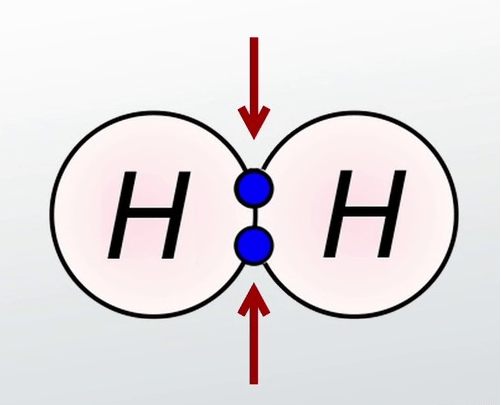
What type of bond is shown in this image?
a)
Ionic
b)
Polar Covalent
c)
Nonpolar Covalent
d)
Van der Waals Force
7.
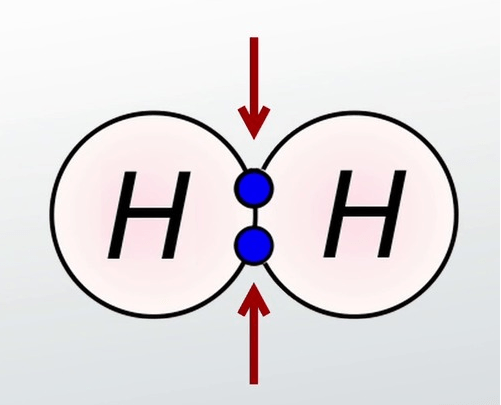
Which of the following is NOT considered a diatomic element?
a)
Carbon
b)
Nitrogen
c)
Chlorine
d)
Iodine
8.
Diatomic elements are defined as IDENTICAL elements that bond with each other (i.e. Oxygen with Oxygen). What type of bond should they form?
a)
Ionic
b)
Polar Covalent
c)
Nonpolar Covalent
d)
Van der Waals force
9.
phosphorus trichloride
a)
KCl3
b)
PCl3
c)
K3Cl
d)
P3Cl
10.
silicon dioxide
a)
SO2
b)
NaO2
c)
SiO2
d)
SiO
11.
SiCl4
a)
silicon tetrachloride
b)
silicon quadchloride
c)
monosilicon tetrachloride
d)
silicon chloride
12.
SO₃
a)
sulfate
b)
sulfur oxide
c)
sulfur trioxide
d)
monosulfur trioxide
13.
Is hydrogen considered a metal or a non-metal?
a)
A metal
b)
Nonmetal
c)
Metalloid
14.
What is a valence electron?
a)
The sum of neutrons and protons.
b)
The # of electrons in the last shell.
c)
A type of bond.
d)
A popular compound.
15.
Atoms are most stable when their outer shell is complete.
a)
true
b)
false
16.
Ionic or covalent?
NaBr
NaBr
a)
Ionic
b)
Covalent
17.
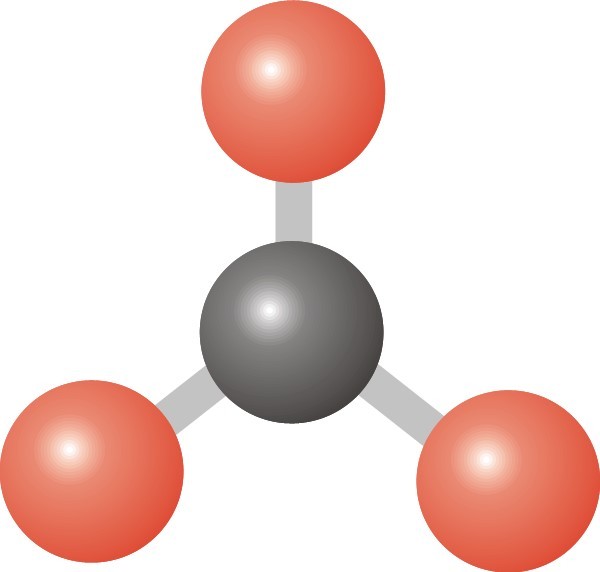
What molecule could this be?
a)
BF3
b)
CH4
c)
H2O
d)
CO2
18.
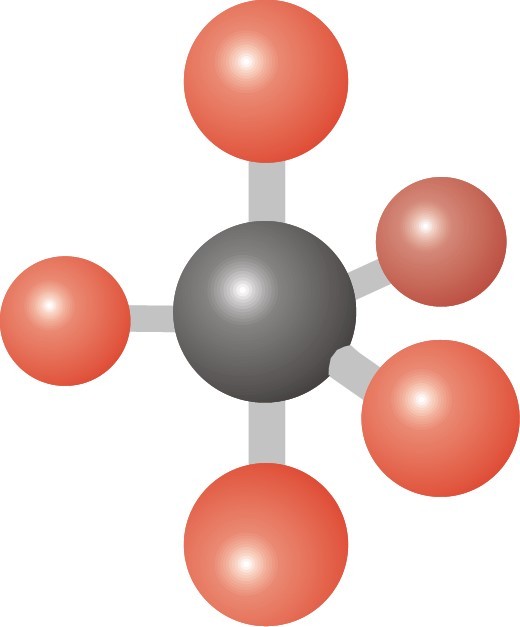
What molecule could this be?
a)
H2O
b)
CCl4
c)
PCl5
d)
NaCl
19.
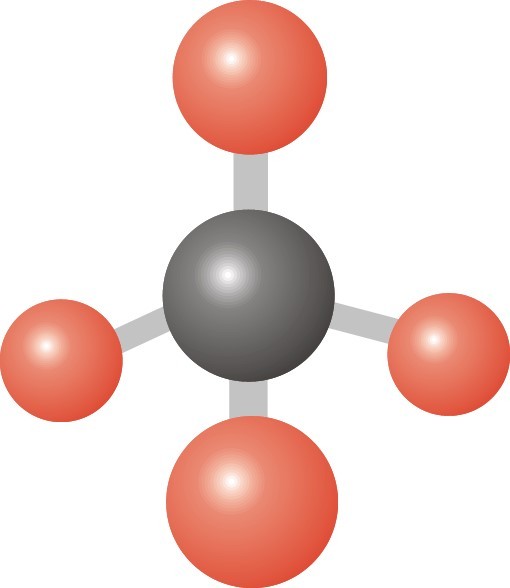
Who could this molecule be?
a)
CH4
b)
CO2
c)
PCl5
d)
BF3
20.
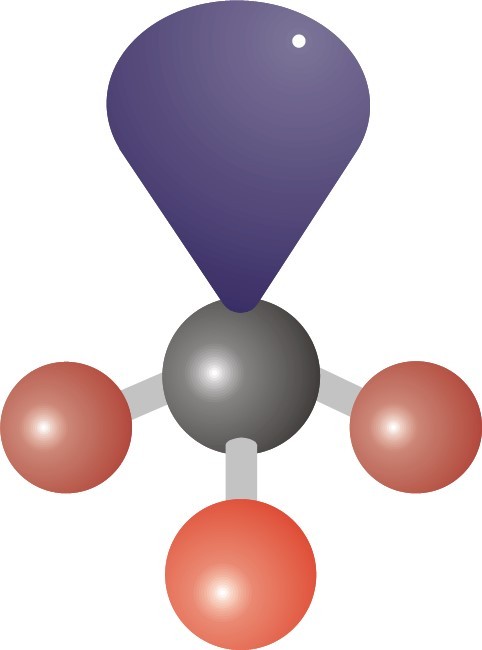
Who could this be?
a)
H2O
b)
NH3
c)
CO2
d)
CH4
21.

How many lone pairs are in this molecule's structure?
a)
6
b)
2
c)
0
d)
4
22.

Ionic Bonds
a)
metal with nonmetal
b)
nonmetal with nonmetal
23.

Cl2
a)
Ionic Bond
b)
Covalent Bond
24.
CaCl
a)
Ionic Bond
b)
Covalent Bond
25.
NH3
a)
Metal with Nonmetal
b)
Nonmetal with Nonmetal
Reset

