wayground logo

Free Printable Worksheets

NEW

Font size

S
M
L
XL
Worksheets

Copyright, Trademarks, Creative Commons

Total questions: 35

Worksheet time: 18mins

Name
Class
Date
1.

A form of protection grounded in the U.S. Constitution and granted by law for original works of authorship fixed in a tangible medium of expression.

a)

Copyright

b)

Parody

c)

Trademark

d)

Phonorecords

2.

Is a license that is one of several public copyright licenses that enable the free distribution of an otherwise copyrighted work.

a)

Fair Use Doctrine

b)

Creative Commons

c)

Phonorecords

d)

Public Domain

3.

Intangible property that is a product of the imagination (i.e., copyrights, trademarks, and patents).

a)

Fair Use Doctrine

b)

Creative Commons

c)

Intellectual Poperty

d)

Patent

4.

A monopoly granted by the U.S. Patent Office for a limited time to the creator of a new invention.

a)

Copyright

b)

Trademark

c)

Patent

d)

Parody

5.

A guideline that determines how much of a copyrighted item can legally be used without permission.

a)

Creative Commons

b)

Intellectual Property

c)

First Sale doctrine

d)

Fair Use Doctrine

6.

To steal and pass off the ideas or words of another as one's own, or to use another's production without crediting the source.

a)

Public Domain

b)

Plagiarism

c)

Permission

d)

Copyright

7.

A word or symbol used to identify a product or service in the marketplace.

a)

Copyright

b)

Permission

c)

Patent

d)

Trademark

8.

Consent to use a work, usually by reprinting or reproducing it in some other work.

a)

Trademark

b)

Copyright

c)

Permission

d)

Public Domain

9.

Which from the following is the symbol for creative commons?

a)
b)
c)
d)
10.
Which Creative Commons condition does this symbol represent?
a)
Attibution
b)
NonCommercial
c)
NoDerivatives
d)
ShareAlike
11.
Which Creative Commons condition does this symbol represent?
a)
Attibution
b)
NonCommercial
c)
NoDerivatives
d)
ShareAlike
12.
Which Creative Commons condition does this symbol represent?
a)
Attibution
b)
NonCommercial
c)
NoDerivatives
d)
ShareAlike
13.
Which Creative Commons condition does this symbol represent?
a)
Attibution
b)
NonCommercial
c)
NoDerivatives
d)
ShareAlike
14.
What are the terms of the NonCommercial condition in Creative Commons?
a)
You must give credit to the creator by citing the work.
b)
You may not use the work to make money.
c)
You cannot make any changes to the work.
d)
If you modify a work, you must share your creation on the same terms.
15.
What are the terms of the ShareAlike condition in Creative Commons?
a)
You must give credit to the creator by citing the work.
b)
You may not use the work to make money.
c)
You cannot make any changes to the work.
d)
If you modify a work, you must share your creation on the same terms.
16.
What are the terms of the Attribution condition in Creative Commons?
a)
You must give credit to the creator by citing the work.
b)
You may not use the work to make money.
c)
You cannot make any changes to the work.
d)
If you modify a work, you must share your creation on the same terms.
17.
What are the terms of the NoDerivatives condition in Creative Commons?
a)
You must give credit to the creator by citing the work.
b)
You may not use the work to make money.
c)
You cannot make any changes to the work.
d)
If you modify a work, you must share your creation on the same terms.
18.
What are the terms of the NoDerivatives condition in Creative Commons?
a)
You must give credit to the creator by citing the work.
b)
You may not use the work to make money.
c)
You cannot make any changes to the work.
d)
If you modify a work, you must share your creation on the same terms.
19.
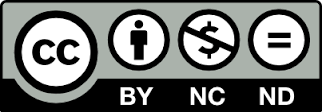
What License does this have?
a)
Attribution-Share Alike License
b)
Attribution-No Derivative Works License
c)
Attribution-Non Commercial-Share Alike License
d)
Attribution-Non commercial-No Derivative Works License
20.
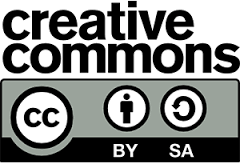
What License does this have?
a)
Attribution-Share Alike License
b)
Attribution-No Derivative Works License
c)
Attribution-Non Commercial-Share Alike License
d)
Attribution-Non commercial-No Derivative Works License
21.
How Do I Obtain Copyright Protection?
a)
you cannot obtain copyright protection
b)
after registration with the Copyright Office
c)
when the work is created 
d)
when someone steals your work
22.
How Long Does Copyright Protection Last?
a)
a lifetime
b)
70 years after the death of the author or artist 
c)
it does not last
d)
1 year
23.
 Something must have the sign to be copyrighted.
a)
True, how else would you know if it was in the public domain or not?
b)
B.False, a work belongs to the creator whether or not there is a © symbol
24.
A teacher rents Gone With the Wind to show the burning of Atlanta scene to her class while studying the civil war. This is fair use.
a)
True
b)
False
25.
A student is writing a report for science class and uses copyright images downloaded from the Internet and cited correctly. He submits his project to a competition that recognizes classroom work for students and wins a prize for the school. This is covered under fair use.
a)
True
b)
False
26.
When creating a project, you use an  image from Google images, you should . . .
a)
Include a Works Cited Page and give credit to the original creator
b)
Hope you don't get caught
c)
Act as if you created the image
d)
It doesn't matter, you are only a kid
27.
What are the two ways you are able to use a work WITHOUT permission?
a)
public domain & eminent domain
b)
public domain & fairy tales
c)
public domain & fair use
d)
public use and fair use
28.
When a musician take a well known song and changes the words to make it funny it is called . . .
a)
Funny song
b)
Parody
c)
Public Domain
d)
Pear Deck
29.
Why do we have copyright?
a)
to protect people who copy things
b)
to protect people who create things
c)
to protect people who buy things
d)
to protect people who use things
30.
Copying, "lifting," or making slight changes to some or all of someone else's work and saying you created it.
a)
fair use
b)
copyright
c)
plagiarize
d)
public domain
31.
Even if you alter an image, you still need permission.
a)
True
b)
False
32.
How much can a copyright infringement cost you?
a)
$30,000
b)
$750
c)
$150,000
d)
$1,000
33.

A student is writing a report for Science class and uses copyright images downloaded from the Internet.

He submits his project to a competition that recognizes classroom work for students and wins a prize for the school.

This is covered under fair use.

a)

True

b)

False

34.

Kathy downloaded a few photos of local organic farms from an images website.

She follows the rules of the photographer and uses them in her digital video about sustainable agriculture.

She is allowed to do this.

a)

True

b)

False

35.

Which works are NOT protected by copyright?

a)

motion pictures

b)

sound recordings

c)

musical, pictorial, and dramatic works

d)

ideas, slogans, names, and short phrases