
 Worksheets
Topic 10 Mechanical waves and sound waves
Total questions: 40
Worksheet time: 39mins
The waves that require a material medium for their propagation are called
Mechanical waves
Electromagnetic waves
Matter waves
Carrier waves
Waves are a transfer of what?
Heat
Light
Energy
particle
How fast the wave is moving through a medium
wave speed
wavelength
amplitude
frequency
The wave speed of a wave in terms of its wavelength λ and period, T is:
v=λT
v=λT2
v=Tλ
v=λT
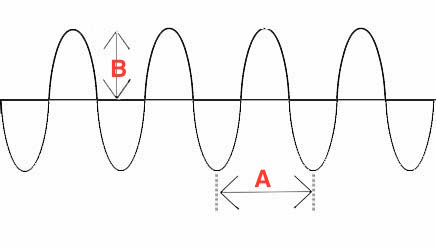
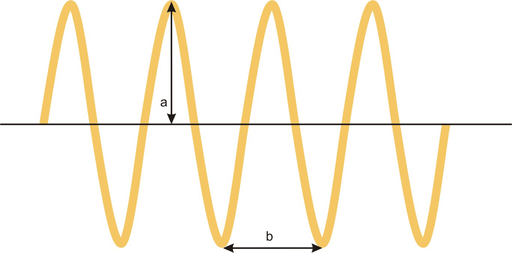
The distance between any two consecutive crests or troughs is called
frequency
period
Phase difference
wavelength
What would happen to the wavelength if the frequency was doubled?
the wavelength would be halved
the wavelength would be doubled
the wavelength would stay the same
frequency does not affect wavelength
What happens to the frequency of a wave when the amplitude is tripled?
the frequency is tripled
the frequency is a third of what it was
amplitude does not affect frequency
The equation of a progressive wave is given by
y=0.1sin(3x+10t) where y and x are in meters and t in second. The direction of the wave propagation is
leftwards
rightwards
upwards
downwards

For waves on a water surface, the following graph shows how the displacement y of a water particle in the surface varies with the time t.
What are the quantities z and s?
z: frequency
s: amplitude
z: period
s: half-amplitude
z: wavelength
s: half-amplitude
z: period
s: amplitude
Choose the CORRECT statement regarding progressive wave.
Wave profile does not move.
Transmits energy
Wave particle does not move
Particle at nodes does not vibrate at all
The principle of superposition states that
two stationary waves superimpose to produce a progressive waves.
the total energy of the resultant waves is the sum of the energy carried by the individual waves.
the frequency of the resultant wave is the difference between the frequencies of the individual waves.
the displacement at a point of the resultant wave is the sum of the displacement of the individual waves acting at that point.
Two wave pulses pass each other on a string. The one traveling towards the right has a positive amplitude, while the one traveling towards the left has an equal amplitude in the negative direction, At the point that they occupy the same region of space at the same time
constructive interference occurs
destructive interference occurs
a standing wave is produced
a traveling wave is produced
Two progressive waves of the same amplitude and frequency travelling in opposite directions when interfere each other produce:
beats
resonance
standing waves
interference
7. Node is a point where displacement is _________ and _______________ interference occurred.
maximum, constructive interference
zero, destructive interference
maximum, destructive interference
zero, constructive interference
The distance between two consecutive (or adjacent) nodes is:
λ
2λ
4λ
8λ
Which of the following is NOT a wave equation ?
y=Asin(ωt+kx)
y=Asin(kx−ωt)
y=Acoskxsinωt
y=Acoskx−Asinωt
Which property of wave motion distinguish a progressive wave from standing wave:
frequency of vibration
propagation of energy
direction of vibration
wavelength

The moving black dot is called ............... and the stationary black dot is called ..........................
node ; antinode
anti-node ; node
anti-amplitude; amplitude
zero ; amplitude
Nodes and antinodes occurs in
single waves
longitudinal waves
progressive waves
stationary waves
Which statement is TRUE about standing wave?
Points on the nodes have maximum amplitude
Distance between a nodes and the adjacent antinode is
4λPoints on the antinodes have the highest frequency
Every point on the waves has the same amplitude

The figure represents a string of length L, fixed at both ends, vibrating in several harmonics. Which string shows the 4th harmonic?
A
B
C
D
E
The speed of a wave in a stretched string depends on
the length and the tension of the string
the amplitude of wave and the length of the string
the amplitude of wave and the tension of the string
the tension and the mass per unit length of the string

Even numbered harmonics do not form in a closed pipe because
the pipe “fits” only an odd number of quarter wavelengths
the pipe “fits” only an even number of quarter wavelengths
the pipe cannot put an anti-node at the open end
the pipe cannot get enough air to vibrate in the pipe at these lengths

The diagram below shows the mode of vibration in a closed pipe. The air displacements, nodes (N) and antinodes (A) are as indicated below.
L=2λ
L=λ
L=45λ
L=43λ
Air in an open tube is oscillating at third harmonic. How many nodes are located within the tube ?
2
3
4
5

Figure shows a standing sound wave in a closed pipe. The standing wave represents the
first harmonic
second harmonic
third harmonic
fourth harmonic
Which of the following diagrams of standing wave represents the second overtone and third harmonic?


Which of the following statements is TRUE about the particle vibration between two successive nodes in a standing wave?
same phase
different period
equal amplitude
different speed of propagation
Which of the following statements about intensity of sound is FALSE?
sound intensity is energy transported per unit time across a unit area.
Intensity is directly proportional to the square of the distance from the point source.
Intensity is a scalar quantity.
SI unit for intensity is W m-2
Which of the following graphs DOES NOT represent the dependence of sound intensity I on its amplitude A and distance from the source r ?


What is the Doppler effect?
The observed change in frequency of sound or light because of the relative motion of a wave source and the observer.
The observed change in amplitude of sound or light because of the relative motion of a wave source and the observer.
The observed change in wave speed of sound or light because of the relative motion of a wave source and the observer.
The observed change in equilibrium position of sound or light because of the relative motion of a wave source and the observer.
The doppler effect is produced in all the following situation EXCEPT
observer is in motion only
the source is in motion only
both observer or source in motion
both observer and source are stationary
When the source of sound moves away from a stationary listener (observer), then _____________ occur.
An apparent increase in frequency
An apparent decrease in frequency
An apparent decrease in wavelength
An apparent change in speed of sound

You stand on the sidewalk next to the street. A fire truck is moving towards you. The frequency of the siren on the fire truck is 600 Hz.
What should you hear?
Frequency higher than 600 Hz
Frequency lower than 600 Hz
Exactly 600 Hz
No sound, silence.
A vehicle moves with constant speed towards a stationary ambulance which emits sound at constant frequency. Which of the following pairs is TRUE concerning the frequency and wavelength of the sound heard by the vehicle driver?
frequency increases ; wavelength remain unchange
frequency increases ; wavelength increases
frequency increases ; wavelength decreases
frequency decreases ; wavelength increases
Which situation will result in the highest observed frequency?
Observer moves at 20 m/s towards sound source.
Sound source is motionless.
Observer moves at 20 m/s away from sound source.
Sound source is motionless.
Observer is motionless.
Sound source moves at 20 m/s away from the observer.
Both sound source and observer are motionless.

Which of the following equation BEST represent the above situation?
fa=(v+vsv)f
fa=(v+vsv−vo)f
fa=(v−vsv)f
fa=(vv+vo)

