
 Worksheets
Y9 CHEM LC2 Test 20/21 - Periodic table & endo/exo
Total questions: 60
Worksheet time: 15hrs 0mins
Which statements are correct about the reactivity of group 1? (select all that apply)
rubidium is more reactive than lithium
potassium is less reactive than caesium
sodium is more reactive than potassium
lithium is the most reactive group 1 element
francium is the least reactive group 1 element
What is formed when potassium reacts with water?
potassium oxide and hydrogen
potassium hydroxide and hydrogen
potassium hydroxide and oxygen
potassium hydroxide and carbon dioxide
potassium hydroxide and water
Group 1 reactivity increases as you go down the group, why? Pick the correct descriptions of why (2)
there is more shielding
there is less shielding
the outer electron is less attracted to the nucleus
the outer electron is more attracted to the nucleus
there are more electrons

At 50oC which of these will be in a solid state? (select all that apply)
caesium
rubidium
potassium
sodium
Which of these is the balanced symbol equation for lithium reacting with water?
2Li + 2H2O -> 2LiOH + H2
Li + H2O -> LiOH + H2
2Li + H2O -> LiOH + H2
2Li + H2O -> 2LiOH + H2O
2Li + H2O -> 2Li(OH)2 + H2

What would you not observe in this chemical reaction? (select all that apply)
lithium would float on the water
lithium would sink in the water
bubbles of gas would be given off
a purple flame
the metal would no longer be seen
When an alkali metal reacts it does so to get a full shell of electrons. When a sodium atom reacts it will form a charged ion as the number of electrons and protons will not be equal. What ion will it form?
Na+1
Na+2
Na-1
Na-2
Na
Which statements are incorrect about the reactivity group 7 elements? (2)
The elements get more reactive as you go down the group
The elements get more reactive as you go up the group
More shells means there is more shielding of the nucleus
More shielding means it is easier to gain an electron because its more easily attracted
Less shielding means it is easier to gain an electron because its more easily attracted

Which of these elements will not be a gas at 70 oC
fluorine
chlorine
bromine
iodine
astatine
How many outer electrons does Iodine have?
6
8
7
127
53

The results table shows you what was observed when a solution was added to a halogen. Using the results can you put the halogens in order of reactivity
chlorine > bromine > iodine
bromine > iodine > chlorine
iodine > bromine > chlorine
bromine > chlorine > iodine
chlorine > iodine > bromine
Which of these is not a noble gas?
Helium
Argon
Oxygen
Krypton
Why is argon used in light bulbs? (select all that apply)
because it is unreactive
because it has a full shell of electrons
because it is not very reactive
because it is a gas
because it will react with oxygen and protect the filament
Electron configuration of argon:
2,8,8
2,4,6,6
1,8,8,1
10, 8
18
Which statement is true?
Group 7 elements need to lose 1 electron to get a full shell of electrons
Group 1 elements need to gain 1 electron to get a full shell of electrons
Group 0 all have a full outer shell of electrons so are unreactive
Group 7 elements lose 7 electrons when they react
Group 1 elements gain 7 electrons when they react
What are the products of this displacement reaction: bromine + potassium iodide
potassium bromide + iodine
potassium iodide + bromine
potassium bromine + iodide
potassium + bromine iodide
Which halogens can displace bromide ions to make bromine?
Fluorine and iodine.
Fluorine and bromine.
Fluorine and chlorine
Chlorine and iodine.
What are the products of this displacement reaction:
sodium + lithium nitrate ->
lithium nitrate + sodium
lithium + sodium nitrate
sodium lithium + nitrate
no reaction will occur
Which one of the following would result in a displacement reaction?
lithium + sodium chloride
potassium + lithium chloride
potassium chloride + lithium
rubidium sulphate + sodium
Correct definition of an exothermic reaction
more energy is released when bonds are formed than is taken in to break bonds
more energy is taken in to break bonds than is released when new bonds are made
more energy is taken in to make bonds than is released when bonds are broken
more energy is released when bonds are broken than is taken in when bonds are made
Correct definition of an endothermic reaction
more energy is released when bonds are formed than is taken in to break bonds
more energy is taken in to break bonds than is released when new bonds are made
more energy is taken in to make bonds than is released when bonds are broken
more energy is released when bonds are broken than is taken in when bonds are made

What is the final temperature of reaction B? (no units needed)
(a)
Which reaction is endothermic?
A
B
C
None of them are
All of them are


This graph is an energy diagram for a chemical reaction. Which is true of this type of reaction?
More energy is required to break reactant bonds than is released when product bonds form
Less energy is required to break reactant bonds than is released when product bonds form
The bonds of the reactants do not require energy to break because the reaction releases energy

Which letter corresponds to the activation energy for the reaction?
A
B
C
D
When the solids Ba(OH)2 and NH4SCN are mixed, a solution is produced and the temperature drops. Which statement is correct?
The reaction is endothermic and the overall energy change is negative
The reaction is endothermic and the overall energy change is positive
The reaction is exothermic and the overall energy change is negative
The reaction is exothermic and the overall energy change is positive
The following equation shows the formation of magnesium oxide from magnesium metal. Which statement is correct for this reaction?
2Mg(s) + O2(g) → 2MgO(s) ΔH = -1204 kJ
1204 kJ of energy are released for every mole of magnesium reacted
602 kJ of energy are absorbed for every mole of magnesium oxide formed
602 kJ of energy are released for every mole of oxygen reacted
1204 kJ of energy are released for every two moles of magnesium oxide formed
For the reaction 2H2(g) + O2(g) → 2H2O(g) the bond energies (in kJ/mol) are
H-H = x, O=O = y, O-H = z
Which calculation will give the value, in kJ/mol, of the overall energy change for the reaction?
2x + y - 2z
4z - 2x - y
2x + y - 4z
2z - 2x - y

Using the diagrams and the bond energies, calculate the energy taken in to break the original bonds - the energy released when new bonds are made
This will calculate the overall energy change in this reaction
+ 160 kJ
-63 kJ
- 160 kJ
-217 kJ

Using the equation and the bond energies given above, calculate the energy taken in to break the original bonds
867kJ/mol
436kJ/mol
431kJ/mol
242kJ/mol
678kJ/mol
Using the equation and the bond energies given above, calculate the energy given out when the new bonds were made
867kJ/mol
436kJ/mol
431kJ/mol
862kJ/mol
678kJ/mol
What have I done wrong when trying to calculate the overall energy change? (2)
(436 + 436) - ( 431) = 441kJ/mol
Used the wrong bond energy for Cl-Cl
Forgot to include the second H-Cl bond
I should have added all the bonds together
The answer doesn't match my sum
I should have subtracted all of the bond energies

Which of the metals is the least reactive?
metal W
metal X
metal Y
metal Z
magnesium sulphate

When repeating an exothermic reaction 4 times, these were the results obtained. Calculate the average temperature rise without including the anomaly
6.2
6.1
7.8
6.6
In this investigation, what is the independent variable?
'Does the amount of anhydrous copper sulphate added to water affect the temperature change?'
amount of anhydrous copper sulphate
volume of water
temperature change
time
In this investigation, what is the dependent variable?
'Does the amount of anhydrous copper sulphate added to water affect the temperature change?'
amount of anhydrous copper sulphate
volume of water
temperature change
time
In this investigation, what is a control variable?
'Does the amount of anhydrous copper sulphate added to water affect the temperature change?'
amount of anhydrous copper sulphate
volume of water
temperature change
time

Which of these statements are correct? (2)
Label a is pointing to an electron and label b is pointing to a neutron
Label c is pointing to a proton and label b is pointing to a neutron
Label b is pointing to an electron and label a is pointing to a neutron
Label b is pointing to a proton and label c is pointing to a neutron
Label a is pointing to a proton and label b is pointing to a neutron
How are neutrons different to electrons? (2)
neutrons have no charge, whereas electrons have a positive charge
neutrons have no charge, whereas electrons have a negative charge
neutrons are found in the nucleus, whereas the electrons are found in shells around the nucleus
neutrons are found in shells around the nucleus, whereas electron are found in the nucleus
neutrons have a relative mass of 1/2000, whereas electrons have a relative mass of 1
Which of these keywords is not a part of an atom?
Electrons
Neutrons
Protons
Nucleus
Isotope

Which 2 statements are incorrect? (2)
Direction A = electron
Direction B = neutron
Direction C = proton
Direction A = proton
Direction C = electron
Which element does this describe:
It contains 23 protons, 28 neutrons and 23 electrons
vanadium
sodium
silicon
nickel
Which of these statements are true? (2)
Hydrogen has more protons than helium
Magnesium has more electrons than sodium
Phosphorous has more neutrons than sulphur
Oxygen has more neutrons than carbon
Sodium and boron have the same number of electrons
Atoms of which element have 4 neutrons?
lithium
beryllium
helium
carbon
potassium
How many protons in an atom of hydrogen?
1
2
3
0

How many outer electrons does Boron have?
2
3
5
8
11
What is the correct electron configuration for magnesium?
2, 8, 2
2, 4, 6
1, 2, 3, 4, 2
12
24
Which is the correct description of the electron shell diagram for neon?
There is 2 electrons in the 1st shell, then 8 electrons in the 2nd shell
There is 1 electron in the 1st shell, then 8 electrons in the 2nd shell and 1 electrons in the 3rd shell
There is 2 electrons in the 1st shell, then 4 electrons in the 2nd shell and 6 electrons in the 3rd shell
There is 2 electrons in the 1st shell, then 8 electrons in the 2nd shell, 8 electrons in the 3rd shell and then 2 outer electrons
Neon is in group 0 so it has no electrons

Identify the reasons why this diagram is wrong for this isotope (2)
There should be only 2 electrons in the first shell
There is only 5 protons in the nucleus when there should be 6
There should be 4 electrons in the first shell
There should be 13 electrons in total
There should only be 6 neutrons in this isotope
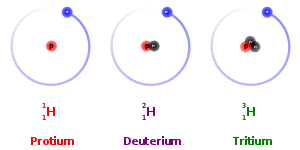
These are all isotopes of hydrogen. Select the correct statements about these isotopes (2)
Same number of protons
Same number of neutrons
Different number of neutrons
Different number of protons
Same atomic mass number
An isotope has three forms.
50% have a mass of 3
30% have a mass of 4
20% have a mass of 5
Average atomic mass will be closest to
2
3
4
5

Which of these descriptions are incorrect? (2)
The plum pudding model has 1 large positively charged proton
In the nuclear model there is a nucleus containing protons and electrons
The electrons are scattered in the plum pudding model
The electrons are in shells in the nuclear model
There was no nucleus in the plum pudding model
Which of the following are conclusions based on Rutherford’s gold foil experiment? (3)
Atom is mostly empty space
The nucleus is positively charged
The atom has a small dense nucleus
Electrons are in shells
Neutrons are in the nucleus
Which element is in group 3, period 2?
boron
aluminium
magnesium
calcium
beryllium
Select the incorrect statement about how Mendeleev organised his Periodic Table?
He put them in order of atomic weight
He put elements with similar properties together
He put them in order of atomic number
He left gaps for undiscovered elements

