
 Worksheets
VL5: HW 12.06
Total questions: 85
Worksheet time: 1hrs 9mins
A solid stays in a definite shape with a definite volume no matter what ________ it is in.
container
air
liquid
Whatever shape the container is, the liquid _______ that shape from the bottom up.
empties
fills
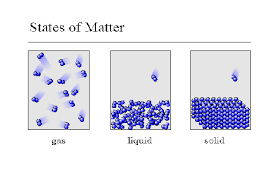
In general, the particles of a liquid are __________ tightly packed than those in a solid.
more
less
The particles in a gas are ___________ apart than those of solids or liquids.
farther
never

Identify the particles.
solid
liquid
gas
none

Identify the particles.
solid
liquid
gas
none

Identify the particles .
solid
liquid
gas
none
_______________ is anything that has mass and takes up space.
Volume
Mass
Matter
Particles
Which combination correctly identifies matter that has a definite volume?
liquids and gases
solids and liquids
solids and gases
solid, liquid, and gas

Freezing
Solid to gas
Liquid to solid
Gas to solid

Boiling
liquid to gas
gas to solid
gas to liquid

What is happening when my ice cream changes from a solid to a liquid?
freezing
melting
burning
Solid to Gas
Deposition
Sublimation
Evaporation
What is condensation?
gas to solid
gas to liquid
liquid to solid
The slower the particles in a substance move,
the colder it is.
the warmer it is.
the more energy it has.

_________ are the substances that are produced in a chemical reaction.
Reactants
Producer
Reaction
Product
________ are the starting substances in a chemical equation.
Reactants
Producer
Reaction
Products
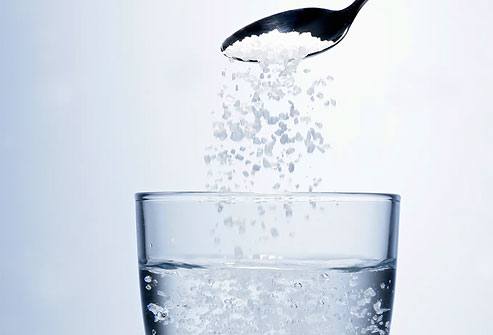

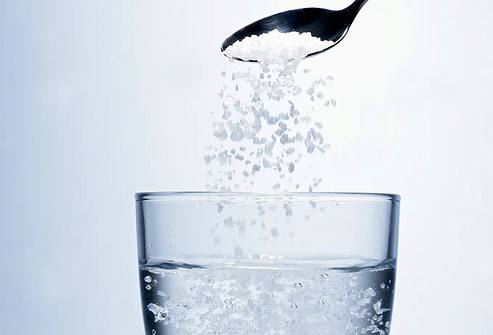
The smaller the particle size the faster the rate of dissolution (rate of dissolving).
True
False
Which will dissolve faster? Crushed table salt or a cube of table salt. Assume they have an equal mass.
crushed table salt
crystal of table salt
What combination would dissolve a solid solute the fastest?
high temperature, no stirring
no heat, no stirring
sugar cube, no heat
high temperature, stirring
Which if these is considered a physical change (check all that apply)?
Deposition
Painting a Wall
Color Change
Melting
Breaking a Window
Which if these is considered a chemical property (check all that apply)?
Combustibility
Flammability
Color
Corrosiveness
Round
When a mixture is stirred
dissolving rate stops.
dissolving rate will increase.
dissolving rate will decrease.
dissolving rate remains the same.
Indicate heat movement, Heat Added or Heat Taken Away: Soild >>> Gas
Heat Added
Heat Taken Away
Indicate heat movement, Heat Added or Heat Taken Away: Gas >> Solid
Heat Added
Heat Taken Away
Indicate heat movement, Heat Added or Heat Taken Away: Gas >> Liquid
Heat Added
Heat Taken Away
Indicate heat movement, Heat Added or Heat Taken Away: Soild >>> Liquid
Heat Added
Heat Taken Away
Indicate heat movement, Heat Added or Heat Taken Away: Condensation
Heat Added
Heat Taken Away
Indicate heat movement, Heat Added or Heat Taken Away: Deposition
Heat Added
Heat Taken Away
Identify the solvent
Which of the following actions will NOT
increase the rate of dissolution
(dissolving)?
Stirring the solution
Decreasing the temperature
Increasing the surface area of the
solute
Increasing the temperature

What is the NET FORCE and DIRECTION (of net force)?
4 N to LEFT
4 N to RIGHT
0 N
0 N to RIGHT

What is the NET FORCE and DIRECTION (of net force)?
6 N to LEFT
6 N to RIGHT
6 N
3 N to LEFT
The strength of the gravitational force between two objects depends on
Mass and Matter
Mass and Weight
Mass and Distance
Mass and Strength
When placed at equal distances apart, the greatest gravitational attraction will be between two
skateboards
bowling balls
school buses
The gravitational force exerted by an object depends on its
volume
mass
weight

The marble is rolling down the ramp. Is this balanced or unbalanced forces?
Balanced
Unbalanced

Are the forces on the rope balanced or unbalanced?
Balanced
Unbalanced

How will this object move?
It won't move because forces are balanced
It will move to the right because forces are unbalanced
How much space particles take up is called?
Density
Volume
Mass
Weight
How do particles act in a liquid?
Every particle stays in one spot.
Particles spread far apart from one another.
Particles slide past one another
Particles squeeze together to fit into small spaces.

Is this a balanced or unbalanced force?
Balanced
Unbalanced

Which of these is a LEARNED behavior?
a peacock courting
a whale migrating
a dog sitting when told to
a turtle hatchling crawling towards the ocean
What kind of behavior is speaking Spanish?
instinct
learned behavior
inherited behavior
imprinting
In winter, a bat stays in its cave, and its body temperature drops, its heart rate slows to a fraction of its normal rate, and it is barely breathing. What is this behavior called?
Migration
Hibernation
courtship behavior
territorial behavior

The viceroy butterfly looks almost identical to the toxic Monarch butterfly, protecting it from predators. What is this called?
hibernation
migration
camouflage
mimicry

This arctic hare is difficult to see against the snowy backdrop, which protects it from predators. What is this called?
hibernation
migration
courtship behavior
camouflage
A wolf cub came too close to a skunk, and was sprayed by its foul smelling chemical spray. Now, the wolf cub stays away from skunks. What type of behavior is this?
innate behavior
imprinting
learned behavior
migration
A baby sea turtle hatches, digs out of its nest, and starts crawling towards the ocean. What type of behavior is this?
learned behavior
imprinting
migrations
innate behavior
Which of the following is NOT an innate behavior?
a baby sucking
a spider spinning a web
a child playing the piano
a bird building a nest
What do we call a behavior that is learned from observations?
inherited behaviors
learned behaviors
imprinting
acquired traits
Behaviors that are passed on from parents to offspring without teaching or training are called what?
innate behaviors
learned behaviors
acquired traits
imprinted behaviors

Which of these is not an instinctive behavior?
a bird building a nest
a turtle burying its eggs
a bear hibernating in winter
a horse pulling a plow
Behaviors that do not need to be taught.
Innate Behaviors
Learned Behaviors
Trait
Instinct

Dog playing guitar.
Which is an example of innate behavior?
pond ducks flocking to be fed
bears leaning to catch fish
human babies speaking words
birds chirping when hatched


