
 Worksheets
Unit 3 Review (Atoms)
Total questions: 55
Worksheet time: 55mins
An atom of an element contains 20 protons. What is the identity of the element? (8.5B)
Argon
Calcium
Neon
Potassium
Which subatomic particle defines the identity of an element? (8.5B)
nucleus
electron
neutron
proton
Which of the following elements is MOST reactive? (Use your Periodic Table and determine where Fr is located.)
Fr
Ca
O
Ba

Determine the number of neutrons in an atom of Carbon (round the mass number). (8.5B) (THINK MAN)
12
6
18
2
How many protons are present in Hafnium (Hf) with a mass number of 178?
72 protons, 178 neutrons, 106 electrons
72 protons, 106 neutrons, 72 electrons
178 protons, 250 neutrons, 72 electrons
106 protons, 72 neutrons, 196 electrons

An atom of an element has 36 protons, 36 electrons, and a mass number of 84? How many neutrons?
36
72
48
8
What types of particles are found in the cloud surrounding the atom's nucleus?
positively and negatively charged particles
negatively charged particles only
neutral and positively charged particles
positively charged particles only

What is the mass number of a potassium (K) atom that has 20 neutrons?
18
19
20
39
Which of the following is the best description of an electron?
No charge and the same mass as a proton
negative charge and much less mass than a proton
positive charge and much more mass than a neutron
negative charge and the same mass of a neutron

An atom has 25 protons, 30 neutrons, and 25 electrons. What is the charge of the nucleus?
+55
-25
+25
-30

Atoms of a certain element have 11 protons and 1 valence electron. Which statement is correct?
the element is sodium and it is not reactive
the element is fluorine and it is highly reactive
the element is fluorine and it is not reactive
the element is sodium and it is highly reactive
What characteristic of an atom always determines it's identity?
number of neutrons
number of protons
number of valence electrons
location of valence electrons

Which characteristic of calcium is most closely related to its chemical reactivity?
20 protons in each calcium atom
calcium's density is 1.54 g.cm3
2 valence electrons in each atom of calcium
one calcium atom has an atomic mass of 40.078 amu
Which statement correctly describes the location and charge of neutrons in an atom?
The neutrons are inside the nucleus and have a negative charge.
The neutrons are outside the nucleus and have a neutral charge.
The neutrons are inside the nucleus and have a neutral charge.
The neutrons are outside the nucleus and have a negative charge.
How many protons, neutrons, and electrons are present in an atom of Barium (Ba) with a mass number of 138?
56 protons, 82 neutrons, and 56 electrons
56 protons, 138 neutrons, 82 electrons
56 protons, 81 neutrons, and 56 electrons
56 protons, 56 neutrons, and 56 electrons
An atom of a certain element has 14 protons, 14 electrons, and a mass number of 27. At room temperature it serves as an excellent semiconductor. How many neutrons are in this atom?
28
14
27
13
In the early 1900s many scientists thought that an atom consisted of a positive substance with negative charges scattered throughout the substance. Then Ernst Rutherford completed an experiment that changed our understanding of atomic structure. Now we know that an atom consists mostly of empty space with ---
protons orbiting a dense nucleus of electron and neutrons
electrons orbiting a dense nucleus of protons and neutrons
neutrons and protons orbiting a cloud of electrons
electrons and protons orbiting a cloud of neutrons
Which of these best describes a neutron?
It has no charge and about the same mass as a proton
It has a negative charge and about the same mass as a proton
It has no charge and about the same mass as an electron
It has a negative charge and about the same mass as an electron
An atom has 82 protons, 125 neutrons, and 82 electrons. What is the charge of the atom's cloud?
+82
-82
+125
0

Based on these drawings, which element is the least reactive?
Chlorine (Cl) because it has three energy levels and seven electrons in the third level
Krypton (Kr) because it has four energy levels and eight electrons in the fourth level
Zinc (Zn) because it has four energy levels and two electrons in the fourth level
Sodium (Na) because it has three energy levels and one electron in the third level

Based on the information in the table, which conclusion could be made about the reactivity of these elements?
Boron is the most reactive because it has the most protons
Fluorine is the most reactive because it has 7 electrons in the outer shell
Silicon is the most reactive because it has an equal number of protons and neutrons
Gallium is the most reactive because it has many more neutrons than protons
The atoms of a certain element contain 35 protons and 7 valence electrons. Which statement correctly identifies the element and describes its chemical reactivity?
The element is bromine and it is highly reactive
The element is bromine and it is not very reactive
The element is Nitrogen and it is highly reactive
The element is Nitrogen and it is not very reactive
A chemist is identifying the elements found in a sample of pond water. What characteristic of an element's atoms always determines the identity of the element?
Number of protons
Number of neutrons
Location of valence electrons
Number of valence electrons
A student is studying sodium, a highly reactive metal that humans need to regular water balance in their bodies. Which characteristic of sodium is most closely related to its chemical reactivity?
The 11 protons in each atom of sodium
The density of sodium, which is 0.971 g/cm3
The atomic mass of sodium, which is 22.990 amu
The 1 valence electron in each atom of sodium
How many valence electrons are in an atom of each element in Group 13 in the Periodic Table?
13
3
10
5

Which of the particles in the chart is a neutron?
Particle A
Particle B
Particle C
Particle A and B
Which statement is correct about protons and valence electrons?
The number of valence electrons determines the identity of the element, while the number of protons determines its reactivity.
The number of valence electrons plus the number of protons is equal to the atomic mass of an element.
The number of protons minus the number of valence electrons is equal to the number of neutrons
The number of protons determines the identity of an element, while the number of valence electrons determines its reactivity.

Which list of characteristics best describe the properties of neon, argon, and krypton?
Conducts heat and electricity, shiny, and solid
Brittle metalloids, reactive with oxygen, and melt at low temperatures
Gaseous at room temperature and chemically stable (not reactive)
Magnetic, highly reactive, and flammable


Which has a positive charge?
neutron
electron
tron
proton

Which part of the atom stores the protons and neutrons?
proton cloud
neutron cloud
electron coud
The nucleus

What part of the atom stores the negative particles?
neutron cloud
proton cloud
electron cloud
nuclear cloud

What charge does the nucleus have?
Negative
Postitive
Neutral
Visa/Amex

What is the smallest unit of matter?
Orbital
Cloud
valence
Atom

What are energy levels in the electron cloud called?
Proton
Nucleus
Atoms
Orbitals

Which subatomic particles are the smallest?
Neutrons
Protons
Electrons
Atoms

Which subatomic particles have the least mass?
Neutrons
Protons
Electrons
Atoms

What is letter “A" pointing to?
Proton
Neutron
Electron
Atom

What is letter “B” pointing to? (THINK A=P=E)
Neutron
Proton
Electron
Atom

What is letter “C”. pointing to?
Neutron
Proton
Electron
Atom

Atomic Mass of an atom is the?
amount of neutrons plus electrons
amount of protons plus neutrons
amount of electrons plus protons
amount of protons only
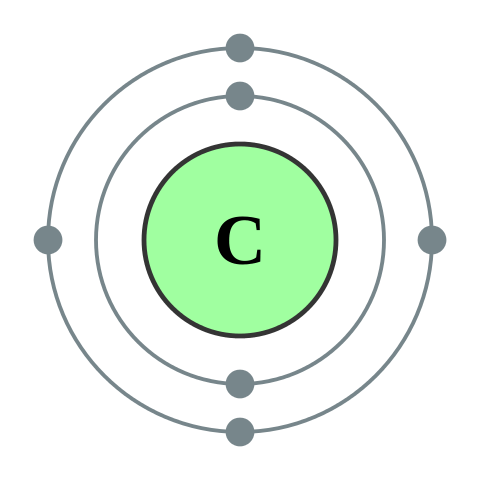
How many valence electrons does carbon have?
4
5
6
7
USE THE PERIODIC TABLE
How many valence electrons does Phosphorus have?
31
5
15
4
Elements in the same GROUP (column) of the periodic table always have the same # of _______ as one another.
Protons
Neutrons
Electrons
Valence Electrons


