
 Worksheets
Ionic Equilibrium
Total questions: 15
Worksheet time: 11mins
According to Arrhenius, what is the definition of an ACID?
a substance that contains hydroxide and ionizes to produce OH-
a substance that contains hydrogen and ionizes to produce H+
a substance that contains hydrogen and ionizes to produce OH-
a substance that contains hydroxide and ionizes to produce H+
According to Bronsted-Lowry, what is the definition of an BASE?
a substance that donates a hydrogen (H+) ion
a substance that donates a hydroxide (OH-) ion
a substance that accepts a hydrogen (H+) ion
a substance that accepts a hydroxide (OH-) ion
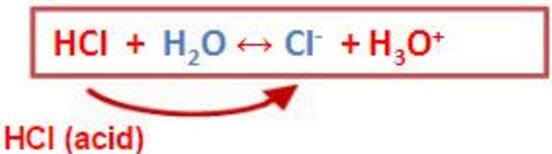
Which of the following shows the CORRECT conjugate acid base pair?
HCI (acid) / H3O+ (conjugate base)
HCI (acid) / CI- (conjugate base)
HCI (base) / CI- (conjugate acid)
HCI (base) / H3O+ (conjugate acid)
if a solution has a pOH of 5.2 the [OH-] of the solution is
6.3 x 10 -6 M
7.0 x 10 -10 M
1.58 x 10⁻⁵ M
2 x 10⁻⁵ M
If the [H3O+] of a solution is 6.8 x 10⁻⁸ M, the pH is
7.17
3.2 x 10⁻⁵
7.2
7.62
Calculate the pH of solution prepared by dissolving 5.9 x 10⁻⁵ moles of HCl in 1.0 L of pure water.
3.77
4.77
4.23
10.23
Calculate the pH of 5.0 x 10⁻⁴ M NaOH solution.
3.30
10.67
11.00
4.30

Solutions of each of the hypothetical acids in the following table are prepared with an initial concentration of 0.100 M. Which of the four solutions will have the lowest pH and be most acidic?
HA
HB
HC
HD
Calculate the approximate [H3O+] concentration in a 0.220 M solution of hypochlorous acid.
Ka for HOCl = 3.0 x 10⁻⁸.
1.7 x 10⁻⁴
3.7 x 10⁻⁴
8.1 x 10⁻⁵
1.4 x 10⁻⁷
A solution made up by dissolving NH₄Cl in water would be
acidic because NH₄⁺ hydrolyses
acidic because Cl⁻ hydrolyses
basic because Cl⁻ hydrolyses
neutral because NH₄Cl is a salt
A solution made up by dissolving NaCN in water would be
acidic because Na⁺ hydrolyses
acidic because CN⁻ hydrolyses
basic because CN⁻ hydrolyses
neutral because NaCN is a salt
Which of the following combinations cannot produce a buffer solution?
25cm3 0.100 moldm-3 CH3CH2COOH(aq) and 25 cm3 0.100 mol CH3CH2COONa
50cm3 0.100 moldm-3 CH3CH2COOH(aq) and 25 cm3 0.100 mol NaOH
50 cm3 0.100 moldm-3 NH3 (aq) and 50 cm3 0.100 moldm-3 HCl(aq)
50 cm3 0.100 moldm-3 NH3 (aq) and 50 cm3 0.100 moldm-3 NH4Cl(aq)
A buffer solution contains 0.36 M sodium acetate (CH3COONa) and 0.45 M acetic acid (CH3COOH), pKa = 4.8. What is the pH of this buffer solution?
4.7
5.2
3.8
6.1
Calculate the pH of buffer solution which contains of 0.10 M ammonia (NH₃) and 0.10 M ammonium chloride (NH₄Cl). Given K₆= 1.8 x 10⁻⁵.
4.74
9.26
10.30
11.50

