
NEW
Font size
 Worksheets
Fossils Review
Total questions: 52
Worksheet time: 31mins

The illustration shows a fossil of a dinosaur skull. Which of the following best describes why this fossil is not made of bone but rock?
The dinosaur ate many plants that contained minerals.
The dinosaur died when a rock fell on it and crushed it.
The dinosaur skull changed from bone to rock in the ground.
The dinosaur died in the ocean and sank to the bottom.
Students notice a fossil of seaweed in a rock found in the middle of Georgia. What conclusion could they form based on this evidence?
Part of Georgia was once under salt water.
Weathering and erosion break down rocks.
Trees in the forest need sunlight in order to grow.
Ancient animals ate seaweed to get energy.
Students layered a container with sand and soil. They added a small chicken bone between the layers. What step in the process of making fossils does this model?
Plants give energy to animals.
Earthquakes push fossils to the surface.
Parts of a living thing are buried.
Water carries minerals through soil.
What can we learn from studying the fossils in a certain area?
How much sunlight the area receives at noon
The direction the wind used to blow in the past
How much rain fell in the area last year
The kinds of animals that lived there
The first step in the process of how fossil are formed is _________
As time passes, sediment hardens into rock, layering on top of the animal or plant part. The remains slowly fossilize in the ground becoming part of the rock.
An animal dies.
The animal's body or plant's leaves are covered by sediments.
The soft tissues are decomposed or destroyed.
The second step in the process of how fossils are formed is _______
As time passes, sediment hardens into rock, layering on top of the animal or plant part. The bones or shells decay into minerals, joining the rock.
An animal dies in a wet environment (such as a riverbank)
The animal’s body or plant’s leaves are covered in mud. Soft tissues or organs decompose or are eaten by other living things.
The hard parts are left behind. (bones, teeth, claws, beaks, etc.)
__________ is the preserved remains of animals, plants, or other organisms from the past.
Evidence
Sequence
Fossils
Organisms
An ____________ is a living thing such as a plant or animal.
evidence
sequence
fossils
organism

What type of fossil is shown here?
trace
mold
cast
mineralization

What type of fossil is shown here?
carbonization/compression
mold
cast
mineralization

What type of fossil is shown here?
original material
mold
cast
mineralization

What type of fossil is shown here?
original material
mold
cast
mineralization

What type of fossil is shown here?
original remains
mold
cast
trace
When we know the exact age of a fossil it is the _____ age.
random
approximate
relative
absolute
In which kind of rock do we usually find a fossil?
sedimentary rock
metamorphic rock
igneous rock
In order for a bone to fossilize, which of the following must happen?
It must get weathered and eroded.
SIt must get covered by sediments.
It must float in water.
Where are prehistoric animals preserved as whole animals?
in amber
in oceans
in obsidian
in igneous rock
A ______ is an impression made in the rock in the shape of a dead plant or animal.
cast
mold
trace fossil
amber
A fossilized dinosaur footprint is a __________.
cast
amber
trace fossil
What forms when a fossil mold is filled?
cast
petrified fossil
carbon film
mold

What kind of fossil is this?
Mold fossil
Cast fossil
True Form fossil
Trace fossil
People who study fossils are called __________ .
fossilologist
paleontologist
meteorologist
fossil hunters
A team of fossil hunters dug a hole in a desert in Peru. Today, this desert is one of the driest places on Earth. Almost no rain falls there. They found a fossil of a shark. What does this tell us about what the environment used to be?
Sharks have sharp teeth
The dessert is a dry place
The desert used to be covered in water
The shark lived in the dry desert
Today, the continent of Antarctica, which surrounds Earth’s South Pole, is the coldest place on our planet. Scientists exploring an area in Antarctica called the Dry Valleys have found fossils of mosses and tiny animals. What does this finding tell us about what the environment used to be?
The land was always covered in ice
The Environment used to be warm enough for animals and mosses to live and survive there.
The environment was covered in water.

The illustration here shows the tooth of a cow and the fossilized teeth of four different animals. Based on tooth structure, which fossil tooth is from an animal that most likely ate the same things as a cow?
Tooth A
Tooth B
Tooth C
Tooth D
When the entire body of a living animal is preserved in ice or amber.
cast fossil
mineralization fossil
original material fossil
mold fossil

What is a fossil?
dinosaur bones
really old rocks
the remains of ancient organisms
an organisms

What can we learn from fossils?
How ancient organisms once lived
Where an ancient organism lived
What an ancient organism ate
All of the above

What is the minimum age required for something to be considered a fossil?
Really, really old
100 years old
10, 000 years old
5,000 years old

What type of fossil is this?
Mold
Cast
original material
Trace fossil

What type of fossil is this?
Trace fossil
Mold
Cast
Carbon film (carbonization)
Which of the following is NOT an example of a fossil?
a petrified dinosaur bone
a footprint captured in mud
a seashell found on the beach
an insect stuck in amber

Why don't we know what many ancient plants looked like?
They had too many soft parts.
They were all eaten by dinosaurs.
There weren't ancient plants.
They had too many hard parts.
Lily sees a skeleton of a dinosaur at a museum. What is true about the bones that make up the skeleton?
The bones are made up of minerals that replaced the bone tissues.
The bones are those of the dinosaur itself.
The bones were formed from mud that hardened.
The bones are made up of amber.
I found a fossil of a fish in what is now a cow pasture. What is the best explanation for how this was possible?
Somebody put the fossil there.
The wind moved the fossil there over time.
The cow pasture used to be underwater.
It would not be possible to find a fossil of a fish in a cow pasture.
What part of an animal will most likely become a fossil?
Muscle
Eyelash
tooth
Ear

This type of fossil would include nests, eggs, feces, and footprints.
cast
mold
original material
trace


When a scientist pours plaster into a mold, what type of fossil do they get?
Trace Fossils
original material
Cast Fossil
They don't call that a fossil
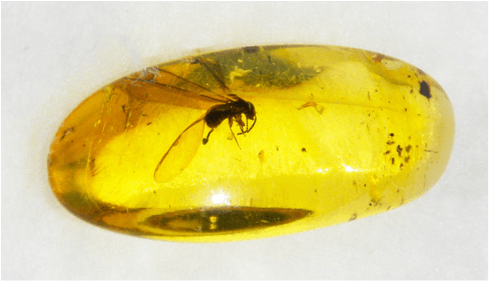

A fossilized carbon outline that forms when pressure drives off the gases and liquids from buried organism
carbon film
fossil
trace
petrified
Turned into stone by the replacement of tissue with minerals
alohamora
winadiumiosa
stupefied
petrified
A hollow area in sediment in the shape of an organism or part of an organism is ______________.
cast
mold
trace fossil
petrified fossil
A solid copy of the shape of an organism is ____________-.
mold
carbon
cast
fossil record
What type of fossil provide evidence of the activities of ancient organisms?
molds and casts
petrified fossils
trace fossils
carbon films
Which of the following substances is NOT able to preserve entire organisms?
sticky tar
water
amber
ice
Most fossils form when living things die and are buried by ______ that hardened into rock over time.
sediment
carbon
extinct
fossils
Scientists study the ________________ to learn about the history of life, past environment on Earth, and how different groups of organisms have changed over time.
sediment
evolution
carbon film
fossil records

