
Font size
 Worksheets
Physical & Chemical Changes Review
Total questions: 45
Worksheet time: 1hrs 27mins
A teacher places Iron filings that are mixed with sand in a bowl. The teacher asks a group of students to plan and figure out a way to separate the materials. Which of the following is the most effective way to separate the mixture to demonstrate that a physical change has occurred?
Add water to the bowl. The sand will dissolve in water, and the iron filings will be left.
Place the contents of the bowl into a funnel made of filter paper, and use water to separate the sand from the iron filings.
Pour the contents of the bowl into a pot with boiling water. The sand will rise, leaving the iron filings at the bottom of the pot.
Use a magnet to attract the iron filings so that they can be separated from the sand.
Students investigate the best plan to separate the following mixture.
-15 grams of table salt and 15 grams of sand are mixed together
-Both dry materials are mixed with 100 mL of water in a glass beaker.
Which of the four students explains effective methods to separate the mixtures and draws appropriate conclusions about the physical change?
Student A: “I noticed that the table salt dissolved in the water. There is no way to reverse this action. The sand did not dissolve in water. I can separate the sand from the water by using my hands.”
Student B: “The table salt dissolved in the water, and the sand did not. However, the table salt is still there. To prove this, I can use filter paper to separate the sand from the saltwater solution. Then, I can boil the water to evaporate it so that only salt is left in the bottom of the glass beaker.
Student C: “When the salt and sand were added to the water, a color change occurred. The water became cloudy. There is no way to reverse this action. We cannot remove the salt or sand from the water.”
Student D: My observations show that the table salt dissolved in water. Once something dissolves, you can no longer see it, so the salt is gone. The sand can be separated from the water. I can pour the sand and water mixture into a flat pan and place it outside in the sun. The water will evaporate leaving only the sand.”
A student takes cereal and pours it in a bowl. Then, the student pours milk in the bowl. The student then wonders if it is possible to separate the cereal from the milk.
Which of the following methods of separation would BEST be used by the student?
The student can use evaporation to boil the cereal out of the milk.
The student can take a magnet to remove all of the pieces of cereal from the bowl of cereal since magnets can pick up any small object.
The student can use a funnel to pour the mixture in filter paper so the milk will go through the filter leaving the cereal in the filter.
There is no way to separate the mixture. Once materials are mixed, there is no way to separate them.
A student is asked to plan a demonstration to show a physical change with a piece of paper. Which of the following investigations could the student use to accurately represent the type of change?
The student can fold the paper in half to show how the paper changed its chemical properties.
The student can cut the paper into tiny pieces to show how the paper changed its physical properties.
The student can put water on the paper to show how the paper can change its state of matter from a solid to a liquid.
The student can burn the paper to show how the paper can also resemble ash and smoke to show a change in state.
A chart of investigations made are shown.
-Investigation 1: A gray iron bar is heated until it glows red.
-Investigation 2: A nail is placed in water and a red-orange rust forms.
-Investigation 3: A few drops of red food coloring are used to turn water red.
Which of the investigations demonstrate an example of a physical change?
All of the situations are examples of physical changes because all of the investigations exhibit changes to the physical properties.
None of the situations are examples of physical changes because they all involve a color change.
Situation 2 is a physical change because rust forming is a natural process.
Situations 1 and 3 are physical changes because no new substances are formed.
A student notices a pile of ice on the sidewalk before school. At lunch time, the student returned and the pile of ice had completely melted into a puddle. What is the best argument for what happened to the ice?
The ice lost heat throughout the day as the sun became more direct, causing it to melt into a liquid.
The ice gained heat throughout the day as the sun became more direct, causing it to melt into a liquid.
The ice gained heat throughout the day as the sun became more direct, causing it to evaporate into water vapor.
The ice lost heat throughout the day as the sun became more direct, causing it to evaporate into water vapor.
A fifth grade teacher is boiling water to make tea. When the teacher grabs the kettle, the steam from the boiling water hits the teacher’s glasses. The glasses begin to fog up and water droplets form on the glasses.
The teacher claims that there is evidence of a change in state of water in this situation.
Which evidence BEST supports this claim?
The steam from the boiling water is a liquid, and as the liquid touches the glasses, the temperature decreases causing the liquid to change its state to a gas.
The steam from the boiling water is a gas, and when the gas touches the glasses, the steam cools down and heat is removed and changes its state to water.
The steam from the boiling water is a liquid, and as the liquid touches the glasses, the temperature increases causing the liquid to change its state to a gas.
The steam from the boiling water is a gas, and eventually the gas will turn back to a liquid and then to a solid over time.
A teacher places a tray of water in the freezer. The next morning the teacher takes the tray from the freezer and makes the following observations with her students.
Student Observations
-The water is solid
-The water took the shape of the tray
-The color is clear
-The water is cold
The student claims that changing the temperature of the water causes a physical change that turns water into ice.
Which argument BEST supports the student’s claim?
Heat was added to the water, which caused the particles to move faster. This changes the water from a solid to a liquid.
Heat was added to the water, which caused the particles to move slower. This changes the water from a solid to a liquid.
Heat was removed from the water, which caused the particles to move faster. This changes the water from a liquid to a solid.
Heat was removed from the water, which caused the particles to move slower. This changes the water from a liquid to a solid.
A student is investigating chemical changes by using different materials.
Which investigation would provide evidence of a chemical change?
Melting butter with fire would provide evidence of a chemical change because the solid would change shape.
Cutting rope into many smaller pieces would provide evidence of a chemical change because the pieces cannot be put back to its original form.
Combining two room temperature liquids that give off heat and gas would provide evidence of a chemical change because the liquids reacted to create a new substance.
Placing salt into water and stirring the salt until it dissolves would provide evidence of a chemical change because the dissolved salt is gone and can never come back.
A student is investigating evidence of chemical changes when making pancakes.
Student Observations
-Flour, baking powder, salt, sugar, milk, egg, and butter are all combined in a bowl to make batter
-Butter is placed on the griddle and turns from a solid to a liquid
-The batter is added to the griddle.
-The batter begins to bubble and turn a golden color.
The student claims that a chemical change occurred during the investigation.
Which argument BEST supports the student’s claim?
The ingredients that combined to make batter provided evidence of a chemical change because you cannot separate the original ingredients.
The butter that was placed on the griddle provided evidence of a chemical change because there was gas emitted when the butter changed states.
The batter added to the griddle provided evidence of a chemical change since the batter instantly changed its physical properties.
The batter beginning to bubble and turn a golden color provided evidence of a chemical change since there was gas and odor production from the heat.
A student placed a piece of ice into a bucket and left it out in the sun. The student then returned to record the observations. What evidence might the student use to defend whether a chemical or a physical change has occurred?
The student should report that a physical change has occurred because even though the temperature has changed, the change did not result in a new substance being created.
The student should report that a chemical change has occurred because the ice began at a different temperature than the resulting water. A temperature change is the indicator that proves a chemical change has occurred.
The student should report that a physical change has occurred because the ice began at a different temperature than the resulting water. A temperature change is the indicator that proves a physical change has occurred.
The student should report that a chemical change has occurred because the state of the substance changed from a solid to a liquid. If a substance changes state, it has created a new substance, and it indicated a chemical change.
How can liquid water be changed into a gas?
by heating
by cooling
by decaying
by rusting
Select the PHYSICAL changes:
A glass breaking.
An egg cooking on the stove.
Wood burning on a fire.
Folding paper into a paper airplane.
Freezing water.
Select the CHEMICAL changes:
Boiling water.
Folding paper into a paper airplane.
Burning wood on a fire.
Fireworks going off.
Cooking an egg on the stove.
Select the PHYSICAL changes:
Boiling water.
Chopping wood.
Burning wood.
Freezing water.
Cutting hair.
Select the CHEMICAL changes:
Dying your hair.
Cutting your hair.
Burning toast.
Cutting toast into triangles to eat.
Brushing your hair.
Choose 2 examples of a chemical change.
melting wax
rusting metal
folding a blanket (fabric)
digesting food
Mr. Sauls mixed 2 substances together. What is the best evidence that a CHEMICAL change occurred when he mixed both substances?
The substance changed in density, volume, or mass.
The substance changed in color
The substance is a liquid

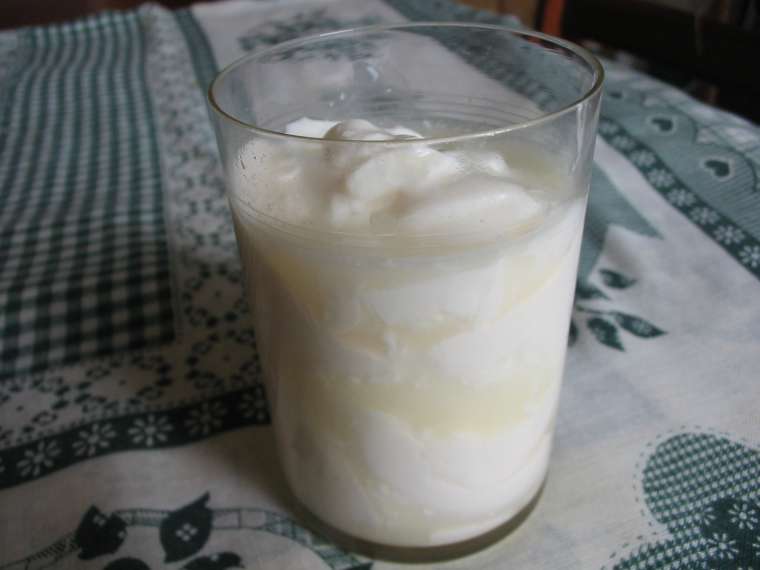
Is milk going sour a physical or chemical change?
Physical
Chemical

A physical change:
DOES result in a new substance.
DOES NOT result in a new substance.
A chemical change:
DOES result in a new substance.
DOES NOT result in a new substance.
A _______________ change may change an object's size, mass, shape or texture.
chemical
physical
Signs of a _______________ change may include a change in smell, color, or temperature.
chemical
physical
If two liquids are mixed together and a thermometer shows a temperature increase, this change is a ____________________.
chemical change
physical change
A student drops an antacid tablet into a liquid. How does the student know a chemical change occurred?
the solid tablet dissolves
a mixture is produced
a gas is produced (bubbles)
the solid tablet sinks
When you blow air into a balloon and it changes size, it is going through a _________________ change.
chemical
physical
When a piece of paper is crumbled into a ball and changes shape, it is going through a _______________ change.
chemical
physical
Baking chocolate chip cookies in the oven is an example of a ______________ change.
chemical
physical
When a bike rusts, it goes through a ________________.
chemical change
physical change
When a banana decays, it goes through a _____________________.
chemical change
physical change
Sanding down a piece of wood is an example of a ______________________.
chemical change
physical change
When leaves decay, they go through a _____________________.
chemical change
physical change
When logs burn and turn into ash, it is an example of a _________________________.
chemical change
physical change
Ice cubes melting is a _________________ change.
chemical
physical

