Wayground logo

Free Printable Worksheets

Font size

S
M
L
XL
Worksheets

Energy Review

Total questions: 61

Worksheet time: 50mins

Name
Class
Date
1.

Choose the answer that has the most ELASTIC POTENTIAL energy.

a)

a rubber band pulled back all the way

b)

a rubber band pulled back part of the way

c)

a rubber band laying on a table

2.

Choose the answer that has the most GRAVITATIONAL POTENTIAL energy.

a)

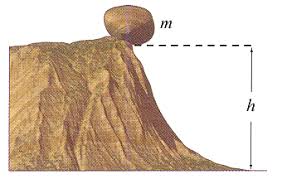
a 500 kg boulder on a 5 meter hill

b)

a 500 kg boulder on a 10 meter hill

c)

a 500 kg boulder on a 20 meter hill

3.

What two factors affect GRAVITATIONAL POTENTIAL energy?

a)

mass

b)

height

c)

speed

d)

mass and speed

e)

mass and height

4.

Which has more GRAVITATIONAL POTENTIAL energy and WHY? (Choose the BEST explanation!)


A roller coaster car at the top of a hill

OR

a roller coaster car at the bottom of the hill.

a)

The car at the top because it is not moving, so it has more potential energy.

b)

The car at the top because it is higher off the ground, so it has more GPE.

c)

The car at the bottom because it is going faster.

d)

The car at the bottom because it can't go any lower.

5.

Energy is the ability to cause _________.

a)

change

b)

problems

c)

channels

d)

solutions

6.

As mass decreases, kinetic energy ________.

a)

decreases

b)

increases

c)

stays the same

d)

is not related

7.

Lowering an object __________ its potential energy.

a)

decreases

b)

increases

c)

does not change

d)

doubles

8.

Energy from the Sun and energy from food are just different forms of the same thing.

a)

True

b)

False

9.

Increasing the speed of an object ____ its potential energy.

a)

changes

b)

decreases

c)

does not affect

d)

increases

10.

Stored energy is also known as ______ energy.

a)

kinetic

b)

potential

c)

mechanical

d)

none of these

11.

What location on the coaster has the greatest potential energy

a)

W

b)

X

c)

Y

d)

Z

12.

The total Kinetic and Potential energy in an object. Example: Swing

a)

Radiant Energy

b)

Mechanical Energy

c)

Thermal Energy

d)

Sound Energy

13.

The vibration of atoms and molecules in a substance. Known as heat. Example: Fireplace

a)

Kinetic Energy

b)

Potential Energy

c)

Chemical Energy

d)

Thermal Energy

14.

The transfer of energy by direct particle contact

a)

conduction

b)

convection

c)

radiation

15.
According to the graph, which of the following is the best estimate for the kinetic energy of the rock after it has fallen for 1 s? 
a)
100 J 
b)
50 J
c)
200 J 
d)
0 J 
16.
Which of the following describes the energy conversions in a car's engine? 
a)
chemical to thermal to mechanical
b)
chemical to electrical to mechanical
c)
thermal to mechanical to chemical
d)
kinetic to potential to mechanial
17.
At its highest point, a pendulum is 1.2 m above the ground and has a GPE of 62 J. If the GPE is 10 J at its lowest point, what is the pendulum's KE at this point? 
a)
0 J 
b)
31 J 
c)
62 J 
d)
52 J 
18.
Ignoring friction, at what point in its motion is the kinetic energy of the ball at a maximum? 
a)
just before the bat strikes it
b)
just before it hits the ground
c)
just after the bat strikes it
d)
at the top of the arc
19.
In a coal burning power plant, coal is burned to heat steam to turn a turbine. The turbine generates power that is sent to homes and businesses. Order the energy transformations of the power plant. 
a)
chemical, mechanical, electrical
b)
electrical, chemical, mechanical
c)
mechanical, chemical, electrical
d)
mechanical, electrical, chemical
20.
Which is an example of energy from chemical bonds being formed or broken and transformed into energy of motion? 
a)
lighting a match
b)
turning on a battery operated toy car
c)
pushing a button on the TV remote control
d)
the wind turning the blades of a windmill
21.
What do all of the processes listed here have in common? 
  sawing a piece of wood
  lighting a match
  turning on a light bulb
a)
All transform into a form of energy from chemical energy.
b)
All transform into a form of energy from electrical energy. 
c)
All transform a form of energy into light energy. 
d)
All transform a form of energy into heat energy. 
22.

Which of these is NOT associated with an objects mechanical energy?

a)

motion

b)

position

c)

shape

d)

weight

23.

How do you find mechanical energy?

a)

power-time

b)

chemical energy x sound energy

c)

mass + height

d)

potential energy + kinetic energy

24.

What are the units for velocity?

a)

mph

b)

m/s

c)

m/s2

d)

km/h

25.

What are the units of mass?

a)

Joules (J)

b)

Watts (W)

c)

Kilograms (kg)

d)

Newtons (N)

26.

What are the units for energy?

a)

Joules (J)

b)

Watts (W)

c)

Kilograms (kg)

d)

Newtons (N)

27.

What is the equation linking kinetic energy, mass and velocity?

a)

Energy = mass x velocity2

b)

Energy = mass / velocity

c)

Energy = 0.5 x mass x velocity2

d)

Energy = mass x velocity

28.

Food, batteries, fuel and muscles store which energy type?

a)

Elastic potential energy

b)

Kinetic energy

c)

Thermal energy

d)

Chemical energy

29.

What is the relationship between KE and GPE?

a)

Direct proportion - they both increase at the same rate

b)

Direct proportion - as KE increases, GPE decreases

c)

Inverse proportion - they both increase at the same rate

d)

Inverse proportion - as KE increases, GPE decreases

30.

Change in thermal energy = mass x specific heat capacity x change in temperature


Calculate the energy transferred to a metal block that has a specific heat capacity of 380J/kg⁰C, has a temperature change of 15⁰C and a mass of 2.7kg

a)

68.4J

b)

68,400J

c)

15,390J

d)

15.39J

31.

What is the energy conversion for a toaster?

a)

Chemical Energy to Radiant Energy

b)

Radiant Energy to Thermal Energy

c)

Electrical Energy to Thermal Energy

d)

Nuclear Energy to Radiant Energy

32.

Transfer of energy by moving matter due to differences in density

a)

Conduction

b)

Convection

c)

Radiation

33.

Materials that slow down or don't allow thermal energy transfer. Example: Wool

a)

Conductor

b)

Insulator

34.

Materials that allow thermal energy transfer. Example: Copper

a)

Insulators

b)

Conductors

35.
How do you calculate power?
a)
P = W/t
b)
P = E/t
c)
P = w * t
d)
P = bbq/chicken
36.
How do we calculate work?
a)
W = F * d
b)
w = f * D
c)
W = F * D
d)
w = f * d
37.
How much work is being done with 200 N of force over 426 meters?
a)
85,200 J
b)
45,620 J
c)
90,480 J
d)
62,329 J
38.
What is the formula for Kinetic Energy?
a)
PE = m*g*h
b)
KE = 1/2m*v2
c)
W = F*d
d)
P = W/t
39.
A force exerted over a distance to move an object is ______________________.
a)
power
b)
work
c)
momentum
d)
Watt
40.
If 150 Joules of work is needed to move a box 10 meters, what force was used? 
a)
1500 N
b)
15 N
c)
1.5 N
d)
150 N
41.
If 68 Joules were necessary to move a 4 Newton crate, how far was the crate moved?
a)
272 m
b)
17 m
c)
4.05 m
d)
272 cm 
42.
The faster an object moves, the ________ kinetic energy it has. 
a)
more
b)
less
c)
none of the above
d)
all of the above 
43.
Gravitational potential energy depends on the ________ and ________ of the object. 
a)
Height and mass
b)
Friction and movement
c)
Mass and Movement
d)
Height and Friction 
44.
What is the formula for calculating the total amount of mechanical energy?
a)
ME = KE + PE
b)
KE = ME + PE
c)
PE = KE + ME
d)
ME = 1/2 mv2
45.
Why does the total amount of mechanical energy stay constant in a system?
a)
energy is not created or destroyed
b)
energy leaves
c)
energy enters
d)
energy is not converted from one form into another
46.
What is NOT one of the six simple machines?
a)
Lever
b)
Pulley
c)
Hinge
d)
Screw
47.
How do you calculate power?
a)
P = W/t
b)
P = E/t
c)
P = w * t
d)
P = bbq/chicken
48.

If you use 30 J of energy to move an object, you have done ____ J of work.

a)

3

b)

10

c)

30

d)

0

49.

Jane carries a 5 kg box and Lorie carries a 10 kg box up a set of stairs, who did more work?

a)

Jane because his box was lighter.

b)

Lorie because her box weighed more.

c)

Can't tell.

50.

If you lift a box that is twice as heavy as your friend you are doing

a)

the same amount of work.

b)

two times more work than your friend.

c)

half as much work as your friend.

d)

Cannot be determined.

51.

You push a crate with a force of 100 N for 5 meters. How much work did you do?

a)

500 J

b)

100 J

c)

50 J

d)

5 J

52.

How much power is generated by Ashley (50 kg) running up a 6 m flight of stairs in 5 seconds?

a)

60 W

b)

62 W

c)

600 W

d)

1500 W

53.

If it took 9 seconds for the object to move 6 meters, what's the power?

a)

81 W

b)

27 W

c)

3 W

d)

6 W

54.

What is the kinetic energy of a 10 kg ball moving at 3 m/s?

a)

15 J

b)

30 J

c)

45 J

d)

90 J

55.

A 5 kg cat falls off a 3 m tall fridge. What is the cat's PE as it starts to fall?

a)

15 J

b)

30 J

c)

150 J

d)

1470 J

56.

What is the mass of an object with 1200 J of PE when it is 5 meters above the ground?

a)

10 kg

b)

24 kg

c)

100 kg

d)

240 kg

57.
In physics, power is identified as this
a)
force x distance
b)
distance / time
c)
work / time
d)
time / work
58.
Jack pushes a lawnmower with a force of 25N and performs 250 J of work. How far did he push the mower?
a)
1 meter
b)
1 kilometer
c)
10 meters
d)
none of these
59.
A mason raises a 2,000 N bag of cement from the floor to over his head (2.0 meters) in 4 seconds. What is his average power input?
a)
1,000 W
b)
2,000 W
c)
500 W
d)
100 W
60.
A 200 W conveyor is used to raise boxes of cupcakes up a 10 meter building. If it takes 10 seconds to move a cake, how much do the boxes weigh?
a)
20 N
b)
200 N
c)
2,000 N
d)
2 N
61.
How much work is done in holding a 15 N sack of potatoes while waiting in line at the grocery store for 3 minutes?
a)
15 J
b)
45 J
c)
0 J
d)
5 J