
NEW
Font size
 Worksheets
Moon phases and shadows Review
Total questions: 51
Worksheet time: 30mins
How long does it take the moon to go from one full moon to the next full moon?
365.25 days
24 hours
29.5 days
1 week

Which type of eclipse is shown?
Lunar Eclipse
Solar Eclipse
A solar eclipse can only happen during which moon phase?
full moon
1st quarter
new moon
3rd quarter

Which type of eclipse is shown?
Lunar Eclipse
Solar Eclipse
Which image shows a waxing crescent?


Which image shows a waning gibbous?


True or False?
No matter where the moon is in its orbit, we always see the same side of the moon.
True
False
Which image shows a first quarter moon?

Which term means light is increasing?
crescent
waning
gibbous
waxing
Which image shows a new moon?


How long does it take for the moon to go from a new moon to the next new moon?
one year
one week
one month
one day
Which term means light is decreasing?
crescent
waning
gibbous
waxing
Which illustration best describes the position of the Earth, Sun, and Moon during a lunar eclipse?


Which illustration best describes the position of the Earth, Sun, and Moon during a solar eclipse?

A
B
C
D
Why do shadows change in appearance during the day?
The change in how the air moves
The place we are standing
The way the Sun moves through the sky
The way things grow
Seasons are due to the tilt of the Earth. The seasons are:
Winter, Spring, Summer and Fall
Winter and Summer only
Rainy season, dry season and cold season
Seasons do not exist
A child observed the way the moon looked every day for 60 days. On day 10, the child saw a full moon. On which day will the child likely see a full moon again?
Day 20
Day 30
Day 40
Day 60
The entire lunar cycle takes about how long?
20 days
15 days
28 days
100 days
How many phases are in the lunar cycle?
5 phases
8 phases
10 phases
30 phases


True or False: The Sun is revolving around the Earth
True
False

This is the period of time it takes for Earth to make a complete rotation on its axis.
Day
Revolution
Night
Rotation

What would be the best way to show the sequence of change in shadows?
Use a meter stick to measure the shadow of an object at 8am and 8 pm
Use a meter stick to measure the shadow of an object many times during one day
Use a meter stick to measure the shadow of an object at noon on a cloudy and sunny day
Use a meter stick to measure the shadow of an object at noon every day for one week
Which shows the best example of a shadow at about noon?


Changes in the moon's appearance are
phases
eclipses
stages
cycle

Define Full Moon
None of moon is visible
Half moon phase is visible
Complete moon face is visible
Less Than half of moon is visible
What is the correct order of the moon phases?
new, full, 1st quarter, 3rd quarter
new moon, 1st quarter, full moon, 3rd quarter
1st quarter, 3rd quarter, new moon, full moon
new, 1st quarter, 3rd quarter, full

The phase of the Moon are caused by the ______________
What word below correctly fits in the blank?
revolution of the Moon around the Earth
tilt of the moon
tilt of the earth
revolution of Earth around the moon
The Moon revolves around Earth about once every __________________
What word below correctly fits in the blank?
Month
Day
Week
Year
A student is going to walk outside to observe her shadow at four different times during a day. At which time will the student most likely notice her shadow is the
shortest?
12:05 in the afternoon
8:05 in the morning
4:05 in the afternoon
7:05 in the evening

How often does the cycle shown in the diagram occur?
Hourly
Daily
Weekly
Monthly

What is shown inside the box? (Hint... pay attention to the box and the arrow)
The Axis of Earth
The South Pole
The Equator
The Orbit of the Earth

Jenny knows that when it is daytime on one part of Earth, it is nighttime on another. What makes daylight turn to darkness?
The rotation of Earth
Earth revolving around the Sun
The tilt of Earth on its axis
The Sun traveling away from Earth
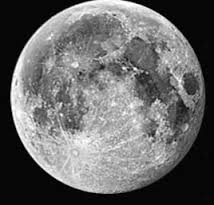
How much time between the full moon and the new moon?
3 weeks
1 month
1 week
2 weeks

