wayground logo

Lembar Kerja Gratis yang Dapat Dicetak

Ukuran huruf

S
M
L
XL
Lembar kerja

Weather Review

Total soal: 55

Worksheet time: 47mins

Nama
Kelas
Tanggal
1.
What causes Hurricanes?
a)
Warm Ocean Water
b)
Convection
c)
Tornadoes that make it to the Ocean
d)
Earthquakes in the Ocean
2.
What part of Earth recieves the most direct sunlight?
a)
The Equator
b)
The Tropics
c)
The Poles
d)
North America
3.
Convection causes Ocean and Wind currents to ...
a)
Rise from the equator to the poles
b)
Drop from the poles to the equator
c)
Die down
d)
Remain the Same
4.
The sun's energy causes heat to be redistributed around the globe through a process called...
a)
Convection
b)
Conduction
c)
Radiation
d)
Election
5.
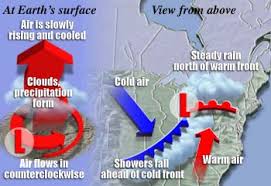
Predict what will happen to Dallas in a few days.
a)
The temperature will decrease and there will be rain
b)
The temperature will increase and there will be rain
c)
There will be a Hurricane
d)
The temperatures will remain the same
6.
where would the coldest temperatures be?
a)
North
b)
South
c)
East
d)
West
7.
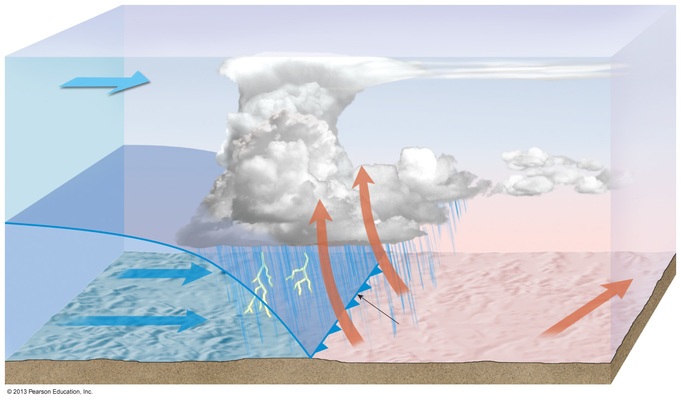
What type of storm front is this? 
a)
warm front
b)
cold front
c)
stationary front
d)
occluded front
8.
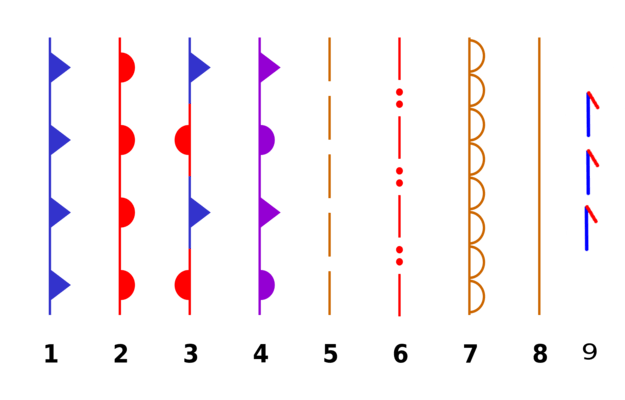
What does symbol # 3 mean?
a)
stationary front
b)
occluded front
c)
warm front
d)
cold front
9.
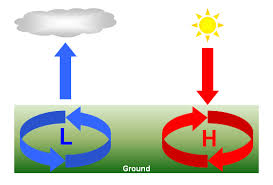
Which most likely produces clear, cool weather?
a)
zero air pressure
b)
stable air pressure
c)
a low pressure system
d)
a high pressure system
10.
_____________ air is more dense and tends to sink
a)
cold
b)
warm
c)
moist
d)
dry
11.
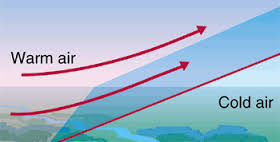
Which type of front is pictured?
a)
Cold front
b)
Warm front
c)
Occluded front
d)
Stationary front
12.
What symbol is this?
a)
warm front
b)
cold front
c)
stationary front
d)
occluded front
13.
Which system results in rainy or stormy weather?
a)
high pressure
b)
low pressure
c)
hurricane
d)
weather system
14.
Which system results in drier, fairer weather?
a)
high pressure
b)
low pressure
c)
hurricane
d)
weather system
15.
Which type of front is associated with purple humps and triangles facing the same direction?
a)
Cold
b)
Warm
c)
Stationary
d)
Occluded
16.

What type of front is shown?

a)

Warm Front

b)

Cold Front

c)

Occluded Front

d)

Stationary Front

17.

What is the energy source for the water cycle?

a)

sun

b)

wind

c)

rain

d)

oceans

18.

What are the main components of the water cycle?

a)

runoff

b)

transpiration

c)

evaporation

d)

condensation

e)

precipitation

19.

Which statement correctly describes how clouds are formed?

a)

Clouds form when a large block of ice is frozen in the sky.

b)

Clouds form when a solid changes directly to a gas through sublimation.

c)

Clouds form when water vapor condenses around tiny specks of dirt in the air.

d)

Clouds form when water vapor evaporates from a lake, river, puddle, or ocean.

20.
What part of the water cycle does this picture show?
a)
condensation
b)
precipitation
c)
evaporation
21.
Snow, sleet, hail, and rain are all examples of  ________________. 
a)
evaporation
b)
condensation
c)
accumulation
d)
precipitation
22.
What is it called when plants give off water vapor as a waste product?
a)
condensation
b)
evaporation
c)
sublimation
d)
transpiration
23.
Wind is caused mainly by air pressure differences that result from...
a)
a. uneven heating of the Earth's atmosphere.
b)
b. absorption of ultraviolet radiation by Earth's land masses.
c)
c. radiation of heat from Earth's land masses to water bodies.
d)
d. rotation of Earth on its axis.
24.
What kind of breeze is this & what time of day/night would it form?
a)
Land breeze - daytime
b)
Land breeze - nighttime
c)
Sea breeze - daytime
d)
Sea breeze - nighttime
25.
Which statement correctly defines wind?
a)
Wind is the movement of air from areas of low pressure to areas of high pressure
b)
Wind is the movement of air to a colder area in the atmosphere.
c)
Wind is the movement of air from areas of high pressure to areas of low pressure.
d)
Wind is the movement of air pushed around and bouncing off Earth's surface.
26.
The Coriolis effect causes ___________.
a)
the Earth to rotate on its axis
b)
continental deflection
c)
global winds and surface currents to move in a curved path instead of a straight line
d)
global winds and deep ocean currents to move in a curved path instead of a straight line.
27.
What impact does the Coriolis effect have upon global winds in the northern and southern hemispheres?
a)
Global winds blow counterclockwise in the northern hemisphere and clockwise in the southern hemisphere.
b)
Global winds blow clockwise in the northern hemisphere and counterclockwise in the southern hemisphere.
c)
Global winds flow clockwise in both the northern and southern hemispheres.
d)
The Coriolis effect has no impact upon global winds in the northern and southern hemispheres.
28.
The Coriolis Effect is caused by
a)
Earth rotating around the sun
b)
Earth rotating on its axis
c)
The tides
d)
Gravity
29.
Due to the Coriolis Effect, water in the northern hemisphere moves
a)
clockwise
b)
counter clockwise
c)
both
d)
neither
30.
Warm ocean currents generally come from
a)
The North Pole
b)
The South Pole
c)
The Equator
d)
Both A and B
31.
Deep Ocean currents are a result of
a)
Global Wind Patterns
b)
Earth's Rotation
c)
Density
d)
All of the above
32.

______ causes surface currents.

a)

The Coriolis Effect

b)

gravity

c)

density differences

d)

wind

33.
The large, circular surface-current pattern found in each ocean.
a)
California Current
b)
Surface Current
c)
Gyre
d)
Global Conveyor Belt
34.

What is pictured above?

a)

A world map

b)

Global Conveyor Belt

c)

Gyres

d)

Water Current Pathways

35.

Pick the correct definition of upwelling

a)

vertical movement of water towards the bottom of the ocean

b)

horizontal movement of water towards the bottom of the ocean

c)

horizontal movement of water towards the surface of the ocean

d)

vertical movement of water towards the surface of the ocean

36.
How do we characterize an air mass that forms over the ocean?
a)
Dry
b)
Wet
c)
Cold
d)
Warm
37.
Describe a continental air mass.
a)
Dry
b)
Wet
c)
Cold
d)
Warm
38.
Describe a maritime air mass.
a)
Dry
b)
Wet
c)
Cold
d)
Warm
39.
Describe a tropical air mass.
a)
Dry
b)
Wet
c)
Cold
d)
Warm
40.
What types of air masses form over oceans?
a)
Maritime
b)
Continental
c)
Polar
d)
Tropical
41.
What types of air masses form over land?
a)
Maritime
b)
Continental
c)
Polar
d)
Tropical
42.
What types of air masses would be colder?
a)
Maritime
b)
Continental
c)
Polar
d)
Tropical
43.
What's the humidity and temperature of a maritime tropical air mass?
a)
Wet and cold
b)
Dry and warm
c)
Wet and warm
d)
Dry and cold
44.

Happy weather: cold and dry

a)

low air pressure system

b)

high air pressure system

45.

Lousy weather: warm and rainy

a)

low air pressure system

b)

high air pressure system

46.

What are the elements of weather? Select all that apply.

a)

Atmospheric Pressure

b)

Wind

c)

Precipitation

d)

Humidity

e)

Temperature

47.

Which holds heat longer?

a)

Solids

b)

Liquids

c)

Gases

d)

They are are equal

48.

Which holds heat the shortest amount of time?

a)

Solids

b)

Liquids

c)

Gasses

d)

They are all the same

49.

Lake Michigan affects Mattawan's weather. What is that called?

a)

Lake Effect

b)

Lake Climate

c)

Snow Day!

d)

Precipitation

50.

Pick the best definition of inversion

a)

When warmer air acts like a lid over colder air

b)

Warm air is stuck in a valley

c)

Pollution is the main cause of inversion

51.

During inversion, is cold on the bottom or on the top?

a)

top

b)

bottom

52.

Which is lousy weather?

a)

high pressure system

b)

low pressure system

53.

Which is happy weather

a)

high pressure system

b)

low pressure system

54.

Which brings sunny weather?

a)

high pressure

b)

low pressure

55.

Tornadoes occur in primarily..

a)

Western US

b)

Central US

c)

Eastern US

d)

Southern US