
Font size
 Worksheets
biology long quiz
Total questions: 100
Worksheet time: 2hrs 40mins
Offspring that are created by sexual reproduction...
are identical to their father
are identical to both parents
have a mix of DNA from both their mother and father
have completely different DNA than either of their parents.


A population of beetles live in a forest covered in green leaves. Some are green and some are brown. After several years of drought (no rain), most of the forest has died and has no leaves. What do we expect to happen to the percentage of green beetles in the population?
The green beetle population will increase.
The green beetle population will decrease.
The green beetle population won't change.

A farmer wants to grow tomato plants that have larger tomatoes. What should he do?
Pick two tomato plants that have smaller size tomatoes and breed them.
Pick one tomato plant with large tomatoes and breed it with a plant that has small tomatoes.
Pick a tomato plant and breed it with a cucumber plant.
Pick two tomatoes plants that have larger size tomatoes and breed them.
Why do male peacocks have brightly colored feathers?
The feathers will keep away the peahens (because the peahens are afraid of the brightly colored feathers.
The feathers are used to help the peacock hunt for food. The male peacocks' feathers attract different types of insects.
They are competing for mates. The females will be attracted to the male peacocks with the biggest and brightest tail feathers.
They are competing for food. The males with the most colorful feathers will catch the most of the food such as small mammals, reptiles, small snakes, ants, millipedes, crickets, termites, centipedes, locust and scorpions.
What specialized plant structure increases the probability of successful reproduction?
Brightly colored petals
Strong roots
Dark green leaves
The ability to hold in more water
The colorful leaf-like structures of flowers
ovary
pistil
petal
stamen
The process in which an organism produces more of its own kind is called-
genetics
reproduction
adaptive behavior
offspring

The process of fertilizing flowers by transferring pollen from the male to female parts
pollination
asexual reproduction
budding
flowerization
In Asexual reproduction the offspring will be
genetically identical to the parents
genetically different from the parents
bigger and stronger then the parents
smaller and weaker then the parents
Type of asexual reproduction that produces two identical cells
vegetative propagation
binary fission
budding
regeneration
Type of asexual reproduction where the offspring grows out of the parent organism
vegetative propagation
binary fission
budding
regeneration
Type of asexual reproduction when one plant grows new plants
vegetative propagation
budding
regeneration
binary fission

A baby animal, a product of reproduction.
mammals
life cycle
offspring
decompose

An animal that has hair and feeds its young with mother's milk.
producer
mammal
carnivore
insect

To move from one place to another due to weather, breeding, or feeding.
hibernate
consumer
vacation
migrate

The place where a plant or an animal naturally lives.
habitat
ecosystem
population
community

To be hunted.
prey
predator
environment
habitat

The phases of development in all living things.
food chain
food web
life span
life cycle

A group of people, plants, or animals living in the same place.
ecosystem
community
town
habitat
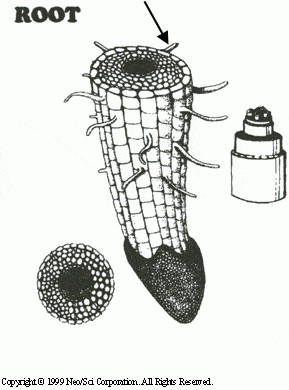
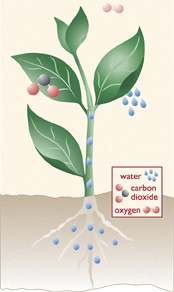
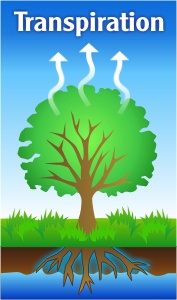
Where does sugar transport begin?
Roots
Leaves
Root hairs
Vascular bundles
What is the name of the liquid part of the blood?
Platelets
Plasma
Red blood cells
What do platelets do?
They stick together and make fibres that make scabs (blood clots) that stop pathogens entering the blood or stop you bleeding to death.
They form your immune system and destroy pathogens.
They carry oxygen around the body attached to haemoglobin.
What other names are given to red blood cells and also white blood cells?
Lymphocytes (red blood cells) and phagocytes and erythrocytes (white blood cells).
Erythrocytes (red blood cells) and phagocytes and lymphocytes (white blood cells).
Phagocyctes (red blood cells) and lymphocytes and erythrocytes (white blood cells).
What type of blood vessel surround alveoli and other tissues in the body?
Capillaries
Arteries
Veins
Why is energy required by the body?
For creating glucose and oxygen
For respiration
For movement (muscle contraction) and keeping warm.
Which part of the blood has haemoglobin?
WBCs
RBCs
Blood platelets
Plasma
________ help in the clotting of blood.
WBCs
RBCs
Platelets
Blood Plasma
Which of the following is not a function of blood?
Blood cells, especially the WBCs, help fight infections.
Blood helps to distribute the digested food to all parts of the body.
Circulation of blood helps to maintain the body temperature
Blood removes the carbon dioxide, produced during respiration.
The response to an infection. Causes the area to redden, swell, and feel warm.
Fever
Mucus
Dilation
Inflammation
Which is NOT considered FIRST line of defense?
Helper T-Cells
Skin
Hair
Mucous Membranes


True/False: Your body cannot make antibodies for pathogens that you have never been in contact with.
True, because your body needs to encounter the pathogen at least once in order to create the antibodies.
False, because you can make antibodies via immunizations given by a doctor.

What is the function of antibodies within the immune system?
Antibodies kill off any antigen that enters the body.
Antibodies are only made when you are given a vaccination for specific antigens.
Antibodies bind to specific antigens to flag for destruction.
Antibodies are part of an external defense mechanism.

What happens after the second time you are exposed to a pathogen?
The body will not be able to fight off the pathogen quickly, because it knows how to get into the body easier.
The body's immune system will react the same was as it did during the first exposure.
The body can only be exposed to a pathogen a second time if you do not have a vaccine.
The body will know how to fight off the pathogen quickly, because memory cells have been created after the first encounter.
How do T cells differ from B cells?
T cells fight pathogens by killing pathogens directly, while B cells fight pathogens by making antibodies.
T cells only make memory cells, and B cells only make antigens
T cells fight pathogens by making antibodies, while B cells fight pathogens by killing pathogens directly.
T cells can only fight off pathogens the body has encountered once, and B cells can fight off any pathogen the body comes across.

Which of the following statements is TRUE about someone's immune system that has allergies?
Body cells are dividing at an uncontrolled rate.
The body is reacting to foreign antigens that are not dangerous to most people.
T cells and B cells in the body cannot be activated.
The body is mistaking its own cells for foreign antigens.
Pathogens are...
Foreign substances that attack the body.
White blood cells that attack foreign substances that enter the body.
A type of internal defense mechanism in the immune system.
Proteins that cause disease.

These are important because they remember the pathogen for the future.
Macrophage
Lymphocyte
Memory T and B cells
Antibodies
What cell is "in charge" and identifies the specific pathogen?
B-cells
Immune response
T-cells
Macrophage

T or F - Viruses can be treated with antibiotics.
true
false

T or F - A fever can help you fight infection.
true
false

T or F - A pathogen is any living organism.
true
false

T or F - Diseases that can be spread from person to person are called non-communicable disease.
true
false

T or F - The type of pathogen that invades your cells and uses your cellular processes to make more copies of itself is a virus.
true
false


When you get cut, your skin cells release hormones that signal platelets to come and stop the bleeding. Platelets then release more hormones that signal even more platelets to help stop bleeding. The hormone signals continue growing until the cut is closed.
Positive Feedback Response
Negative Feedback Loop
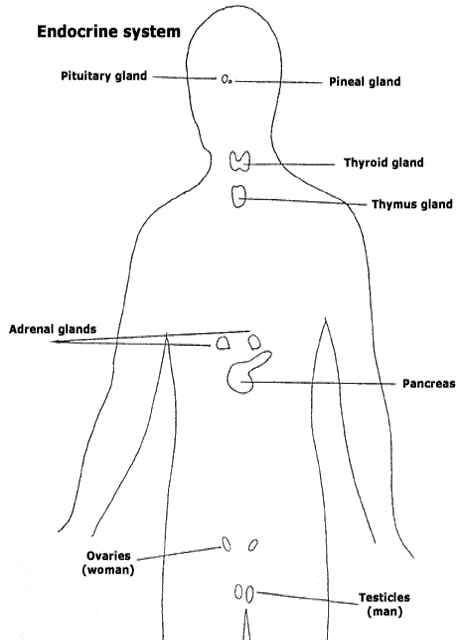
What is an example of a negative feedback mechanism?


Which system sends electrochemical messages that helps control the body's responses to internal and external changes?
nervous
endocrine
digestive
integumentary
What is the central nervous system (CNS) made up of?
brain and spinal cord
brain and cranial nerves
spinal cord and spinal nerves
cranial nerves and spinal nerves

This part of the neuron receives chemical messages from the neurotransmitters of other neurons. It is labeled A in the diagram.
Dendrite
Axon
Axon Terminal
Cell Body
These type of cells are responsible for transmitting electrical signals from nervous system to various parts of the body.
Neuron
Nerve
Villi
Somatic
Which of the following are chemicals that travel in the blood and cause changes in different parts of the body?
Hormones
Glands
Parathyroid
Adrenal Gland
When glucose levels in the blood rise, your brain sends a signal to your pancreas. The pancreas releases insulin, which opens channels in cell membranes to allow glucose to enter the cell, lowering blood sugar levels. This is an example of a:
Positive Feedback Loop
Negative Feedback Loop
When you get cut, your skin cells release hormones that signal platelets to come and stop the bleeding. Platelets then release more hormones that signal even more platelets to help stop bleeding. The hormone signals continue until the cut is closed. This is an example of what type of feedback?
Positive Feedback Response
Negative Feedback Loop
If the calcium in your blood decreases below homeostasis levels, a gland in the brain will sense the decrease and send a chemical message to your bones. Your bones will release calcium into the blood, bringing blood calcium levels back up. This is an example of what type of feedback?
Positive Feedback Response
Negative Feedback Loop
As you get dehydrated, your blood becomes thicker and harder to pump. Your kidneys will respond by stopping urine production, sending the water from urine into your bloodstream to thin your blood back to normal level. This is an example of what type of feedback?
Positive Feedback Response
Negative Feedback Loop

responds to the output from the control center
control center
receptor
thermoregulation
effector
Detects change and sends a message to the control center
receptor
control center
effector
regulation
Endothermic creatures maintain fairly consistent body temperatures. Ectothermic creatures do not. What are the best synonyms for "endothermic" and "ectothermic?"
warm-blooded and cold-blooded
land-dwelling and water-dwelling
vertebrate and invertebrate
What might happen if you didn't run a fever when you got sick?
You would recover much more quickly
Your body temperature would drop to dangerous levels
Your immune system would shut down
Your body wouldn't fight off the infection as efficiently as it could

