
 Worksheets
Space Goals 5-6 Review: Eclipses & Seasons
Total questions: 25
Worksheet time: 13mins

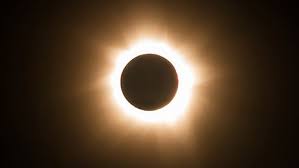
What type of eclipse is this?
Solar
Lunar


We do NOT have a lunar eclipse each month because...
The tilt of the moon's orbit is at 5 degrees
The moon is too small
The moon's orbital distance changes
All choices
Is every solar eclipse a total eclipse?
Yes
No
What is the outer, lighter part of a shadow called?
the umbra
the penumbra

What type of eclipse is this?
Solar
Lunar
What happens during a solar eclipse?
The sun passes between the earth and the moon, casting a shadow on the moon.
The moon passes between the sun and Earth, casting a shadow on Earth.
The moon passes through the earth's shadow, casting a shadow on the moon..
What happens during a lunar eclipse?
The sun passes between the earth and the moon, casting a shadow on the moon.
The moon passes between the sun and Earth, casting a shadow on Earth.
The moon passes through the earth's shadow, casting a shadow on the moon.


The earth's axial tilt causes...
the amount of solar energy we have.
the earth's distance from the sun to change (not its axis)
day and night.
moon phases.
What would seasons be like if Earth's axis were straight up and down?
There would still be summer, fall, winter, and spring, just like what we have now.
Seasons would be more extreme.
Earth would have the same season all year
Choose TWO reasons that the earth has seasons.
The rotation of the earth.
The revolution of the earth.
The earth's axial tilt.
Moon phases
What determines what season it is?
How close the earth is to the sun.
How much direct or indirect light a part of Earth receives.
What time off day it is.
How hot it is.
When would a part of the earth receive more direct light?
When it's tilted away from the sun.
When it's tilted toward the sun.
When it is neither tilted toward or away from the sun.

What season is the northern hemisphere getting indirect light?
A. Summer
B. Fall
C. Winter
D. Spring
What image would best describe the solar intensity during summer?


Which image best shows what a shadow would look like in winter?


Why is it hot during the summer?
Indirect light
The sun is lower in the sky for less time
Earth is closer to the sun
The sun is higher in the sky for longer

Which season would the northern hemisphere experience in position 3?
Winter
Spring
Summer
Fall

