wayground logo

Free Printable Worksheets

NEW

Font size

S
M
L
XL
Worksheets

Unit 2 Review

Total questions: 50

Worksheet time: 50mins

Name
Class
Date
1.

The nucleus of an atom contains which subatomic particles?

a)

protons and electrons

b)

protons and neutrons

c)

electrons and neutrons

d)

protons, electrons, and neutrons

2.

Which subatomic particle is counted to determine the type of element the atom represents?

a)

proton

b)

neutron

c)

electron

d)

boron

3.

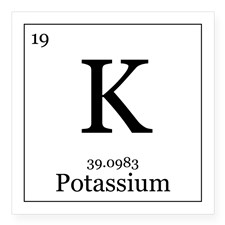
How many neutrons are in the atom "K"?

a)

29

b)

19

c)

58

d)

20

4.
Adding or subtracting neutrons (charge = 0, mass = 1) makes the element change into an...
a)
ion
b)
mixture
c)
isotope
d)
neutral atom
5.
The atomic mass is equal to _.
a)
the number of protons only
b)
the number of neutrons only
c)
the total number of protons and neutrons
d)
the number of protons, neutrons, and electrons.
6.
An atom that has gained or lost electrons is called ...
a)
a winner
b)
an isotope
c)
an ion
d)
a loser
7.

Which subatomic particle has a negative charge?

a)

proton

b)

neutron

c)

electron

d)

cybertron

8.

What is the center of an atom called?

a)

The headquarters

b)

The centrometer

c)

The hypothesis

d)

The nucleus

9.

Which color on the image of the periodic table corresponds with the halogens.

a)

red

b)

black

c)

blue

d)

orange

10.

Which color on the image of the periodic table corresponds with the lanthanides.

a)

red

b)

black

c)

blue

d)

orange

11.

Which color on the image of the periodic table corresponds with the transition metals.

a)

red

b)

black

c)

blue

d)

orange

12.

Horizontal rows on the periodic table are called ___?

a)

groups

b)

periods

c)

rows

d)

families

13.

The periodic table is mostly comprised of what type of element?

a)

Metals

b)

Nonmetals

c)

Metalloids

14.

When a halogen such as Chlorine, combines with an alkali metal to produce a what?

a)

compound

b)

salt

c)

mineral

d)

acid

15.
As you move down the periodic table atoms get bigger.  This is because ____________.
a)
The atoms have more mass.
b)
The atoms have more protons.
c)
The atoms have more energy levels
d)
The atoms have more nuetrons
16.
Atoms that have a high electronegativity, _______________.
a)
give up their electrons more easily.
b)
hold on to their electrons more tightly.
c)
have more electron shells.
17.
Ionization energy is...
a)
the energy required to add an electron to a specific atom
b)
how much energy it takes to remove an electron from an atom
c)
the energy required to shield the outer electrons from the nucleus
d)
a measure of the ability of an atom to attract electrons
18.

Atomic radius generally increases as we move __________.

a)

down a group and from right to left across a period

b)

up a group and from left to right across a period

c)

down a group and from left to right across a period

d)

up a group and from right to left across a period

19.

Electronegativity __________ from left to right within a period and __________ from top to bottom within a group.

a)

decreases, increases

b)

increases, increases

c)

increases, decreases

d)

stays the same, increases

20.
Which element has the smaller atomic radius: potassium (K) or bromine (Br)?
a)
potassium (K)
b)
bromine (Br)
21.

How many dots would you put around carbon, a group 14 element?

a)

4

b)

6

c)

8

d)

18

22.

This is a correct dot diagram for neon (Ne)

a)

true

b)

false

23.

How many electrons should sodium, atomic number 11, have around its Lewis dot model?

a)

1

b)

2

c)

3

d)

4

24.
According to the octet rule most elements need _______ valence electrons.
a)
2
b)
8
c)
6
d)
18
25.

What is a valence electron?

a)

electron found in a middle shell

b)

electron found in outermost shell

c)

electron found in innermost shell

d)

electron not found in a shell

26.

Ionic bonding involves

a)

transfer of electrons

b)

sharing of electrons

c)

holding onto electrons

d)

electrons are not involved

27.

What usually forms a positive ion?

a)

metal

b)

nonmetal

c)

metalloid

d)

there is no way to tell

28.

What is the correct Lewis Dot Structure for ammonia NH3

a)
b)
c)
d)
29.
What atom matches this electron configuration?
1s22s22p63s23p64s23d10
a)
Zinc
b)
Copper
c)
Nickel
d)
Germanium
30.
What electron configuration matches an oxygen atom?
a)
1s22s22p63s2, 3p64s23d104p5
b)
1s22s22p4
c)
1s22s22p6
d)
1s22s22p63s23p64s23d1
31.
How many electrons can the first energy level hold?
a)
1
b)
2
c)
8
d)
0
32.
The electron configuration of an atom is 1s22s22p6.  The number of electrons in the atom is 
a)
3
b)
6
c)
8
d)
10
33.
This orbital diagram represents:  
a)
C
b)
B
c)
N
d)
O
34.
What is incorrect about this orbital diagram?
a)
Both arrows in the 2p box should be pointing up
b)
There is nothing incorrect with this diagram
c)
In the 2p box there should only be 1 electron in the first 2p box and one in the 2nd 2p box
d)
All the arrows should be pointing up.
35.
What is the name of K2O?
a)
dipotassium monoxide
b)
dipotassium oxygen
c)
Potassium oxide
d)
Potassium oxygen
36.
What is the formula for sulfur pentoxide?
a)
SO2
b)
SO3
c)
SO4
d)
SO5
37.
What is the formula for Calcium Chlorate? (refer to your polyatomic ions sheet)
a)
CaClO3
b)
Ca(ClO3)2
c)
Ca(ClO3)3
d)
Ca(ClO3)4
38.

What is the name of the following formula: Cu3N

a)

copper nitride

b)

copper (iii) nitride

c)

copper (i) nitride

d)

copper (iii) nitrogen (i)

39.

The name of FeCl₂ is

a)

iron chloride

b)

iron (II) chloride

c)

iron (I) chloride

d)

iron dichloride

40.
What is the name of NH4Cl?
a)
nitrogen tetrahydrogen chloride
b)
ammonium chlorine
c)
ammonium chloride
d)
ammonium chlorate
41.

The proper formula for magnesium hydroxide:

a)

MgOH

b)

Mg2OH

c)

Mg(OH)2

d)

Mg2OH2

42.
Fe +2  and  SO4 -2
a)
FeSO4
b)
Fe4(SO4)2
c)
FeSO2
d)
correct answer is not given
43.
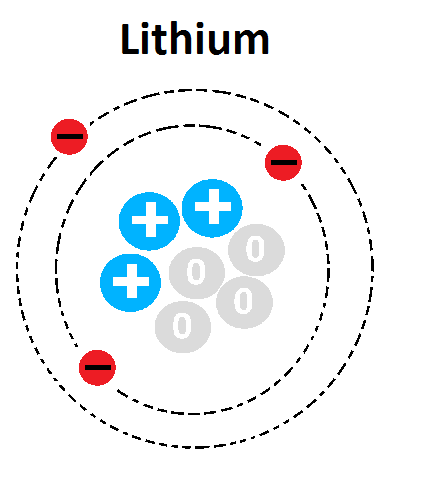
What is the mass number of this atom?
a)
1
b)
3
c)
4
d)
7
44.
What group does this element belong to?
a)
Group 1: Alkali metals
b)
Group 18: Noble Gases
c)
Group 2: Alkaline-Earth Metals
d)
Group 17: Halogens
45.
How many valence electrons?
a)
2
b)
3
c)
5
d)
10
46.

Name this element.

a)

Neon

b)

Magnesium

c)

Sodium

d)

Manganese

47.
How did Rutherford discover the proton?
a)
Cathode tube ray experiment
b)
Gold Foil Experiment
c)
Planetary Model
d)
Plum Pudding Model
48.
He developed the planetary model of the atom.
a)
Rutherford
b)
Bohr
c)
Chadwick
d)
Dalton
49.

He claimed that matter was made of small, hard particles that he called “atomos.”

a)

Democritis

b)

Dalton

c)

Moseley

d)

Einstein

50.

John Dalton stated:

a)

Atoms are tiny, invisible particles.

b)

Atoms of one element are all the same.

c)

Atoms of different elements are different.

d)

Compounds form by combining atoms.

e)

All of the statements listed.