Wayground logo

Free Printable Worksheets

Font size

S
M
L
XL
Worksheets

5th Grade 2nd Quarter Exam Review

Total questions: 40

Worksheet time: 34mins

Name
Class
Date
1.

A student creates a mixture by pouring 30 grams of salt into a beaker that contains 200 grams of water. She stirs the mixture until she can no longer see any pieces of salt in the water.

What is the mass of the mixture of salt and water after the matter was mixed well?

a)

30 grams

b)

200 grams

c)

230 grams

d)

170 grams

2.

A student creates a mixture by pouring 30 grams of salt into a beaker that contains 200 grams of water. She stirs the mixture until she can no longer see any pieces of salt in the water. What has the student made?

a)

a heterogeneous mixture

b)

a homogeneous mixture

3.

A student creates a mixture by pouring 30 grams of salt into a beaker that contains 200 grams of water. She stirs the mixture until she can no longer see any pieces of salt in the water. What happened to the salt?

a)

it was destroyed

b)

it sank to the bottom of the beaker

c)

it dissolved

d)

it evaporated

4.

An effervescent tablet and water are weighed. Then the tablet is placed in water in this open container. Will the mass of the substances remain the same after 10 minutes?

a)

No, because the matter is being destroyed.

b)

No, because the gas being formed is escaping into the air.

c)

Yes, it is a heterogeneous mixture

d)

Yes, because it is in a closed container and the gas cannot escape.

5.

What caused the balloon to inflate?

a)

melted water from the dry ice

b)

released gas from the melted dry ice

c)

magic

6.

What happened to the balloon?

a)

the gas increased the balloon's mass, but not its volume

b)

the gas decreased the balloon's mass and size

c)

the gas increased the balloon's volume, but it lost some of its mass

d)

the gas increased the balloon's volume, but the mass stayed the same

7.

What type of change is this an example of?

a)

a physical change

b)

a chemical change

8.

What will the mass of the substance be after mixing?

a)

200 grams

b)

250 grams

c)

300 grams

d)

350 grams

9.

What type of change occurred in the beaker?

a)

physical change

b)

chemical change

10.

This diagram is an example or which of the following?

Select all that apply. (multiple select)

a)

Law of conservation of mass

b)

a heterogeneous mixture

c)

a new substance being formed

d)

physical change

e)

chemical change

11.
Matter can not be created nor destroyed: it can only be
a)
Destroyed a little bit
b)
Invisible
c)
Transformed, changed
d)
None of the above
12.
A precipitate is a 
a)
liquid that forms when two solids are reacted
b)
a solid that forms when two liquids are mixed
c)
a gas that forms when vinegar and baking soda react
d)
a change of color in a solution
13.
What will weigh more when a chemical change is complete?  The reactants before the chemical reaction, or the product after the reaction is complete?
a)
They both will weigh the same
b)
The product always weighs more than the reactant
c)
The reactant will weigh more than the product
d)
They both will loose mass after the reaction
14.
This type of system allows matter to flow freely in and out...
a)
Closed System
b)
Open System
15.
A boiling pot with a lid on it to keep in the energy is what type of system?
a)
Closed System
b)
Open System
16.
What is the Law of Conservation of mass?
a)
Mass is created in a chemical reaction
b)
Mass is created in a physical change
c)
New chemicals formed from a chemical reaction have a larger overall mass than the original reactants
d)
Mass is never created or destroyed
17.
A combination of 2 or more ingredients where each keep their own physical properties and can be easily separated.
a)
solution
b)
dissolve
c)
mixture
d)
saltwater
18.
The part of a solution that dissolves.
a)
mixture
b)
solute
c)
solvent
d)
liquid
19.
A solution is a mixture of one or more substances _________ evenly into another substance.
a)
dissolved
b)
evaporated
c)
carried
d)
split
20.
The amount of matter something contains is its ______________.
a)
gas
b)
solid
c)
weight
d)
mass
21.
a)

solute

b)

solvent

22.
a)

solvent

b)

solute

23.
a)

solvent

b)

solute

24.
What is a solvent?
a)
The substance that does the dissolving in a solution.
b)
The substance that is being dissolved in a solution.
c)
The mixing of different substances.
d)
The process in which neutral molecules lose or gain electrons
25.

What type of mixture would coffee be?

a)

homogeneous

b)

heterogeneous

26.

What type of mixture would fruit salad be?

a)

homogeneous

b)

heterogeneous

27.
Chicken noodle soup is an example of a
a)
homogeneous mixture
b)
heterogeneous mixture
28.
Soil is an example of a
a)
homogeneous mixture
b)
heterogeneous mixture
29.

Which of these is true about a heterogeneous mixture?

a)

every sample that you take is the same

b)

every sample that you take is the same color

c)

all samples are edible (able to be eaten)

d)

every sample you take is different

30.

Homogeneous mixture can be in solid, liquid or gas. Steel the most common material used in the production of wheel is an alloy of iron and carbon. What is an alloy? A mixture of ____.

a)

solid and liquid components

b)

two objects

c)

different liquid components

d)

a mixture of different metals

31.

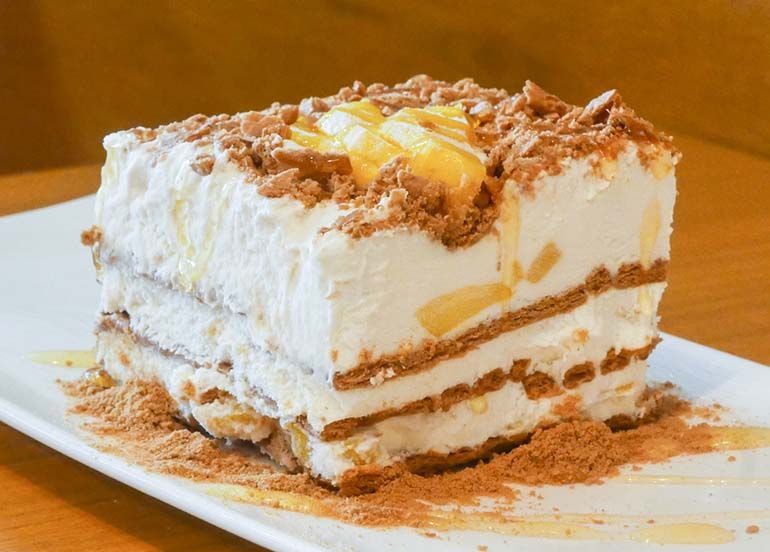
One famous heterogeneous mixture is mango float or crema de mangga. It is a Filipino icebox cake dessert made with layers of graham crackers, whipped cream, condensed milk, and ripe mangoes. Which statement below best describes mango float?

a)

The components of of mango float such as mango, whipped cream and milk are still recognizable even after the mixing procedure.

b)

The components of of mango float such as mango, whipped cream and milk are no longer recognizable even after the mixing procedure.

c)

Mango float is a heterogeneous mixture because after the mixing procedure, the parts are not anymore uniform in appearance.

d)

Mango float is a heterogeneous mixture because after the mixing procedure, there are few recognizable components or substances.

32.
An investigation of the Earth’s geosphere would include the exploration of which of the following features?
a)
Glaciers, rivers, and oceans
b)
Plants, animals, and fungus
c)
Rock, soil, and sediments
d)
Nitrogen, oxygen, and carbon dioxide
33.
Which of the following provides the best example of an interaction between the hydrosphere and the atmosphere?
a)
Carbon dioxide gas is released into the air by living things.
b)
Consistent patterns of wind change the shape of landforms.
c)
The oceans release heat energy that makes climate milder.
d)
Water vapor in the air is taken into plants through their leaves.
34.
When a volcanic eruption spews gases and ash into the air, which two spheres are interacting?
a)
Hydrosphere and geosphere
b)
Biosphere and geosphere
c)
Geosphere and atmosphere
d)
Biosphere and atmosphere
35.
The ___________ is the sphere that contains all of the earth’s rocks below the earths first surface 
a)
Hydrosphere
b)
Atmosphere
c)
Geosphere
d)
Biosphere
36.
I consist of you, plants, animals, and everything that is living on earth. Which sphere am I? 
a)
Hydrosphere
b)
Biosphere
c)
Atmosphere
d)
Geosphere
37.
An example of biosphere connecting to atmosphere is...
a)
Plants produce oxygen
b)
Animals eat plants
c)
Animals live in caves
d)
Animals drink water
38.
This part of the Earth System includes the crust, mantle, and core.
a)
Geosphere
b)
Atmosphere
c)
Hydrosphere
d)
Biosphere
39.
This part of the Earth System includes the gases that surround the earth.
a)
Geosphere
b)
Atmosphere
c)
Hydrosphere
d)
Biosphere
40.

A scientist collects water samples from a river near a volcano. This scientist is collecting data about the _______

a)

hydrosphere

b)

geosphere

c)

atmosphere

d)

biosphere