
 Worksheets
Art Semester Review 1
Total questions: 30
Worksheet time: 16mins
Name
Class
Date
1.

What element of art is best represented in this picture?
a)
Line
b)
Form
c)
Value
2.
Which element of art is 3 dimensional
a)
shape
b)
form
c)
line
3.

This Principle of Design is the path the viewer’s eye takes through the work of art, often to focal areas. It can be directed along lines, edges, shape, and color within the work of art.
a)
Movement
b)
Repetition
c)
Unity
d)
Emphasis
4.

This Principle of Design make the work of art seem active. The replication of elements of design creates unity within the work of art.
a)
Repetition
b)
Variety
c)
Rhythm
d)
Proportion
5.
The focal point of the design which captures the viewer's attention.
a)
Balance
b)
Repetition
c)
Emphasis
d)
Unity
6.

When mixing a primary and a secondary color together, you get a_____________
a)
Triad
b)
Cool Color
c)
Tertiary
d)
Secondary Primary
7.
A pure color is a:
a)
Tint
b)
Tone
c)
Shade
d)
Hue
8.
What is created when light is reflected off a surface?
a)
Sparkles
b)
Lines
c)
Color
9.
The area in and around objects.
a)
Space
b)
Shape
c)
Line
10.

What are these called?
a)
Tertiary Colours
b)
Secondary Colours
c)
Primary Colours
11.
What are the primary colors?
a)
blue, green, violet
b)
red, yellow, blue
c)
orange, green, violet
d)
red, orange, green
12.

What principle does this image demonstrate?
a)
Pop Art
b)
Variety in shape and color
c)
Flowers make good subjects in art
13.

What is the emphasis of this photograph?
a)
The green apples around the pepper
b)
The red pepper in the center
c)
The little man peeking through the apples
14.

the way something looks like it feels
a)
implied texture
b)
actual texture
c)
feeling
d)
real texture
15.

What element of art is best represented in this picture?
a)
Shape
b)
Line
c)
Texture
d)
Color
16.

What is the primary element(s) of art used in this painting by Kandinsky?
a)
Shape
b)
Shape and Space
c)
Space and Color
d)
Line and space
17.

Element of Design: Hue. May be complementary, analogous, primary, secondary, tertiary, or part of a color wheel.
a)
Shape
b)
Color
c)
Line
d)
Form
18.
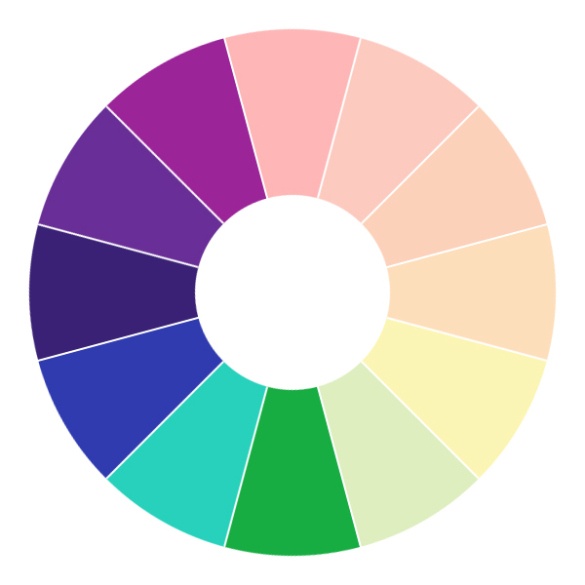
Blues, Greens, and Violets depict feelings of coolness, relaxation, and zen. These colors are also known as:
a)
Warm Colors
b)
Cool Colors
c)
Tertiary Colors
d)
Analogous Colors
19.
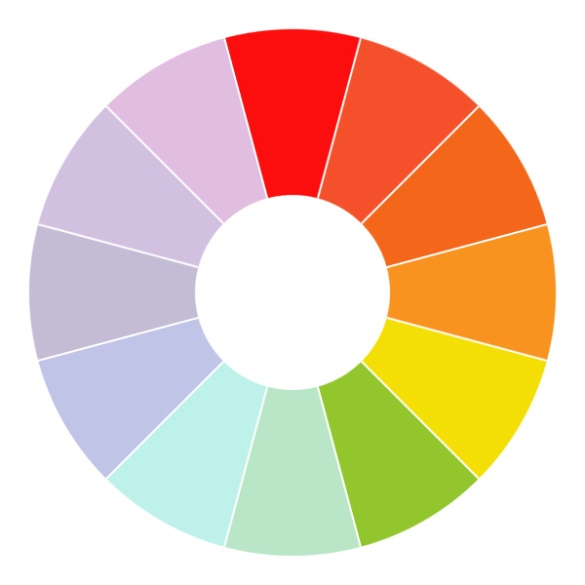
Reds, Yellows, and Oranges depict feelings of heat, passion, and intensity. These colors are also known as:
a)
Cool Colors
b)
Primary Colors
c)
Secondary Colors
d)
Warm Colors
20.
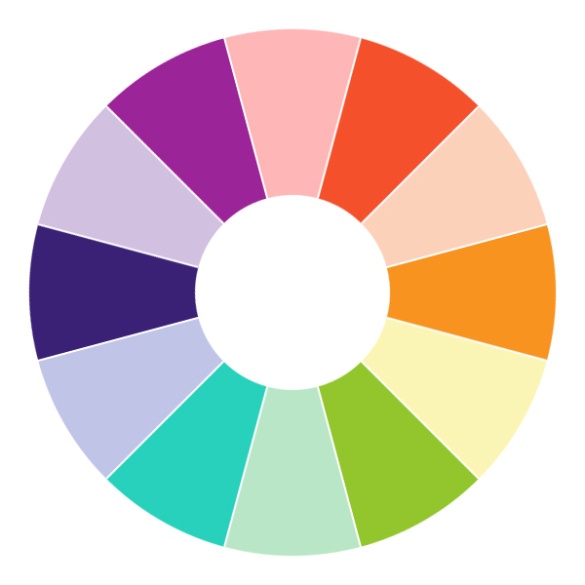
These colors are created after mixing a Primary and a Secondary color together:
a)
Analogous Colors
b)
Tertiary Colors
c)
Complementary Colors
d)
Warm Colors
21.

What is the color scheme?
a)
Complimentary
b)
Analogous
22.
What is special about Secondary Colors?
a)
They are made from Primary Colors
b)
They CANNOT be made
c)
They do not exist
23.
What are Complimentary Colors?
a)
Blue & Orange
b)
Purple & Yellow
c)
Red & Green
d)
All of the above
24.
The lightness and darkness of a color.
a)
tint
b)
shade
c)
intensity
d)
value
25.
A technique for shading using parallel lines that cross over other parallel lines.
a)
cross hatching
b)
scrumbling
c)
hatching
d)
blending
26.
What determines the direction of a shadow?
a)
the perspective of the artist
b)
light source
c)
size of the object
d)
all of these
27.
Which tool can help you add highlights or lighten values?
a)
eraser
b)
blending stump
c)
tortillion
d)
pencil
28.

Which shading technique is shown?
a)
blending
b)
stippling
c)
hatching
d)
cross hatching
29.

Which shading technique is shown?
a)
blending
b)
stippling
c)
hatching
d)
cross hatching
30.
Light (real or imaginary) that creates shadows and highlights.
a)
light source
b)
sun shine
c)
flashlight
100 %

