wayground logo

Free Printable Worksheets

NEW

Font size

S
M
L
XL
Worksheets

Revision on Scary Tales

Total questions: 63

Worksheet time: 40mins

Name
Class
Date
1.
The author's viewpoint is that Scary Tales
a)
are a punishment for liars.
b)
are good for children.
c)
are difficult to tell. 
d)
are usually also funny.
2.
The author says she enjoys scary stories because
a)
they helped her grandfather recover from illness. 
b)
she wants junior high students to listen to her. 
c)
she likes to get attention. 
d)
her grandfather liked them. 
3.
In lines 8-9, when the author's grandmother says, "Hold it, let me leave the room, lightning's going to strike,” she means that 
a)
there is a severe storm in the area.
b)
the story Granddaddy will tell is about lightening.
c)
the story that Granddaddy is about to tell is a lie.
d)
she needs an excuse to leave the room.
4.
What is the author's counterargument to those who say she should not tell scary stories to children?
a)
Children are like mules that are too stubborn to listen.
b)
Children enjoy bedtime stories told by adults.
c)
Children can frighten themselves, even without scary stories.
d)
Children need to hear stories so they can get to sleep.
5.
What does the author mean in lines 37–42 when she says, “What is my branch? A good scary story”?
a)
A scary story can be dangerous.
b)
A scary story can be dangerous.
c)
A scary story is a good attention-getter.
d)
A scary story is a branch of literature.
6.
Why does the author say it is important not to “lose your sense of fear”?
a)
It helps her to remember her grandfather.
b)
It is helpful in dealing with children.
c)
It leads people to be more cautious.
d)
It makes people sleep better at night.
7.
What evidence does the author cite to prove that scary tales do not harm children?
a)
She tells about the scary tales that she heard as a child.
b)
She points out that junior high students are like mules.
c)
She explains that “fools rush in where angels fear to tread.”
d)
She says “you should think twice before you go into the woods.”
8.
Which is an example of the author's informal style?
a)
“Children need to be frightened.”
b)
“I'd get closer to Pa ‘cause I wanted to watch the people listening to him.”
c)
“He wanted me to know that only fools rush in where angels fear to tread.”
d)
“I loved those days when Grandpa told his scary stories.”
9.
“I loved those days when Grandpa told his scary stories.”
a)
get their attention.
b)
make them afraid of her.
c)
prove that fear is a good thing.
d)
help them cope with their emotions.
10.
 Which example shows that the author has a humorous style?
a)
“He was sick a lot, but if visitors came, he'd prop himself up in an armchair and put a quilt on his lap.”
b)
“When you don't exercise it, you lose your sense of fear. That's why my granddaddy told me scary stories.”
c)
“So I remained fat for the rest of my life. That's why no monsters have ever bothered me.”
d)
“Children can frighten themselves without your help. When they're alone in bed they hear thing and they see things.”
11.
Why does the author say it is important not to "lose your sense of fear"?
a)
It helps her to remember her grandfather. 
b)
It leads people to be more cautious. 
c)
It is helpful in dealing with children.
d)
It makes people sleep better at night. 
12.
What does the author mean in lines 37-42 when she says, "What is my branch? A good scary story"?
a)
A scary story is a good attention-getter. 
b)
A scary story is a branch of literature. 
c)
A scary story can be dangerous. 
d)
A scary story affects listening skills. 
13.
The author tells scary tales to sixth through graders to 
a)
make them afraid of her. 
b)
prove that fear is a good thing. 
c)
get their attention.
d)
help them cope with their emotions.
14.
What evidence does the author cite to prove that scary tales do not harm children?
a)
She tells about the scary tales that she heard as a child. 
b)
She says " you should think twice before you go into the woods."
c)
She explains that "fools fush in where angels fear to tread."
d)
she points out that junior high students are like mules. 
15.
What evidence in the text suggests that the author's grandfather was a good storyteller?
a)
He knew his stories were harmless and wouldn't hurt a flea.
b)
He knew how to get a reaction from his listeners "at just the right moment in the story" (lines 22-26).
c)
"Mr. Hall wears a rug. I didn't know what a rug was" but I knew Pa would tell me (lines 14-15)
16.
Which is an example of the author's informal style?
a)
"Children need to be frightened."
b)
"He wanted me to know that only fools rush in where angels fear to tread."
c)
"I'd get closer to Pa 'cause I wanted to watch the people listening to him."
d)
"I loved those days when Grandpa told his scary stories."
17.
What is the author's counterargument to those who says she should not tell scary stories to children? 
a)
Children are like mules that are too stubborn to listen.
b)
Children need to hear stories so they can get to sleep.
c)
Children enjoy bedtime stories told by adults. 
d)
Children can frighten themselves, even without scary stories. 
18.
According to the author, how are scary stories helpful to children?
a)
Scary stories are beneficial to make kids braver. 
b)
Emotion "should be exercised" and that scary stories provide that exercise. She says that scary stories are a reminder that exercise. She says that scary stories are a reminder that it is sometimes important "to think twice" and be "cautious" (lines 52-59).
c)
Scary stories help kids realize that this are actual stories and that it is real and not fictitious. 
d)
Scary stories make kids grow mature faster. 
19.

Mood is mainly about the feelings of the ....

a)

Author

b)

Audience

c)

Characters

d)

No one

20.

Tone is mainly about the feelings of the...

a)

Audience

b)

Author

c)

Characters

d)

No one

21.

When an author uses figurative language in their writing this is an example of what author's style technique?

a)

Word Choice

b)

Mood

c)

Tone

d)

Sentence fluency

22.
Diction refers to...
a)
An author's style
b)
An author's choice of words and syntax
c)
An author's tone
d)
An author's perspective
23.
Author's perspective refers to the unique combination of...
a)
ideas, values and beliefs
b)
tone, diction, and voice
c)
tone, purpose, and syntax
d)
voice, style, and imagery
24.
Syntax is...
a)
An author's word choice
b)
the author's attitude
c)
The personality that comes across on the page
d)
an arrangement of words into sentences
25.
Look at the following excerpt from Gloria Naylor:
"She loaded that baby down with every name in the book: Charles Somebody Harrison Somebody-Else Duvall.  We called him Chick.  That's what he looked like, toddling around: little pecan head sitting on a scrawny neck, two bright buttons for eyes, and a feathery mess of hair she couldn't keep slicked down for nothing."
Which of the following best describes her style?
a)
formal and ornate
b)
playful and informal
c)
confusing and serious
d)
loving and nostalgic 
26.
The writer's position or opinion on an issue. 
a)
claim
b)
counterclaim
c)
reasons
d)
evidence
27.
Why the writer believes his or her claims. 
a)
claim
b)
counterclaim
c)
reasons
d)
evidence
28.
Support reasons and include examples, anecdotes, statistics, and facts. 
a)
claim
b)
counterclaim
c)
reasons
d)
evidence
29.
Disproves the opposing viewpoint and explains why the writer's position is better. 
a)
claim
b)
counterclaim
c)
reasons
d)
evidence
30.
Statements that can be proved and statements expressed in numbers. 
a)
facts and statistics
b)
examples
c)
expert opinions
d)
anecdotes
31.
A quote from a scholar or someone who has in-depth knowledge of a subject. 
a)
facts and statistics
b)
examples
c)
expert opinions
d)
anecdotes
32.
A brief story that illustrates a point. 
a)
facts and statistics
b)
examples
c)
expert opinions
d)
anecdotes
33.
Where does the claim most often appear in an argument?
a)
In the beginning
b)
In the middle
c)
In the first sentence
d)
In the conclusion
34.
Which is NOT a reason to evaluate an argument?
a)
Change viewpoints 
b)
Confirm ideas about a topic 
c)
Help to bring about change
d)
So you can win 
35.

The last sentence in the introductory paragraph which states the writer's position

a)

argument

b)

claim

c)

topic sentence

d)

rebuttal

36.

These are examples of which parts of the argument?

Some people may say that cats are better pets than dogs; however, dogs are more playful and loyal than cats.

a)

claim; call to action

b)

hook; bridge

c)

counter-argument; rebuttal

d)

claim; topic sentence

37.

The response to the counter-argument.

a)

rebuttal

b)

call to action

c)

topic sentence

d)

call to action

38.

The sentence in a paragraph that tells what a body paragraph will be about.

a)

claim

b)

call to action

c)

rebuttal

d)

topic sentence

39.

A statement acknowledging what the other side of an issue will say.

a)

rebuttal

b)

claim

c)

hook

d)

counter-argument

40.

This is an example of a __________________.

The hero in the story changed the lives of others through his courage and dedication to others.

a)

claim

b)

topic sentence

c)

call to action

d)

rebuttal

41.

This is an example of a _____________________

Some may say that language arts is not the best subject;

a)

claim

b)

topic sentence

c)

ethos

d)

counter-argument

42.

The children ____ at 7 a.m. everyday.

a)

get up

b)

gets up

43.

Kathy ____ TV everyday after work.

a)

watch

b)

watches

44.

My friend ____ on my street a few blocks away.

a)

live

b)

lives

45.

My grandmother ____ to the grocery store every Saturday.

a)

go

b)

goes

46.

My next door neighbor ____ dinner every night.

a)

cook

b)

cooks

47.
1.   There _______ five puppies for sale because the couple already has ten puppies.
a)
are
b)
is
48.
6. That red-haired lady in the fur hat ___________across the street. 
a)
live
b)
lives
49.
The boys with the two Mustangs _______ at school late every single day.
a)
arrive
b)
arrives
50.
That student in two of my classes always ______ his  homework.
a)
d0
b)
does
51.
When students ______ to Harmon for third period, there _____ no opportunities to attend tutorials.
a)
goes, is
b)
go, are
c)
goes, are
d)
go, is
52.
Whenever Jose ____ to Physical Education, he never _________ out.
a)
go....dresses
b)
goes....dress
c)
goes...dresses
d)
go....dress
53.
Alejandra and Jasmine ________ to go shopping and _________  two pairs of shoes each.
a)
plans, purchases
b)
plan, purchases
c)
plans, purchase
d)
plan, purchase
54.
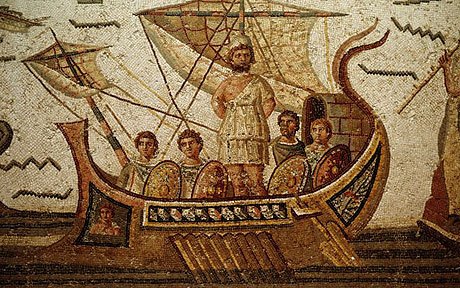
After the Trojan War, Odysseus and his men (is, are) trying to get home to Ithaca. 
a)
Are
b)
Is
55.

Either Uncle Jack or Aunt Alexandra (is arriving, are arriving) to Bangkok today.

a)

are arriving

b)

is arriving

56.
Each of us ____ how to play baseball.
a)
knows
b)
know
c)
is knowing
d)
nose
57.
The coffee and the donuts ____ gone.
a)
is
b)
are
c)
be
d)
has
58.
Either the trash can or your socks _________ horrible.
a)
smells
b)
smell
c)
smels
d)
smel
59.
None of the trucks _____ arrived yet.
a)
has
b)
have
60.

Both my boss and her partner ___________ coins.

a)

collecting

b)

collects

c)

collect

d)

collected

61.

Every student and teacher _______ given a flower at assembly.

a)

has

b)

were

c)

was

62.

Neither Lois nor Jude ________ able to finish the puzzle.

a)

was

b)

were

63.

Neither the teacher nor the student _______ prepared for the listening exam.

a)

were

b)

was