
 Worksheets
Customer Engagement class activity
Total questions: 65
Worksheet time: 43mins
What is the first script should come out from our mouth when customer came in?
Good morning Sir/Ms, how can I help you?
Good morning Sir/Ms, are you coming for service today?
Good morning Sir/Ms, do you have an appointment today?
Good morning Sir/Ms
"The way that we see something based on our experience" is the meaning of...........
perception
expectation
analytical
assumption
What is company image?
The way the company takes pictures
The way the company is seen by others and represents itself
How many likes the company gets on social media
The type of logo they have
What is often the result of positive customer/client relations?
Additional stress
More competition
Repeat business
Increased training
What is essential to growth?
Short term interactions
Events
Long term interactions
Financial interest
What happens when you do not see the big picture?
Opportunities are focused
Opportunities are overlooked
Nothing
Growth is enhanced
Which areas of business need to be monitored?
Successful
Unsuccessful
Successful and unsuccessful
None
How can the salesperson try to reduce the number of customer complaints about the products customers buy?
By using high-pressure selling techniques
By identifying the customer's real needs
By approaching customers as soon as possible
By advising the customer from personal experience
Customer Engagement is
the ongoing interactions between a company and the customer
like customer service
reactive
a term used to describe the advice or assistance a company gives its customers
A customer is defined as
Someone that visits your company regularly
A buyer
One that purchases a commodity or service
One that cares for you and your company's needs
The goal of Customer Engagement is
An increase in revenue
Brand Loyalty
a sustainable business model
to find the customer
There are 2 types of customer engagement. These are
over the phone and face to face
Online and Offline
In store and Out of Store
Good and Bad
Engagement means
Tending to draw favorable attention or interest
A agreement to take someones hand in marriage
An agreement to meet with someone at a specified time
To engage with a customer
Customer Service is Customer Engagement
True
False
An example of customer engagement is
Social media listening
Accepting complaint calls from customers
Responding immediately to users' comments related to current posts
Posting to social media
How does solving difficult-customer situations benefit your company?
It will generate repeat business.
The difficult customers won’t bother you again.
You will get a promotion.
All the employees will get promotions.
How does solving difficult-customer situations benefit you personally?
You will encounter difficult customers less frequently.
Your customers will be happier.
You gain valuable communication skills.
Your boss will automatically give you a raise.
Stacey works at a fancy gift shop. Many of the items in the shop are expensive collectibles, and Stacey is very knowledgeable about them. Today, a man comes in looking for a gift for his wife. Stacey offers to help, but he just grunts at her and turns his back. Stacey’s customer is
impatient.
insulting.
leave-me-alone.
argumentative
Jonathan works in his small town’s only grocery store. He is on a first-name basis with most of the customers who come in. Cheryl is a difficult customer. Sometimes she’s really friendly, and other times she snaps at Jonathan. She is a(n) __________ customer.
irritable/moody
suspicious
slow/methodical
dishonest
Darcie is a lifeguard at the local beach. Sometimes, she has to blow her whistle to signal to swimmers that they have gone out too far. Today, one of the risky swimmers runs up to her and shouts, “I wasn’t out too far! You must be blind!” This is an example of a(n) __________ customer.
insulting
suspicious
impatient
slow/methodical
Ellen works at a golf course. During the summer, she drives a golf cart around the course, selling cold drinks and snacks to the golfers. It’s a beautiful day, and the course is especially crowded. Ellen offers one golfer a cold drink, and she replies, “Well, I guess I’ll have time, since the play is so slow. It’s not very fun to have to wait so long between holes. Who is running this course? You always set your tee times way too close together!” Ellen’s customer is
suspicious
argumentative
complaining
leave-me-alone
Carrie has a summer job cleaning and maintaining backyard pools. Her boss thinks she does a great job. Today, she has a new client. For a while, he was watching her from the porch, and then he came out and stood just a few feet away from her. “Don’t do it that way,” he instructed. “You’re using too much chlorine. Should I just measure it out for you?” Carrie’s customer is
slow/methodical
domineering/superior
suspicious
irritable/moody
Mitch works at the layaway counter in a retail store. The store’s layaway policy is clearly posted on a sign over the counter, but sometimes customers just don’t “get it.” Today, a woman asked about 15 questions to make sure she understood the policy correctly. She was a __________ customer.
dishonest
domineering/superior
complaining
suspicious
Randy works at a batting cage. Today, a customer came to him to complain that the machine did not give as many pitches as she paid for and to demand a refund. Randy checked out the machine and didn’t find anything wrong with it. He had a feeling that the customer was just
trying to practice for free but didn’t have any proof. Randy’s customer is
domineering/superior
dishonest
impatient
leave-me-alone
Which of the following is the best way to handle argumentative customers:
Ask simple, polite questions with options.
Never press for sales or decisions.
Explain and demonstrate good service as many times as you need to.
Mirror their behavior.
Which of the following is the best way to handle dishonest customers:
Explain and demonstrate good service as many times as you need to.
Never press for sales or decisions.
Don’t jump to quick conclusions.
Mirror their behavior.
Which of the following is the best way to handle impatient customers:
Explain and demonstrate good service as many times as you need to.
Agree first on common points.
Never press for sales or decisions.
Serve them non-emotionally.
Which of the following is the best way to handle slow/methodical customers:
Don’t jump to quick conclusions.
Let them have their say.
Serve them non-emotionally.
Help them along by not overwhelming them.
Which of the following is the best way to handle leave-me-alone customers:
Agree first on common points.
Ask simple, polite questions with options.
Don’t jump to quick conclusions.
Never press for sales or decisions.
Which of the following is the best way to handle suspicious customers:
Ask simple, polite questions with options.
Serve them non-emotionally.
Help them along by not overwhelming them.
Explain and demonstrate good service as many times as you need to.
Which of the following is the best way to handle irritable/moody customers:
Let them have their say.
Be consistent in your positive behavior.
Explain and demonstrate good service as many times as you need to.
Ask simple, polite questions with options.
Which of the following is the best way to handle domineering/superior customers:
Never press for sales or decisions.
Don’t jump to quick conclusions.
Let them have their say.
Explain and demonstrate good service as many times as you need to.
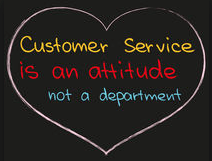
A good _______________ is essential to a business when providing customer service.
speaking voice
attitude
first impression
hair style

When greeting a customer you should always............
smile and shake their hand
tell the customer how you feel today
have open body language
multitask and ask them to repeat

How do you handle a difficult customer who comes into the store for help?
Pass off the customer onto other TSI student
Hear customer out, calm customer and resolve situation
Be disrespectful back to the customer
Avoid interacting with the customer

A key benefit from offering good customer service is ............
Lower costs
Repeat business
Reduced tax
less customers

Good Customer Service helps to:
Build Your Brand
Create Trust With Your Customers
Reduce Customer Complaints & Minimise Problems
All of the Options

What makes your organisation different from similar ones?
Staff & Service are the difference
Our cakes are better
Our coffee is warmer
Our chairs are more comfortable
Which of the following is most likely to help in calming an angry customer when face to face?
Crossing your arms
Rapid nodding of the head
Slow nodding of the head
Smiling
Which statement about customer service is correct?
Excellent customer service results in a more positive business
reputation.
Excellent customer service results in more promises and
therefore more lawsuits.
Excellent customer service results in fewer loyal customers.
Excellent customer service results in lower wages.
The first step in solving a problem is:
Develop a solution
Reflect and review
Understand the problem
Investigate and research the problem

MS PowerPoint is a/an ...............................
Application Software
System Software
Operating System
None of the them

We can navigate from one slide to another by using ......................
Mouse
Keyboard
Both keyboard and mouse
None of them
Which type media is most effective to reach out to the millennials?
Advertise on hardcopy News Paper
Advertisement at the bus stops
Handing out flyers
Social Media like IG or Twitter
Who's input affect the customer's purchase decision?
Family
Friends
Reviews on the web
Company's information
All of the above

By increasing the predictability of daily routines and practices we can...
encourage sustained effort
maximize group work
minimize distractions
promote self-efficacy

