Wayground logo

Free Printable Worksheets

Font size

S
M
L
XL
Worksheets

Chemistry Test Part 2

Total questions: 55

Worksheet time: 1hrs 18mins

Name
Class
Date
1.

This image shows what happens when methane gas (CH4) is burned (reacts with oxygen O2). Which of the following is a reactant?

a)

Methane (CH4)

b)

Water (H2O)

c)

Carbon dioxide (CO2)

d)

none of the above

2.
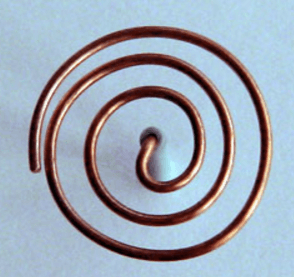
Is bending copper wire a physical or chemical change?
a)
Physical
b)
Chemical
3.
Is melting butter a physical or chemical change?
a)
Physical
b)
Chemical
4.

Any time something burns, it is going through a

a)

chemical change

b)

physical change

5.

A mixture is the result of a physical change because...

a)

The parts can be separated

b)

A new substance is made

c)

There is a chemical reaction

d)

One part of the mixture disappears

6.

A copper penny turning green after a few years is an example of ...

a)

Chemical Change

b)

Physical Change

7.

The substances that go into a chemical reaction are called

a)

reactants

b)

products

c)

molecules

d)

mixtures

8.

The end results of a chemical reaction are called

a)

products

b)

reactants

c)

explosion

d)

a pile of goo

9.

This image shows what happens when methane gas (CH4) is burned (reacts with oxygen O2) to produce carbon dioxide and water. Which of the following is a product?

a)

methane (CH4)

b)

oxygen (O2)

c)

carbon dioxide (CO2)

d)

none of the above

10.
A chemical reaction is balanced when
a)
both sides have the same elements
b)
Both sides have the same  number of atoms
c)
Same subscripts
d)
Same coefficients
11.
Which of these is not a chemical reaction?
a)
Burning of wood
b)
Milk going bad
c)
Mixing vinegar and baking soda
d)
Melting of ice
12.
What is the Law of Conservation of mass?
a)
Mass is created in a chemical reaction
b)
Mass is created in a physical change
c)
New chemicals formed from a chemical reaction have a larger overall mass than the original reactants
d)
Mass is never created or destroyed
13.
Is this equation balanced or unbalanced? 
2Fe2O3 + 3C --> 4Fe + 3 CO2
a)
balanced
b)
unbalanced
14.
If a reaction starts with a total 75g of reactants it should produce 
a)
a total of 40g of products
b)
a total of 75g of products
c)
a total of 180 g of products
d)
None of the above
15.
Which of the following is a sign that a chemical reaction has occurred?
a)
change in shape
b)
melting
c)
formation of a gas
d)
dissolving
16.
Which of the following is NOT an example of a physical change?
a)
crumpled paper
b)
pencil sharpening
c)
shrunken clothing
d)
rust
17.
A change where one or more new substances are created.
a)
Physical Change 
b)
Chemical Change 
18.
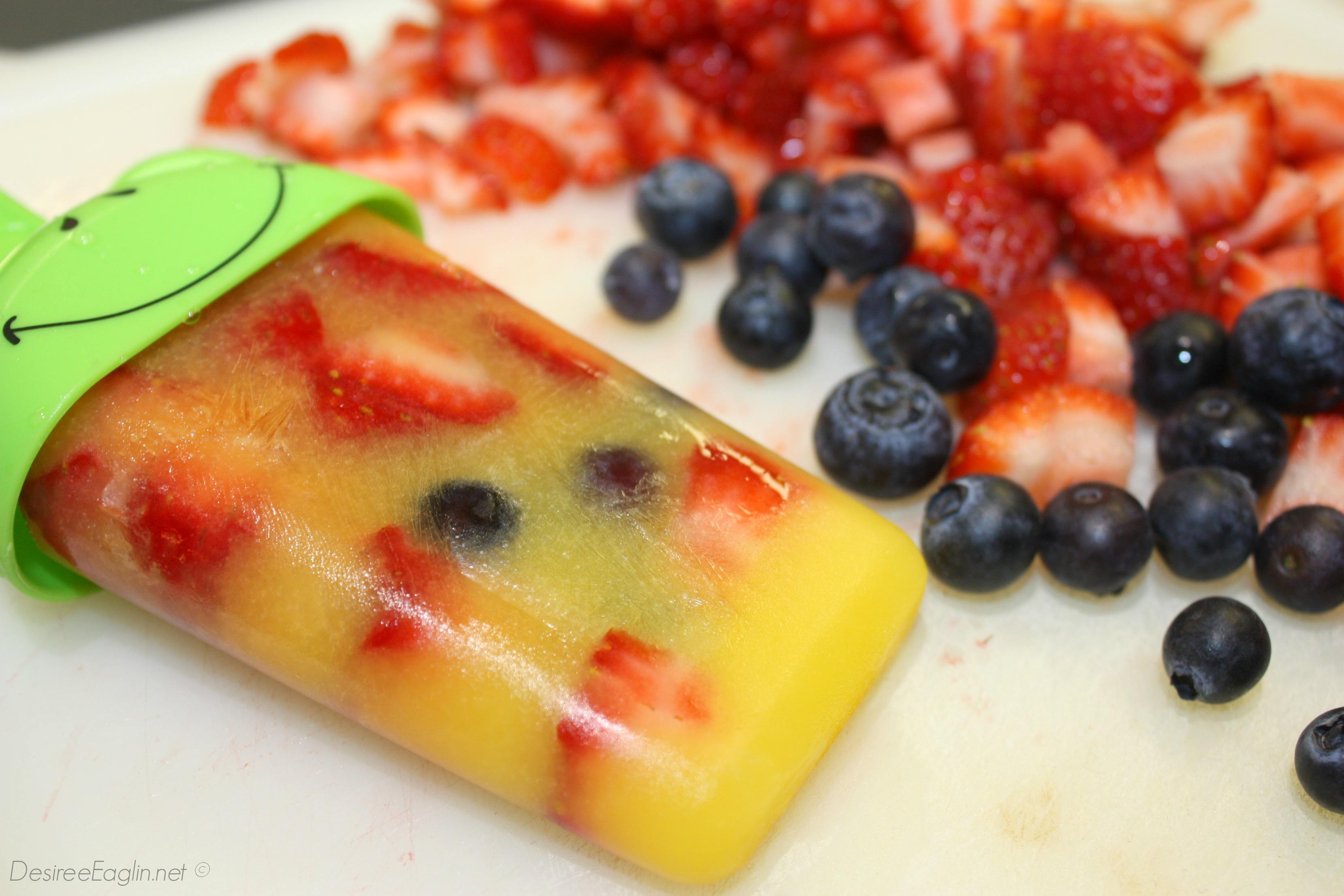
Freezing Juice?
a)
Physical Change
b)
Chemical Change
19.
Fizzing, foaming, and burning are all examples of
a)
Chemical change
b)
Physical change
20.
Rust on an iron bar is an example of chemical change.
a)
True 
b)
False
21.
Which type of property is the ability to conduct electricity?
a)
physical property
b)
chemical property
22.

Which is an example of a physical property?

a)

malleability

b)

rusting

c)

reactivity

d)

flammability

23.

Which is a chemical property?

a)

Reactivity

b)

boiling point

c)

density

d)

conductivity

24.

Flammability is a

a)

Chemical property

b)

Physical property

c)

Real property

d)

Fake property

25.

A sour taste is a characteristic of:

a)

acids

b)

bases

c)

neutral

d)

pH scale

26.

Which is a characteristic of a base?

a)

tastes sour

b)

found mostly in foods

c)

feels slippery

d)

turn litmus paper red

27.

A substance that is 3 on the pH scale would be a(n):

a)

acid

b)

base

c)

neutral

d)

solute

28.
What color does litmus paper turn in the presence of an acid?
a)
blue
b)
black
c)
green
d)
red
29.
Bases are located where on the pH scale?
a)
any number can be a base
b)
below 7
c)
above 7
d)
number 7 is a base
30.
A substance that is a 10 on the pH scale would be a(n) ____.
a)
acid
b)
neutral
c)
base
d)
indicator
31.
At what location on the pH scale can you find acids?
a)
number 7 on the pH scale is acidic
b)
below 7
c)
above 7
d)
you can find acids all throughout the scale
32.

Taste bitter

a)

acids

b)

bases

c)

neutral

d)

pH paper

33.

A pH level of 7 indicates

a)

acid

b)

base

c)

neutral

d)

none of the following

34.

Which property is not associated with acids?

a)

Sour taste

b)

strong acids can burn you

c)

turns litmus paper blue

d)

reacts with metals

35.

You test a solution with pH paper, and the paper turns blue. The solution is ______.

a)

neutral

b)

an acid

c)

a base

d)

an acid & a base

36.
Is this balanced?...
Al + O2 --> 2Al2O3
a)
Yes!
b)
NO!
37.
At the end of chemical reactions, what is the total mass of the reactants compared to the total mass of the products?
a)
the product is doubled
b)
the product is half the mass of the reactants
c)
the mass is the same
d)
the mass changes depending on the reaction
38.
How many atoms of aluminum are on each side of the following equation: 4Al + 3O2 --> 2Al2 O3
a)
2
b)
6
c)
1
d)
4
39.
Is the following equation balanced or unbalanced?
Fe + S --> FeS
a)
balanced
b)
unbalanced
40.
6 CO2 + 6 H2O → C6H12O6 + 6 O2
a)
Balanced
b)
Not Balanced
41.
2 AgI + Na2S → Ag2S + 2 NaI
a)
Balanced
b)
Not Balanced
42.
CO2 + H2O → C6H12O6 + 6H2O2
a)
Balanced
b)
Not Balanced
43.
PCl5 + 4 H2O → H3PO4 + 5 HCl
a)
Balanced
b)
Not Balanced
44.

The chemical bond between a non-metal and another non-metal will be a ________ bond.

a)

metal

b)

ionic

c)

covalent

d)

polar

45.

The chemical bond between a metal and a non-metal will be a _____ bond.

a)

metal

b)

ionic

c)

covalent

d)

polar

46.

Beryllium and sulfur will form a ______ bond

a)

ionic

b)

covalent

c)

metalloid

47.

Sodium and Bromine will make a _____ bond.

a)

ionic

b)

covalent

c)

metallic

48.

Carbon and Oxygen will make a ___________ bond.

a)

ionic

b)

covalent

c)

metallic

49.

Nitrogen and Oxygen will make a ____________ bond

a)

ionic

b)

covalent

c)

metallic

50.

MgO

a)

ionic

b)

covalent

c)

metallic

51.

NaCl

a)

ionic

b)

covalent

c)

metallic

52.

A bond formed as a result of a transfer of electrons is what type of bond?

a)

Ionic

b)

Covalent

53.

A bond formed as a result of sharing of electrons is what type of bond?

a)

Ionic

b)

Covalent

54.

Phenolphthalein is a pH indicator that turns magenta or bright pink in the presence of what type of solution?

a)

Acid

b)

Base

c)

Neutral

55.

To make lemonade you must mix the powder into water until it dissolves. This is an example of what type of change?

a)

Physical Change

b)

Chemical Change