wayground logo

Free Printable Worksheets

NEW

Font size

S
M
L
XL
Worksheets

7th Grade Life Science Brain Bowl

Total questions: 30

Worksheet time: 15mins

Name
Class
Date
1.
This system supplies the body with oxygen and rids it of carbon dioxide.
a)
circulatory
b)
respiratory
c)
muscular
d)
nervous
2.
 Which system is the stomach in?
a)
respiratory
b)
digestive
c)
nervous
d)
excretory
3.
The ________________ system is responsible for support and protection of the body; it also stores minerals like calcium.
a)
SKELETAL
b)
MUSCULAR
c)
DIGESTIVE
d)
INTEGUMENTARY
4.

Which system breaks down the food you eat so your body will have energy?

a)

digestive system

b)

skeletal system

c)

nervous system

5.

As your body works harder, what happens to your HEART rate?

a)

Increases

b)

Decreases

c)

Beats backward

d)

Stays the same

6.
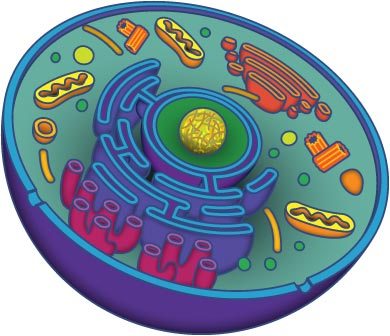
Functions in energy production, known as the energy factory of the cell
a)
mitochondria
b)
chloroplast
c)
vacuole
d)
cytoplasm
7.
The control center that controls all the functions of the cell
a)
cytoplasm
b)
cell wall
c)
cell membrane
d)
nucleus
8.
I am a gel like substance that supports the other organelles
a)
cell membrane
b)
CO2
c)
cytoplasm
d)
chlorine
9.
I am found in plant cells. I am rigid, strong & stiff. I give support to the plant cell.  I give the cell it's box shape
a)
cell membrane
b)
cell wall
c)
chlorophyll
d)
mitochondria
10.

Name two organelles that are only found in plant cells.

a)

Cell wall and chloroplasts

b)

Cell wall and nucleus

c)

Chloroplast and mitochondria

d)

Cell membrane and ribosome

11.
In what organelle is the genetic material found inside?
 
a)
Endoplasmic Reticulum
b)
Golgi Complex
c)
Nucleolus
d)
Nucleus
12.
The two kinds of cells are Prokaryotes and Eukaryotes. How are they different?
a)
Prokaryotes have a nucleus.
b)
Eukaryotes have a nucleus.
c)
Prokaryotes are plant cells.
d)
There is no difference.
13.
Under a microscope, what kind of cells lack membrane-bound internal organelles?
a)
Prokaryotes
b)
Eukaryotes
c)
Plants
d)
Animals
14.

Which statement was NOT included in cell theory?

a)

All living things are composed of cells.

b)

Living cells come only from other living cells.

c)

Each cell contains a cell membrane, cytoplasm, nucleus, mitochondria, and endoplasmic reticulum.

d)

Cells are the smallest structure of living things that can perform the functions necessary for life.
15.

All living things are made up of...

a)

cells

b)

tissues

c)

organ

d)

organ systems

16.
Which statement is a part of the cell theory?
a)
all cells come from preexisting cells
b)
bacteria are prokaryotic cells
c)
eukaryotic cells are complex
d)
humans are multicellular
17.

Asexual reproduction is associated with what type of cell division?

a)

Mitosis

b)

Meiosis

18.

An organism that has been reproduced by asexual means receives ______________ of its chromosomes from its one parent.

a)

3

b)

25%

c)

50%

d)

100%

19.

What is the big advantage of sexual reproduction?

a)

Can quickly grow the population

b)

Offspring are guaranteed to be successful in an unchanged environment.

c)

Only one parent is required to reproduce.

d)

Can adapt to changing environments

20.

What is the type of cell division associated with sexual reproduction?

a)

Mitosis

b)

Meiosis

21.

During mitosis the parent cell produces:

a)

2 daughter cells with the same number of chromosomes as the parent cell.

b)

2 daughter cells with the half the number of chromosomes as the parents cell.

c)

4 daughter cells with the same number of chromosomes as the parent cell.

d)

4 daughter cells with half the number of chromosomes as the parent cell.

22.

During meiosis the parent cell produces:

a)

2 daughter cells with the same number of chromosomes as the parent cell.

b)

2 daughter cells with the half the number of chromosomes as the parents cell.

c)

4 daughter cells with the same number of chromosomes as the parent cell.

d)

4 daughter cells with half the number of chromosomes as the parent cell.

23.

How many parents are required for asexual reproduction?

a)

none

b)

1

c)

2

d)

4

24.

How many parents are involved with sexual reproduction?

a)

none

b)

1

c)

2

d)

4

25.
A type of reproduction in which the genetic materials from two different cells combine, producing an offspring 
a)
Asexual Reproduction
b)
Sexual Reproduction
26.
What is an advantage of sexual reproduction?
a)
Allows genetic variation
b)
Only needs one parent
c)
Happens very quickly
d)
Offspring are exact copies of parent
27.
If two organisms reproduce sexually, then their offspring will exhibit a genetic makeup that is -
a)
identical to only one parent
b)
identical to all of its siblings
c)
a unique combination of traits
d)
the recessive traits of each parent
28.
What does DNA stand for?
a)
Deoxyribonucleic acid
b)
Denitrogenous acid
c)
Deribonucleic acid
d)
Diribonucleic acid
29.
_____________________ carries information for inherited traits.
a)
DNA
b)
FBI
c)
RNA
d)
CBS
30.
Which of the following is the correct order of organization in living things from most basic (simple) to most complex?
a)
a.  Organism, cell, tissue, organ, organ system
b)
a.  Organ system, organ, tissue, cell, organism
c)
a.  Cell, tissue, organ, organ system, organism
d)
a.  Cell, organ, tissue, organ, organism, organ system