
 Worksheets
Module 2 Practice
Total questions: 26
Worksheet time: 46mins
Name
Class
Date
1.
What atom matches this electron configuration?
1s22s22p63s23p64s23d10
1s22s22p63s23p64s23d10
a)
Zinc
b)
Copper
c)
Nickel
d)
Germanium
2.
What atom matches this electron configuration?
1s22s22p63s2
1s22s22p63s2
a)
Neon
b)
Magnesium
c)
Aluminum
d)
Potassium
3.
What electron configuration matches an oxygen atom?
a)
1s22s22p63s2, 3p64s23d104p5
b)
1s22s22p4
c)
1s22s22p6
d)
1s22s22p63s23p64s23d1
4.
The electron configuration of an atom is 1s22s22p6. The number of electrons in the atom is
a)
3
b)
6
c)
8
d)
10
5.
What is this element?
1s22s22p63s2
1s22s22p63s2
a)
Neon
b)
Magnesium
c)
Aluminum
d)
Potassium
6.
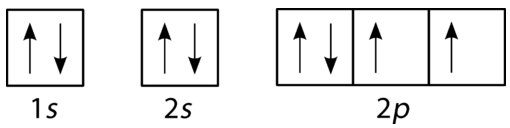
This orbital diagram represents:
a)
C
b)
B
c)
N
d)
O
7.

This orbital diagram represents:
a)
C
b)
B
c)
N
d)
O
8.

What is incorrect about this orbital diagram?
a)
Both arrows in the 2p box should be pointing up
b)
There is nothing incorrect with this diagram
c)
In the there should only be 1 orbital in the first 2p box and one in the 2nd 2p box
d)
All the arrows should be pointing up.
9.

The diagram above represents two electrons with
a)
a. opposite spins.
b)
b. the same spin.
c)
c. different energies.
d)
d. different energy levels.
10.

Which example shows a violation of Hund's Rule?
a)
A
b)
B
c)
C
d)
D
11.
Which shows the correct orbital diagram for Cobalt?
a)
b)
c)
d)
12.
Which of these is incorrect?
a)
b)
13.

This could be the dot diagram of
a)
Mg
b)
Cl
c)
C
d)
O
14.
Which of these is correct?
a)
b)
c)
15.
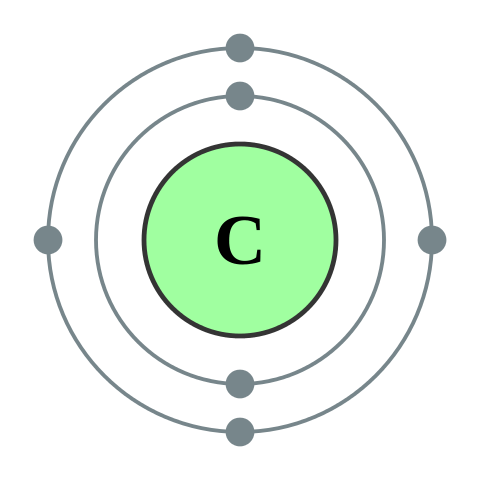
How many valence electrons does carbon have?
a)
4
b)
5
c)
6
d)
7
16.
USE THE PERIODIC TABLE
How many valence electrons does Phosphorus have?
a)
31
b)
5
c)
15
d)
4
17.
What happens to the atomic numbers as you move from left to right on the periodic table?
a)
Increase
b)
Decrease
c)
Stay the same
d)
Nothing
18.
Which element is most likely to have six valence electrons?
a)
Barium (Ba)
b)
Carbon (C)
c)
Oxygen (O)
d)
Americium (Am)
19.
Which of the following elements is most likely a poor conductor of electricity?
a)
Beryllium (Be)
b)
Gold (Au)
c)
Phosphorus (P)
d)
Copper (Cu)
20.
Which is an alkali metal?
a)
Magnesium
b)
Iron
c)
Sodium
d)
Europium
21.
Which is a halogen?
a)
Helium
b)
Chlorine
c)
Oxygen
d)
Neptune
22.
As you move down a group, atomic radius increases because -
a)
you add more and more neutrons
b)
you add more and more protons
c)
you add more and more shells (energy levels)
d)
you add more atomic mass
23.
Francium (Fr) has the lowest ionization energy in Group 1 because -
a)
it has the smallest number of valence electrons
b)
it has the greatest atomic mass
c)
it has the greatest number of protons, so it attracts its electrons the strongest
d)
its 1 valence electron is very far from the nucleus, so little energy is needed to remove it
24.
Electronegativity is...
a)
the ability of an atom to attract/ accept electrons
b)
the ability of an atom to lose electrons
c)
the energy required to remove an electron from a specific atom
d)
how easy it is to make friends.
25.
Which has the greater Electronegativity:
N or C?
N or C?
a)
C
b)
N
26.
As you move across the periodic table atoms tend to get smaller because, ______________.
a)
the atoms have more mass.
b)
the atoms have less mass
c)
the atoms have more protons.
d)
the atoms have less electrons.
100 %

