
 Worksheets
Cell Membrane and Passive Transport
Total questions: 25
Worksheet time: 36mins
Name
Class
Date
1.
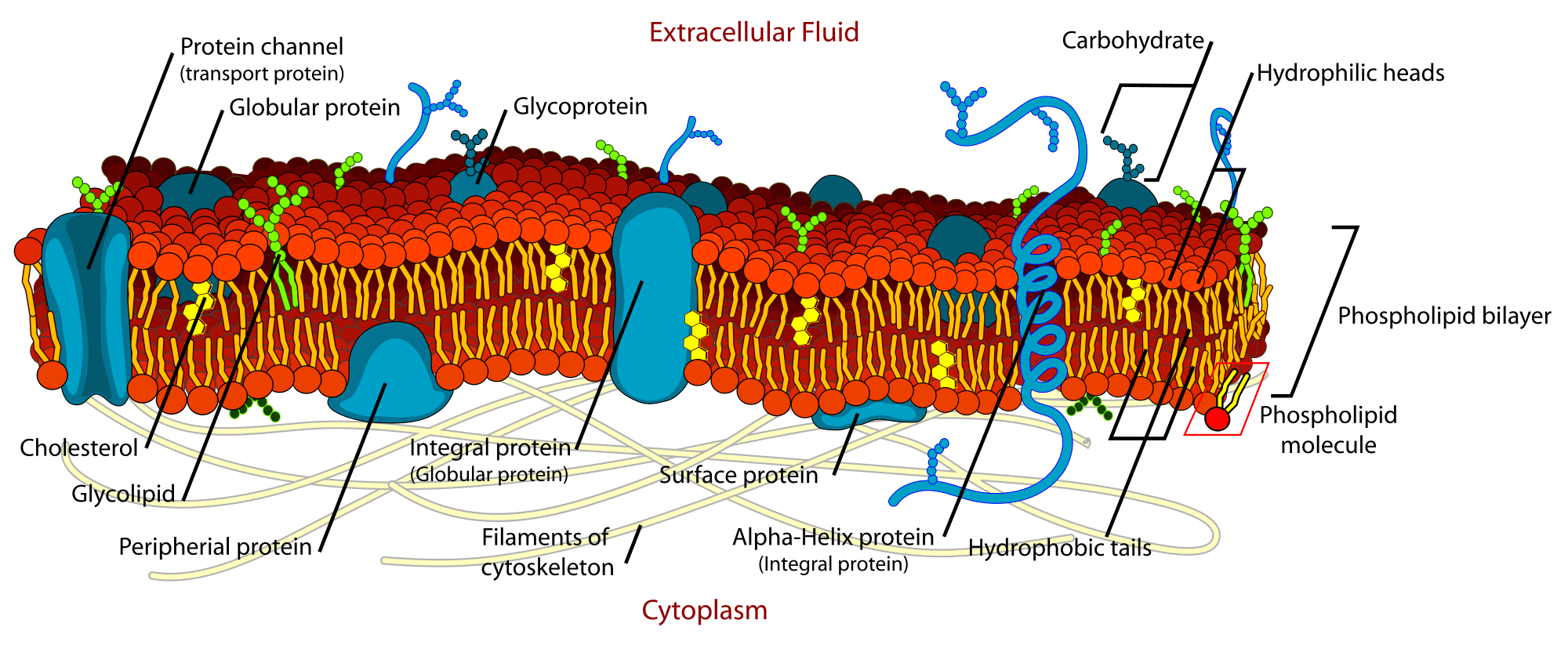
What is this image?
a)
cell membrane
b)
proteins
c)
carbohydrates
d)
lipids
2.
The function of the plasma membrane is....
a)
to regulate what enters and leaves the cell.
b)
fight bacteria and viruses that enter the cell.
c)
provide rigid support and protection to the cell.
d)
make sure each cell can move
3.
Hydrophilic means...
a)
water-loving
b)
water-fearing
c)
nonpolar
d)
lipid soluble
4.

Hydrophobic region of the cell membrane?
a)
E
b)
B
c)
C
d)
A
5.
What is another term for "selectively permeable"?
a)
porous
b)
completely permeable
c)
permanent
d)
semipermeable
6.
A phospholipid has 2 parts. What are they called?
a)
Hydrophilic Head, Hydrophobic Tail
b)
Hydrophobic Head, Hydrophilic Tail
7.
"Water Fearing"
a)
Hydrophobic
b)
Hydrophilic
c)
Hydroelectric
d)
Hydroloric
8.
This is a balance that organisms maintain through self-regulating adjustments
a)
bilayer
b)
homeostasis
c)
secretions
9.
What is diffusion?
a)
when molecules move from a low concentration to a high concentration
b)
when molecules move from a high concentration to a low concentration.
c)
no movement
d)
molecules move everywhere
10.

Osmosis
a)
diffusion of water molecules through a semi-permeable mebrane from an area of low concentration to an area of high concentration
b)
the diffusion of particles from an area of high concentration to an area of low concentration
c)
diffusion of water molecules through a semi-permeable membrane from an area of high concentration to an area of low concentration
d)
the diffusion of particles from an area of low concentration to an area of high concentration
11.

Equilibrium?
a)
a large amount of substance on side of the cell and a small amount on the other side
b)
a small amount of substance on side of the cell and a large amount on the otherside
c)
equal amount of substance on either side of the membrane
d)
no particles on either side of the a cell membrane
12.

Which way will the water molecules move during osmosis?
a)
Out of the cell, so the cell shrinks.
b)
Out of the cell, so the cell swells.
c)
Into the cell, so the cell shrinks.
d)
Into the cell, so the cell swells.
13.
Passive Transport means
a)
Energy is used
b)
No energy is used
c)
Energy is created
14.
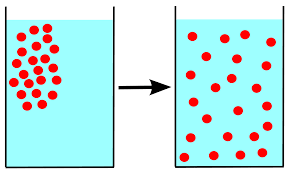
The picture below is an example of _________________.
a)
osmosis
b)
isotonic
c)
diffusion
d)
active transport
15.

The cell below is in a _____________ solution.
a)
Hypertonic
b)
Hypotonic
c)
Isotonic
16.

The cell below is in a _________ solution.
a)
Hypotonic
b)
Hypertonic
c)
Isotonic
17.
Passive transport moves molecules from...
a)
low concentration to high concentration
b)
high concentration to low concentration
18.
Which type of Passive transport uses the help of a transport protein?
a)
Osmosis
b)
Facilitated diffusion
c)
Simple diffusion
19.
What type of passive transport moves water molecules from high concentration to low concentration?
a)
Simple diffusion
b)
Osmosis
c)
Active transport
d)
Facilitated diffusion
20.
When the number of water molecules outside of the cell is greater than inside the cell, which will most likely occur?
a)
Molecules of water will NOT MOVE either way.
b)
Molecules of water will move OUT of the cell.
c)
Molecules of water will move INTO the cell.
d)
Molecules of water will EVAPORATE.
21.

What type of solution is this cell in?
a)
Isotonic
b)
Hypertonic
c)
Hypotonic
d)
diffused
22.

What type of solution is this cell in?
a)
Isotonic
b)
Hypertonic
c)
Hypotonic
d)
diffused
23.
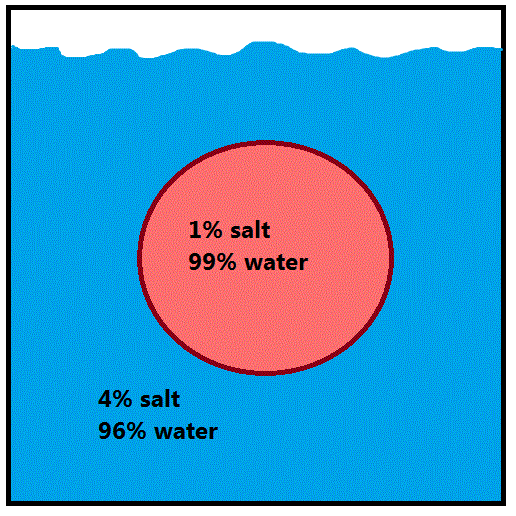
Where will the water go?
a)
Into the cell
b)
Out of the cell
c)
Equally in & out - it's isotonic
d)
There is no water
24.
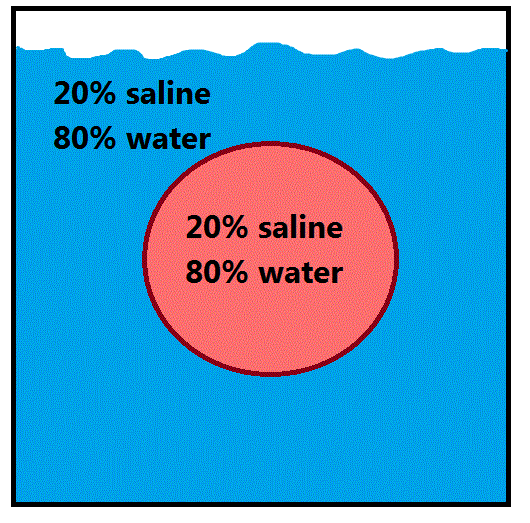
A blood cell is placed into the jar, as seen. Where will the water go?
a)
Into the cell
b)
Out of the cell
c)
Equally in & out - it's isotonic
d)
The water is a lie
25.
An animal cell placed in a hypertonic (salty) solution will
a)
Stay the same
b)
Shrink- get smaller
c)
Swell- get bigger
100 %

