wayground logo

Free Printable Worksheets

NEW

Font size

S
M
L
XL
Worksheets

Compounds, Bonds, and Formulas Test

Total questions: 50

Worksheet time: 1hrs 23mins

Name
Class
Date
1.
How many atoms of carbon (C) are in C6H12O6?
a)
3
b)
6
c)
12
d)
24
2.
Element or compound?
H2O
a)
element
b)
compound
3.
Which of the following is a compound?
a)
Co
b)
O2
c)
C
d)
CO2
4.

The blue numbers in the image below represent ________

a)

Chemicals

b)

coefficients

c)

subscripts

d)

none of the answers are correct

5.

Alanine is an amino acid with formula C3H7NO2. How many atoms in all are in each molecule of alanine?

a)

3

b)

7

c)

12

d)

13

6.

Which of the following statements accurately describes the number of atoms in a molecule of ammonia (NH3)?

a)

Three atoms of nitrogen and three atoms of hydrogen

b)

One atom of nitrogen and three atoms of hydrogen

c)

Three atoms of nitrogen and one atom of hydrogen

d)

One atom of nitrogen and one atom of hydrogen

7.

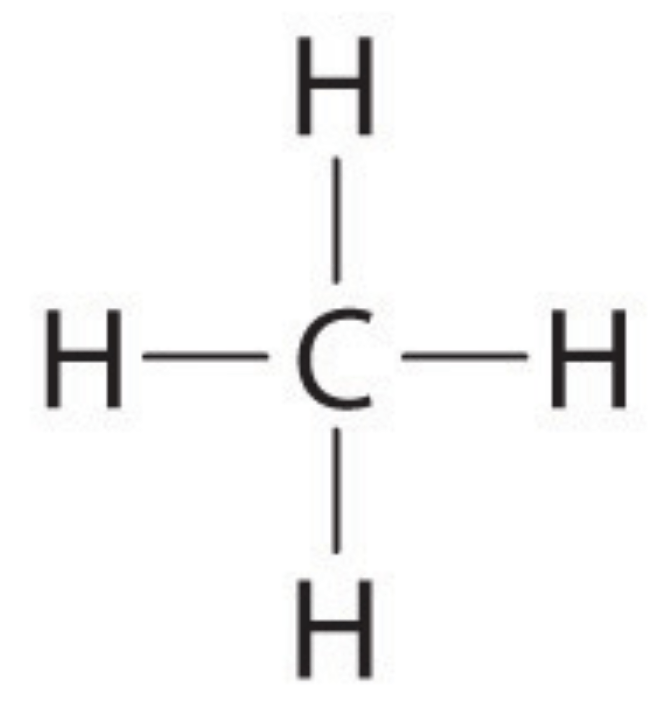
Which of the following molecules has the formula CH2O?

a)
b)
c)
d)
8.

Which elements are in the formula shown above?

a)

Tin and Chlorine

b)

Tin, Carbon and Lithium

c)

Sulfur, Nitrogen and Chlorine

d)

Sulfur, Nitrogen, Carbon and Lithium

9.

Which of the following chemical formulas contains exactly 4 hydrogen atoms?

a)

CH3COONa

b)

NH4OH

c)

CH3CH2Cl

d)

CH3CHO

10.

Which of the following is an ionic compound?

a)

Carbon monoxide

b)

Nitrogen Trihydride

c)

Sodium Chloride

d)

O2

11.
_______________ compounds share electrons.
a)
ionic
b)
covalent
c)
metallic
d)
acidic
12.

What force of attraction holds atoms or ions together?

a)

Chemical Bond

b)

Covalent Bond

c)

Ionic Bond

d)

Jimmy Neutron

13.

What kind of compound is made from the attraction between oppositely charged ions?

a)

Covalent

b)

Metallic

c)

Ionic

d)

Chemical

14.

What type of bond is formed between a metal and a nonmetal

a)

ionic

b)

covalent

c)

metallic

d)

basic

15.

What type of compound is formed between nonmetals only?

a)

ionic

b)

covalent

c)

metallic

d)

acidic

16.
What is the formula for magnesium chloride?
a)
MgCl
b)
Mg2Cl
c)
MgCl2
d)
Mg(ClO3)2
17.
The chemical formula of magnesium hydroxide is
a)
MgOH₂
b)
Mg(OH)₂
c)
Mg(OH)
d)
MgH₂
18.
The chemical formula of Iron (III)bromide is
a)
FeBr
b)
Fe(III)Br
c)
FeBr₃
d)
Fe₂Br₃
19.
The chemical compound for sodium phosphate would be:
a)
NaPO4
b)
Na2PO4
c)
Na3PO4
d)
Na(PO4)3
20.
Metals tend to _____ electrons to form _______; nonmetals tend to _____ electrons to form ________.
a)
lose, cations ;   lose, anions
b)
gain, cations ;    lose, anions
c)
gain, anions ;    gain, cations
d)
lose, cations ;     gain, anions
21.
What is the formula for manganese(III) oxide?
a)
MgO
b)
Mg2O3
c)
MnO
d)
Mn2O3
22.
When naming ionic compounds with transition metals you need to include roman numerals to show the _____ of the metal..
a)
atomic number
b)
mass number
c)
charge
d)
ionization energy
23.
Fe(NO3)2
a)
iron nitrate
b)
iron dinitrate
c)
iron(II) nitrate
d)
iron(I) nitrate
24.

Lead (II) Nitrate

a)

PB(NO3)2

b)

Pb(NO3)2

c)

Pb(NO3)

25.
Covalent Formula - 
tetrahydrogen dicarbide
a)
H4C2
b)
HC
c)
H2C4
d)
HCO2
26.
Ionic Naming - 
CuI2
a)
copper iodine
b)
copper iodide
c)
carbon iodide
d)
copper diiodide
27.

Ionic Naming -

Na2O

a)

disodium monoxide

b)

nitrogen oxide

c)

nitrogen oxygen

d)

sodium oxide

28.
Ionic Naming - 
AlCl3
a)
aluminum chloride
b)
aluminum trichloride
c)
aluminum chlorine
d)
aluminum chloroiodide
29.
Ionic Naming - 
MgS
a)
Magnesium monosulfide
b)
Manganese sulfide
c)
Magnesium sulfide
d)
Magnesium sulfur
30.
Covalent Naming - 
CO
a)
monocarbon monoxide
b)
carbon oxide
c)
carbon oxygen
d)
carbon monoxide
31.
Covalent Naming - 
C3N6
a)
carbon nitride
b)
tricarbon hexanitrogen
c)
tricarbon hexanitride
d)
hexacarbon trinitride
32.
Ionic Formula - 
aluminum sulfide
a)
AlS
b)
Al3S2
c)
Al2S3
d)
AlS4
33.

Covalent Naming -


Silicon octaoxide

a)

SO8

b)

SiO4

c)

S2O6

d)

SiO8

34.

Classify the following molecule.

a)

polar

b)

nonpolar

35.

Classify the following molecule.

a)

polar

b)

nonpolar

36.
HCl
a)
Polar 
b)
Nonpolar 
37.
F2
a)
Polar 
b)
Nonpolar 
38.
H2O
a)
Polar 
b)
Nonpolar 
39.
How do covalent bonds form?
a)
Donating & receiving valence e- between atoms.
b)
Opposite slight charges attract each other between compounds.
c)
Scientists are still not sure how they form.
d)
Sharing valence e- between atoms.
40.

In a polar covalent bond, electrons are shared:

a)

equally

b)

unequally

c)

between two metals

d)

between a metal and a non-metal

41.
Which types of compounds dissolve easily in water?
a)
Polar and Nonpolar
b)
Polar and Ionic
c)
Nonpolar and Ionic
d)
Covalent and Nonpolar
42.
What is the reason why oil and water don't mix?
a)
Oil is too heavy to mix with water
b)
Water can only mix with polar molecules 
c)
Water can only mix with non-polar molecules
d)
Oil is too light to mix with water 
43.

A molecule that has a partial positive end and a partial negative end because of unequal sharing of electrons is a _______________.

a)

nonpolar molecule

b)

polar molecule

c)

ionic compound

d)

metalic compound

44.

Atoms of a polar molecule share their electrons ___________.

a)

Equally

b)

Unequally

45.

Polar molecules will dissolve in other polar molecules and nonpolar molecules will dissolve in other nonpolar molecules.

a)

True

b)

False

46.

Polar molecules have

a)

no charges.

b)

slight positive and negative charges on opposite ends of the molecules.

c)

only positive charges.

d)

either positive or negative charges, but not both.

47.

The attractions between water molecules are called a __________________.

a)

gravity force

b)

dipole force

c)

nuclear force

d)

I don't know!

48.

When you have Li-O, what is the polarity?

a)

nonpolar

b)

polar

c)

ionic

49.

When you have Si-O, what is the polarity?

a)

nonpolar

b)

polar

c)

ionic

50.

What would solubility look like for polar covalent bond in water?

a)

soluable

b)

nonsoluable