
 Worksheets
First semester Review
Total questions: 56
Worksheet time: 2hrs 42mins
A _________ is a solid, naturally formed substance that always has the same composition and the same properties
rock
mineral
element
natural resource
Why do some igneous rocks form larger crystals than others?
it depends on the mineral in the rock
it depends on the rate of cooling
it depends on where the rock forms
Which is a type of rock?
sedimentary
igneous
metamorphic
all are types of rocks
What type of rock are formed under heat and pressure?
igneous
sedimentary
metamorphic


Check all the ways that conserve natural resources.
Repair a leaky hose.
Leave the lights on when you're not using them.
Ride a bike instead of driving a car
Take shorter showers
Run the dishwasher with only 2 dishes in it
Karen is concerned about protecting the environment. Which of the following could she do to conserve our NONRENEWABLE resources?
Turn the water off while she is brushing her teeth.
Take shorter showers to use less water.
Ride her bike to school instead of having her mother drive her.
Leave the lights on when she is not home.


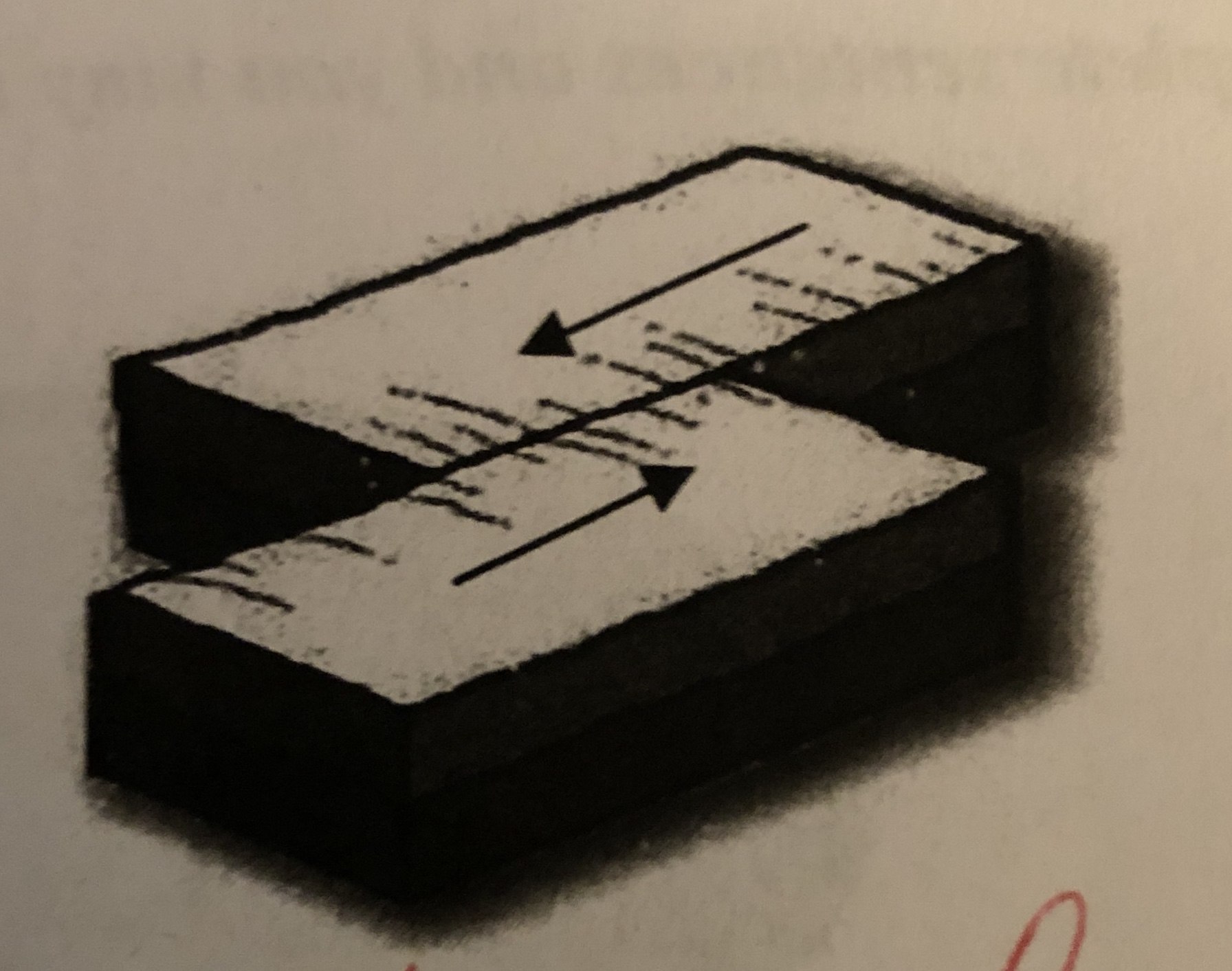
What type of boundary is this?
convergent
divergent
transform
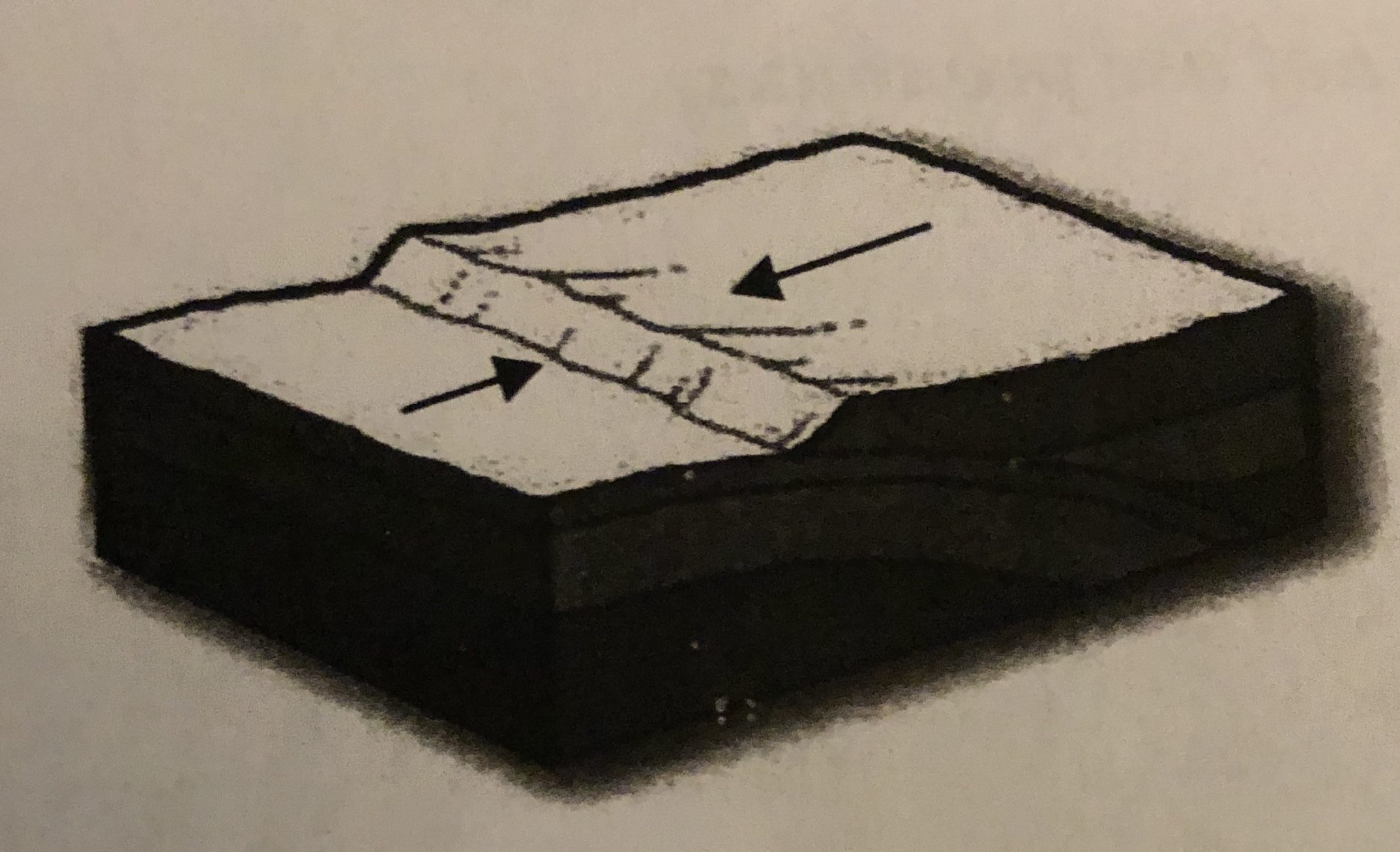
What type of boundary is this?
convergent
transform
divergent
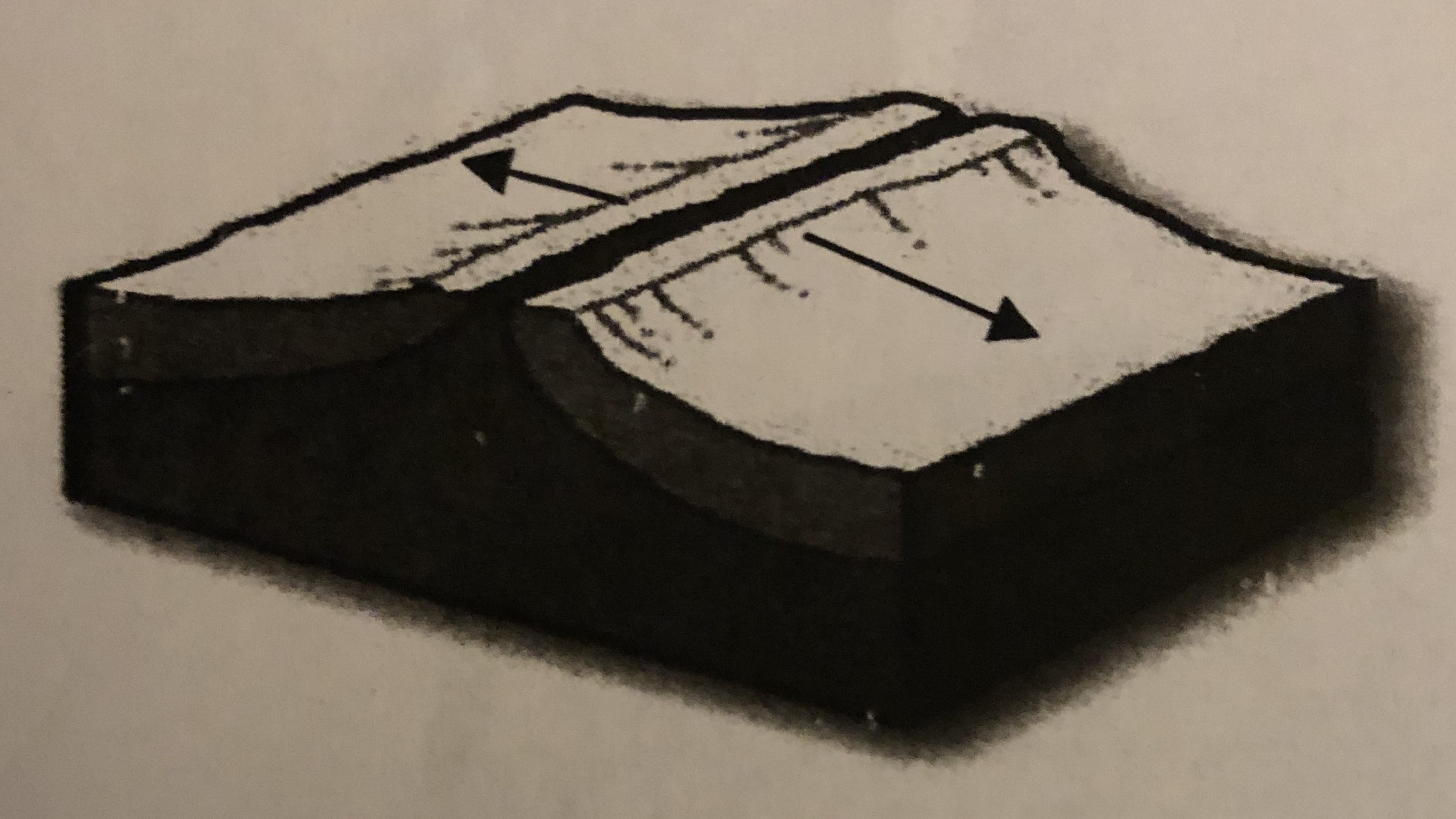
What type of boundary is this?
convergent
divergent
transform
What evidence was NOT used by Wegener as proof of continental drift?
land features
erosion
climate
fossils
What is a plate boundary where both plates move away from each other?
divergent
plate
convergent
transform
Any trace of an ancient organism that has been preserved in rock is called a
landform
continent
fossil
landmass
According to Wegener's theory of continental drift,
Earth's surface is made up of seven major landmasses
the continents do not drift
Earth is slowly cooling and shrinking
the continents were once joined together in a single landmass and have slowly moved.
What is Pangea?
the name of a German scientist
the name of a supercontinent that existed millions of years ago
another name for continental drift
the name of an ancient fossil
What is the process that continually adds new crust to the ocean floor along both sides of the mid-ocean ridge?
subduction
continental drift
convergent
sea floor spreading
What is a plate boundary where two plates move toward each other?
transform
convergent
divergent
What is Wegener's idea that continents are slowly moving over Earth's surface called?
divergence
faults
plates
continental drift
Most geologists think that the movement of Earth's plates is caused by
conduction
earthquakes
convection currents in the mantle
Earth's magnetic field

What natural force is most likely responsible for the formation of the narrow passage through the cliffs in the picture?
Blowing wind eroded the soil
Flowing water eroded the soil
Ocean waves deposited soil
Gravity moved and deposited soil
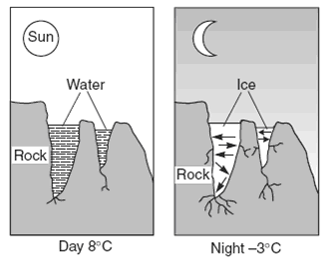
Which statement best explains why this process results in weathering?


Ice wedging is an example of -
Physical weathering
Chemical weathering
Both physical AND chemical weathering
Topsoil is dark in color because it...
undergoes a lot of chemical weathering.
has a large amount of organic material.
is full of dark rocks.
contains a lot of worms.
Factors that influence soil formation in a region include:
average temperature
amount of rainfall
type of bedrock
all of the answers are correct

Horizon A is also known as...
Top soil
Bedrock
Subsoil
Organic material

The B Horizon is known as
Parent Rock
Top soil
Bedrock
Subsoil

The C Horizon is known as
Top soil
Organic material
Parent Material
Bedrock
a dark-colored substance that forms as plant and animal remains decay
soil
top soil
loam
humus
a layer of soil that differs in color and texture from the layers above or below it
soil horizons
soil
organic matter
decomposers
Convection currents in the Earth's mantle are caused by:
Less dense hot magma moving downward
Less dense hot magma moving upward
Tectonic plate movement
More dense cooler magma moving upward

Name the type of heat transfer shown in the picture.
convection
conduction
radiation
Convection cycles move in the mantle. How does this affect the crust?
crust has no motion
crust moves in random directions
crust moves in same direction convection cycle moves
Convection currents occur due to...
rotation of earth
differences in temperature and density
electrons moving
gravitational pull
Which of the following is one reason Earth's tectonic plates to move?
energy from the Sun
magnetic Pole Reversal
convection currents in the mantle
faults in Mountain Ranges
Part of a gemstone's value is based on the way it shines in reflected light. The way a mineral reflects light is described as the mineral's
streak
color
luster
fracture

Which of the following properties of minerals is described with the Mohs scale?
luster
fracture
fluorescence
hardness

