
 Worksheets
3 chapters
Total questions: 48
Worksheet time: 37mins
Sansthita went to a wildlife sanctuary where she saw dense vegetation of trees, shrubs, herbs and also a variety of animals like monkeys, birds, elephants, snakes, frogs, etc. The most likely location of this sanctuary is in the
temperate region
tropical region
polar region
coastal region.
Given below are some adaptive features of animals.
(i) Layer of fat under the skin
(ii) Long, curved and sharp claws
(iii) Slippery body
(iv) Thick white fur
Which of them are the adaptive features of a polar bear?
(i) only
(i) and (ii) only
(i), (ii) and (iii) only
(i), (ii) and (iv)
Which of the following statements is incorrect for penguins? –
They huddle together.
They cannot swim.
They have webbed feet.
They have streamlined body.
Read the following environmental conditions of tropical rainforests.
(i) Hot and humid climate
(ii) Unequal lengths of day and night
(iii) Abundant rainfall
(iv) Abundant light and moisture
Identify the conditions from the above list that are responsible for the presence of large number of plants and animals in tropical rain forests.
(i)and(ii)
(i) and (iii)
(i), (iii) and (iv)
(ii) and (iv)


the amount of water vapor in the air

What is a weather ?
The state of the atmosphere at a particular place and time
The state of atmosphere that stays in a place for a long term.
Adaptation of a living thing.

Which of these are the adaptations of polar bear ?
They are always in group
They have a very strong sense of smell
They can only swim for a short period of time
The paws are wide and large.
Why are always penguins huddled together or in groups
To not be alone
To get warmness
To protect from predators
They like being in groups

Siberian crane migrates from Siberia to ________________ and _____________ in India
In tropical region in the coldest month the temperature is higher than _________degree celcius
13°C
18°C
20°C
15°C
Which of the following is not an element of weather
Temperature
Humidty
Latitude
Wind Speed
Weather reports are prepared by
Geologists
Meteorologists
Germinologists
Physicians
The maximum temperature for a particular day is recorded in the ..............................
Evening
Night
Morning
Afternoon
Rainfall is usually measured in ..............................
millimeters
centimeters
foot
meter
All changes in the weather are caused by the
Moon
Sun
Earth
Altitude
The normal habitat of Siberian Crane is..................................
Bharatpur
Sultanpur
Siberia
none of these
Humidity is the measure of
Temperature
Pressure
Moisture
Wind
Which of the following has a long colourful beak
Arctic Tern
Toucan
Penguin
Siberian Crane
A Monkey is found to have silver-white mane surrounding the head. it is called
Gorilla
Lion-tailed mcaque
Chimpanzee
Bandar
The Elephant uses it's trunk as a sense organ for detecting ..........................
Sound
Taste
Sight
Smell
The function of transpiration is to transport _______ and ____________ from the roots to the leaves
water, mineral salts
food, nutrients
water, food
Which statement correctly identifies the substance and direction it is transported in the xylem?
Water, only upwards
Glucose, only upwards
Water, up and down the plant
Glucose, up and down the plant

The enlarged base of the pistil that stores the eggs of the plant is the ___.
ovary
ovule
stigma
style

The tip of the style that has sticky hairs to trap pollen is the ___.
stamen
stigma
ovary
style

The transfer of pollen, containing the sperm cells, to the female part of the flower.
seed disperal
pollination
germination
fertilization

After fertilization what does the ovary develop into?
Fruit
Bud
Seed
Flower
When a plant reproduces by its vegetative parts it is called-
Asexual reproduction
Sexual reproduction
The roots of this plant can give rise to a new baby plant.
Bryophyllum
Sweet potato
Sugarcane
The leaves of this plant produces buds in their margin which grows into a new plant.
Flowers become fruits, which bear seeds. The seeds germinate to give new plants. Name this type of reproduction.
Asexual reproduction
Sexual reproduction
Vegetative propagation
Where does an offspring get its traits in asexual reproduction?
From both parents
From only one parent
From neither parent
There are no traits handed down
Deforestation means
large scale planting of trees
large scale cutting down of trees
both of these
none of these
Which of the following serve as green lung?
Green pigment of the plants
Forests
Kitchen garden
Greenhouse Gases
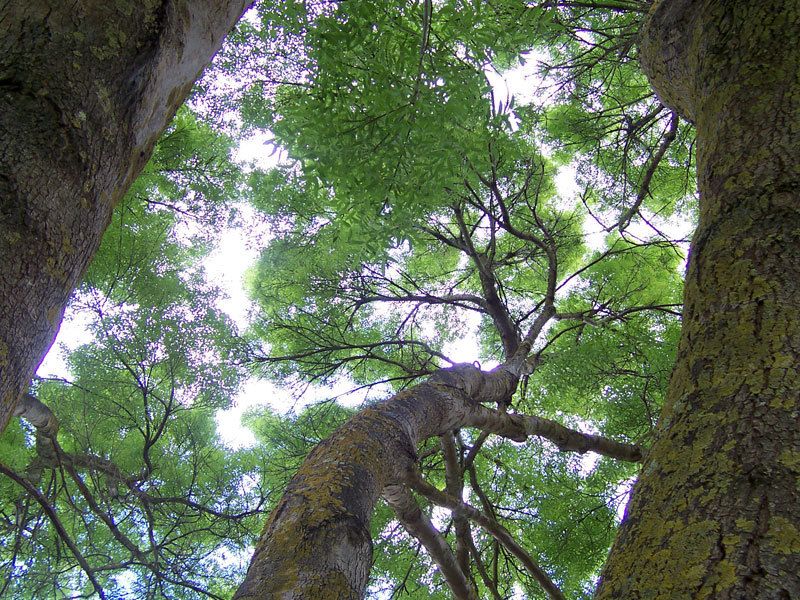
Refers to the upper layer or habitat zone.
Canopy
Crown
Humus
Forest regeneration
a natural home or environment of an animal , plant , or other organism is called a (a) .
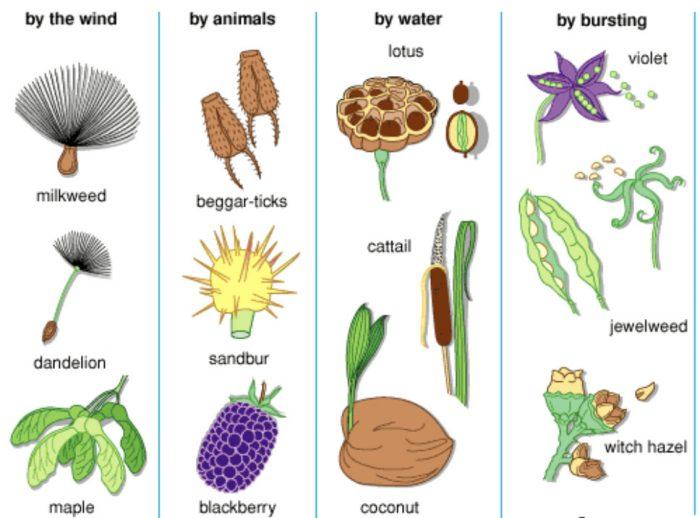
The agents like wind, water and animals which help in the process of dispersal are called _______________.
Agents of dispersal
seed dispersal
Forests aborbs the noise from the nearby highway, Preventing _________________
Air Pollution
Noise Pollution
Land Pollution

