
 Worksheets
Pen Lit
Total questions: 207
Worksheet time: 3hrs 59mins
Letters added to the end of a root word changing its meaning is called a ____________________.
compare and contrast
inference
suffix
theme
Similes, metaphors, alliteration, personification and hyperbole are examples of ________________________.
prefix
figurative language
resource materials
evidence
10. A word or phrase that has a similar meaning as another word or phrase is a(an) ____________________
antonym
synonym
verb
noun
11. A type of writing that is used to describe or inform is ____________________.
informational writing
persuasive essay
context writing
personal narrative
What is an allusion?
reference to itself.
reference to something else.
a trick used in magic.
comparing two unlike items.
What is alliteration?
repeat the first letter in a series of
words in order to draw attention to the sound.
repeat the last letter in a series of
words in order to draw attention to the sound.
used in creating nursery rhymes.
none of the above
In literature, contrast is a...
literary device through which writers
identify differences between two subjects, places,
persons, things, or ideas in order to draw attention
to them.
a literary device in the form of a
poem, quotation, or sentence.
compares two things that aren’t alike by
using “like” or “as.”
descriptions that appeal to the five senses.
Foreshadowing is...
a type of mood.
a dark and ominous feeling.
a way the author uses to make reading move faster.
hints the author gives to the reader.
Syntax can be defined as..
a computer error.
a type of figurative language.
sentence structure.
pace of reading.
Tone is used to set the.
general attitude or mood of a piece.
general setting of a story.
way characters talk in a story.
pace in which a readers reads the passages.
A Theme is...
setting
the main component of the setting.
a unifying or dominant idea.
a secondary less important idea.
Onomatopoeia occurs when...
a word follows no conventional English Language rules.
a word is spelled like it
sounds.
a word describes an animal.
two words rhyme.
Personification is...
about animal qualities.
talking about personal issues.
about qualities that pertain to inanimate objects.
about human qualities.
A metaphor makes a..
indirect comparison between
two objects by replacing one idea for another.
direct comparison between
two objects by replacing one idea for another.
direct comparison between
three objects by replacing one idea for another.
indirect comparison between
three objects by replacing one idea for another.
Actions, dialogue, and narrative description that reveal a character's personality to the reader.
Setting
Characterization
Personalization
Flashback
"Ah, distinctly I remember, it was in the bleak December" is an example of which literary term?
Internal Rhyme
End Rhyme
Onomatopoeia
Alliteration
A word which imitates a sound.
onomatopoeia
assonance
alliteration
mood
Words like "achoo! pow! whoosh! splat!" are examples of which literary term?
onomatopoeia
assonance
alliteration
theme
TYPES OF IRONY: When the audience knows something the character doesn't.
situational irony
dramatic irony
verbal irony
TYPES OF IRONY: When we say one thing but mean another. (sarcasm)
situational irony
dramatic irony
verbal irony
The emotions the reader feels while reading.
irony
mood
alliteration
onomatopoeia
"suspense, joy, fear, and calm" are all examples of which literary term?
mood
onomatopoeia
dramatic irony
assonance
The feeling of anxious uncertainty or excitement about what will happen next.
alliteration
assonance
suspense
internal rhyme
Choose the correct definition.
An allusion is a reference to something else.
Allusion is another way to present contrast by placing two unlike things close together.
With allusion, either the sound itself creates meaning,
like a harsh “c” sound, or the words that have the
repeating sound can be linked together.
None of the above
What is a literary device through which writers
identify differences between two subjects, places,
persons, things, or ideas in order to draw attention
to them.
Alliteration
Allusion
Contrast
Juxtaposition
Writers sometimes repeat the first letter in a series of
words in order to draw attention to the sound. This is called...
allusion
alliteration
contrast
juxtaposition
A metaphor makes a direct comparison between
two objects by replacing one idea for another.
True
False
When an author gives something not alive or not
human the qualities of a person.
Metaphor
Personification
Simile
Imagery
Which statement is correct
A simile is simply to be thought
of as the hints the author gives to the reader.
A simile is another term for a picture.
A simile makes a direct comparison between
two objects by replacing one idea for another.
A simile compares two things that aren’t alike by
using “like” or “as.”
Imagery is formed by descriptions that appeal to the five senses:
sight, touch, taste, sound, and smell.
True
False
Personification is...
making animals act like people.
adding human qualities to characters.
when the narrator knows everything about all the characters.
giving an inhuman thing human qualities.
...is an example of an oxymoron
That boy is a real Romeo
Wooosh
Awfully pretty
She sells seashells by the sea shore
When what happens turns out to be quite different from what was expected is
irony
flashback
denotation
syntax
Which of the following are examples of a simile?
He was as fast as a cheetah.
Her voice was like a crow.
He was a mountain.
She laughed like a hyena.
A comparison using like or as
simile
metaphor
personification
tone
A comparison that says one thing is another.
imagery
tone
simile
metaphor
Which of the following are examples of a metaphor?
He was a cheetah on the track.
She was a mouse of a speaker.
He was as powerful as an elephant.
Her eating habits reminded me of a bird.
The attitude a writer/speaker wants the words to have.
imagery
personifcation
tone
dialect
Which point of view is told from the perspective of the narrator on the OUTSIDE of the story?
First person
Second person
Third person
None of these
What is a ROUND character?
A minor character
Someone who doesn't change in the story
A character who causes trouble
A character that shows growth and dimension throughout the story
What is point of view?
The lesson in the story
The perspective of the narrator
The problem of the plot
Where and when the story takes place
What is the definition of FLAT character?
Someone who shows change in a story
The main character
A character who does not show growth
The bad guy
Who is the protagonist?
The character who shows change
The leading character of the story
The force that is opposing the main character
A minor character
Who is the antagonist?
The character who shows change
The leading character of the story
The force that is opposing the main character
A minor character
What is conflict?
The problem
The where and when
The most exciting/suspenseful part of the story
The ending of the plot
What point of view is this piece of text?
"Presently I heard a slight groan, and I knew it was the groan of mortal terror. It was not a groan of pain or of grief --oh, no! --it was the low stifled sound that arises from the bottom of the soul when overcharged with awe. I knew the sound well. Many a night, just at midnight, when all the world slept, it has welled up from my own bosom, deepening, with its dreadful echo, the terrors that distracted me. I say I knew it well."
First person
Second person
Third person
What point of view is this piece of text?
"Mr. Peters stood for some minutes reflecting on how he should use his reward. He knew very well that the gift of three magic wishes was one which brought trouble more often than not, and he had no intention of being like the forester who first wished by mistake for a sausage, and then in a rage wished it on the end of his wife's nose, and then had to use his last wish in getting it off again. Mr. Peters had most of the things which he wanted and was very content with his life. The only thing that troubled him was that he was a little lonely, and had no companion for his old age. He decided to use his first wish and to keep the other two in case of an emergency."
First person
Second person
Third person

What type of EXTERNAL conflict is the picture?
Katniss was forced to play the Hunger Games because those were the rules of the government.
Character vs Character
Character vs Nature
Character vs Self
Character vs Society
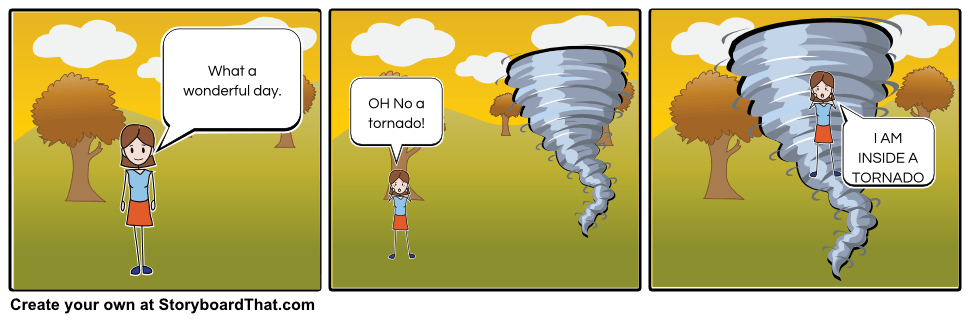
What type of EXTERNAL conflict is the picture?
Character vs Character
Character vs Nature
Character vs Self
Character vs Society
Which point of view is this passage?
Brian could not bear to be on the roof of the skyscraper any longer. He wasn't usually afraid of heights, but the wind was so strong and Rufus kept messing with him. "Would you try to land on your feet or your head?" Rufus asked with a straight face. Rufus could tell that he was getting to Brian, which only encouraged him to keep going. "Let's go look over the edge, Brian," suggested Rufus, knowing full well that Brian would refuse.
First person
Third Person Limited
Second Person
Third Person Omniscent
Which point of view is this passage?
The stars were burning brightly in the night sky. The evening breeze felt cool on my skin. It was the last night of summer break and I was calm, oddly calm. It's not that I was excited to go back to school. I wasn't. School is a lot of work for me. But I was excited to see my friends again, and I knew that she would be there.
First person
Third Person Limited
Second Person
Third Person Omniscent
A fox fell into a well and couldn’t get out. By and by a thirsty goat came along. Seeing the fox in the well it asked if the water was good. “Good”, said the fox. “It’s the best water I’ve tasted in all my life. Come down and try it yourself. “The goat thought of nothing but how thirsty he was. So he jumped into the well. When he had drunk enough he looked around but there was no way to get out. Then the fox said, “I have a good idea. You stand on your hind legs and put your forelegs against the side of the well. Then I’ll climb on your back, from there I’ll step on your horns, and I can get out. And when I’m out I’ll help you out of the well.” The goat did as he was asked and the fox got on his back and so out of the well. Then he coolly walked away. The goat called out loudly after him out. The fox merely turned to him and said, “If you only has as much sense in your head as you have hairs in your beard you wouldn’t have jumped into the well without making sure that you could get out again.
What is the type of the text above?
Procedure
Report
Recount
Narrative
A fox fell into a well and couldn’t get out. By and by a thirsty goat came along. Seeing the fox in the well it asked if the water was good. “Good”, said the fox. “It’s the best water I’ve tasted in all my life. Come down and try it yourself. “The goat thought of nothing but how thirsty he was. So he jumped into the well. When he had drunk enough he looked around but there was no way to get out. Then the fox said, “I have a good idea. You stand on your hind legs and put your forelegs against the side of the well. Then I’ll climb on your back, from there I’ll step on your horns, and I can get out. And when I’m out I’ll help you out of the well.” The goat did as he was asked and the fox got on his back and so out of the well. Then he coolly walked away. The goat called out loudly after him out. The fox merely turned to him and said, “If you only has as much sense in your head as you have hairs in your beard you wouldn’t have jumped into the well without making sure that you could get out again.
where did the setting of the text?
in the forest
in the well
in the office
in the jungle
A fox fell into a well and couldn’t get out. By and by a thirsty goat came along. Seeing the fox in the well it asked if the water was good. “Good”, said the fox. “It’s the best water I’ve tasted in all my life. Come down and try it yourself. “The goat thought of nothing but how thirsty he was. So he jumped into the well. When he had drunk enough he looked around but there was no way to get out. Then the fox said, “I have a good idea. You stand on your hind legs and put your forelegs against the side of the well. Then I’ll climb on your back, from there I’ll step on your horns, and I can get out. And when I’m out I’ll help you out of the well.” The goat did as he was asked and the fox got on his back and so out of the well. Then he coolly walked away. The goat called out loudly after him out. The fox merely turned to him and said, “If you only has as much sense in your head as you have hairs in your beard you wouldn’t have jumped into the well without making sure that you could get out again.
what kind of narrative text is it?
science fiction
fable
fairy
myths
A fox fell into a well and couldn’t get out. By and by a thirsty goat came along. Seeing the fox in the well it asked if the water was good. “Good”, said the fox. “It’s the best water I’ve tasted in all my life. Come down and try it yourself. “The goat thought of nothing but how thirsty he was. So he jumped into the well. When he had drunk enough he looked around but there was no way to get out. Then the fox said, “I have a good idea. You stand on your hind legs and put your forelegs against the side of the well. Then I’ll climb on your back, from there I’ll step on your horns, and I can get out. And when I’m out I’ll help you out of the well.” The goat did as he was asked and the fox got on his back and so out of the well. Then he coolly walked away. The goat called out loudly after him out. The fox merely turned to him and said, “If you only has as much sense in your head as you have hairs in your beard you wouldn’t have jumped into the well without making sure that you could get out again.
How wa the characteristic of the fox in this story?
clever
cunning
polite
generous
The loosing rooster slunk away and hid itself in a quiet corner. The winner flew up to a high wall, flapped its wings and crowed its victory, as loud as it could.
Suddenly, an eagle came sailing through the air and carried it off, with its talons. The loosing rooster immediately came out of its corner and ruled the farm yard from then on.
From the text we know that ....
The loosing rooster slunk away and hid itself in a quiet corner. The winner flew up to a high wall, flapped its wings and crowed its victory, as loud as it could.
Suddenly, an eagle came sailing through the air and carried it off, with its talons. The loosing rooster immediately came out of its corner and ruled the farm yard from then on.
What is the main idea of paragraph 3?
The loosing rooster slunk away and hid itself in a quiet corner. The winner flew up to a high wall, flapped its wings and crowed its victory, as loud as it could.
Suddenly, an eagle came sailing through the air and carried it off, with its talons. The loosing rooster immediately came out of its corner and ruled the farm yard from then on.
What can we learn from the story?
What is the main idea?
What is the problem?
What is the main idea?



Weather reporters have to give out a lot of information. That's why they use pictures. The pictures help them tell us about the weather without using so many words. Weather reporters need to know where the cold air is. They need to know where the warm air is. They have to know where it is raining and what types of clouds are in the area. Their reports need to be correct, but they also need to be short. The pictures help weather reporters get the information out in a fast way.
Which sentence best describes the main idea of the paragraph?
Weather reporters need to know where the cold air is
Pictures help weather reporters get information out in a fast way
Their reports need to be correct, but they also need to be short
They have to know where it is raining and what types of clouds are in the area
Which of the following is NOT a supporting detail?
What is the main idea?
People do not really use music to charm snakes. Snakes have no ears, so the snake can't hear a flute. The snake charmer startles the snake by waving a hand near it. The snake lifts its head to look around. The charmer then says back and forth or moves the flute. The snake moves its head to keep an eye on the movement. This paragraph mainly tells:
why flute music charms snakes
why snakes can't hear sounds
how people really charm snakes
Ted was anxious to try out for the basketball team. He had practiced and knew he was ready. Tryouts made him a little nervous, but when he found out he made the team he knew that all the work had paid off.
What is the author's purpose?
to entertain you witha story about a boy who worked hard
to teach how to play basketball
to persuade you to try out for the basketball team

Yesterday was my birthday. When I woke up, I noticed my brother Josh hung up a big sign that said,"Happy Birthday, Charles!" Mom made spaghetti for dinner.
It's my favorite food in the whole world. My friend Dave came over and handed me a wrapped gift. I wondered what it was. It was a new basketball! I had a great day.
What is the main idea of this paragraph?
Josh got lots of gifts.
Charles got a lot of gifts.
Charles had a great birthday.
I can't wait until this weekend! We’re going to my grandparents’ house and my entire family will be there. I will spend most of my time playing games with my cousins. We always have such a good time together! The day goes by so fast, and by the end we are all exhausted... but we still don’t want to leave!
What is the main idea?
Weekends are times to travel.
The author enjoys spending time with her family.
The author's grandparents live far away.
Kimberly, her parents, and her sister, Camille, were flying to visit Los Angeles. They were going to stay for a week with Kimberly and Camille's grandparents. Then they were going to drive down to San Diego to visit Stephanie, a girl Kimberly had met at summer camp in New Hampshire.
When would Kimberly's family go to San Diego?
after three days in Los Angeles
after six days in Los Angeles
after a week in Los Angeles
The old man was walking down the street slowly. Since he was a pedestrian, he stayed along the outer edges of the lanes and was careful to keep to the crosswalks as he crossed to other streets.
What does the word "pedestrian" mean in the paragraph above?
a person traveling on foot
a person traveling in a car
a person resting from traveling
Steel is a very important metal which is used for many things. In the United States, the automobile industry uses the most steel. Steel is used in putting up buildings, in making cans and containers, and in making farm and factory machines.
The main idea is:
The auto industry is the most important.
The United States produces the most steel in the world.
Steel is used for many purposes.
Fish, nuts, and seeds have protein. Protein helps your body build muscle and build up immunity to illnesses. It is important to get enough protein in your diet to keep you strong so that you can get all of your work done.
It is likely that:
You need to have protein once a month.
You don't need to eat protein.
You need to have protein every day.
Read the text and answer the question.
Coronaviruses were discovered in the 1960s. They are a group of viruses that cause diseases in mammals and birds. In humans, coronaviruses cause respiratory tract infections that are typically mild, such as the common cold.
The name "coronavirus" is derived from the Latin corona, meaning crown or halo. The name refers to the characteristic appearance of the infective form of the virus, which is reminiscent of a crown or a solar corona.
Question :
What is coronavirus?
Group of viruses that cause diseases in mammals and birds only.
Group of viruses that cause respiratory and tract infections in humans.
Group of viruses that cause common cold only in human.
Group of viruses that name after a Latin scientist
Andrew sat in the chair. The dentist looked in his mouth with a small mirror. With a sharp pointed tool, he picked at places around Andrew's teeth. Finally, the dentist spoke, and told the boy his teeth had cavities.
How did Andrew get cavities in his teeth?
He did not brush his teeth well.
He did not floss his teeth.
He ate too much candy.
All of the above.
Every student in class had to study the life cycle of an animal. Beth chose one she wanted to learn more about. She often saw it in the pond near her house. She was amazed, though, when she really followed one closely from it's beginning as an egg to a tadpole until its legs developed.
What animal did Beth study?
duck
mouse
frog
lizard
Today is a special day for Bob. He was waiting at the bus stop with his dad. He is a little scared. He is meeting his second grade teacher for the first time. He hopes he likes her. He hopes he makes new friends in his class, too.
What day do you think this is for Bob?
day of the class trip
first day of school
Halloween
Christmas
Compare & Contrast
Seeing how the words are spelled
Seeing what is the same & different
How is Levertov's poem "Talk in the Dark" structured?
A speech by a USSR general
A conversation between two people
A monologue from a woman who lost her husband in the Vietnam War
A discussion between two powerful government officials
Levertov presents an image of mankind as "flies on the hide of the Leviathan". What tone does this set for the readers?
Joyful
Religious
Angry
Dark
When one of the characters in "Talk in the Dark" says, "but this time there will be no graves, all the dead will lie where they fall". What are they referring to?
The threat of nuclear annihilation
The possibility of a Soviet naval attack
The beginning of another world war
The United States dropping a third bomb on Japan
Peter Gabriel's "Games Without Frontiers" begins and ends with Gabriel repeating the same phrase "Jeux Sans Frontières". What is the purpose of repeating the name of the song in French?
The repetition of the phrase in a foreign language creates a sense of fear and suspense
Gabriel believes we should not be nationalistic, and should learn other languages besides English
To entice listeners to research the phrase and watch the French tv show
The repetition is confusing and draws listeners in to continue listening
Based on the song "Games Without Frontiers", Gabriel would most likely agree with which of the following statements?
Nationalism is good and people should take pride in their country
War is acceptable as long as we are fighting for a good cause
War is destructive and ineffective
Other countries are better than the United States
Scenes from the music video for "New Years Day" such as an army carrying white flags through a snowy forest adds what to the song?
Personification
Repetition
Suspense
Imagery
Does U2 seem to have a positive or negative outlook on the Cold War?
Positive
Negative
Songwriter Bono wrote "New Years Day" while thinking of a significant player in the Cold War. Who was this?
Soviet leader Mikhail Gorbachev
Solidarity party leader Lech Walesa
United States diplomat George F. Kennan
United States war general Douglas MacArthur
"Russians" by Sting creates empathy for the Soviets by repeating the statement, "I hope the Russians love their children too". What is the purpose of this?
To create imagery in the song
It brings up the point that the Russians are also losing children in the fighting
To suggest that people are the same regardless of politics
To create a sense of hopefulness that the Soviets will win the war
The three songs all have a common theme which is:
Anti-war
Nationalism
Politics
Loneliness
What poem/song was your favorite from this week?
"Talk in the Dark" by Denise Levertov
"Games Without Frontiers" by Peter Gabriel
"New Years Day" by U2
"Russians" by Sting
In what ways does Churchill link the United States to Great Britain? (Check all that apply)
By addressing all "English speaking peoples"
Using pronouns such as "we" and "us"
Thanking them for their help in WWII
Addressing how the United States was once a British colony
What is the purpose of Churchill's "Sinews of Peace" speech?
To warn the world of the growing threat of Communism
To gain support for his idea of a United Nations army
Churchill was trying to get reelected into parliament
It was a threat to Stalin that he should steer clear of the United States and Great Britain
The title of the speech is "Sinews of Peace". What do you think the word sinews refers to?
Churchill personifies tissue in his speech by expressing how we are all made up of tissue and bone
He compares tissue to the grasp the Soviet Union has on Eastern Europe
It is a metaphor for the many ways the United States and Great Britain are tied together, like tissue that connects muscles and bones
The title of the speech is not important to the overall purpose of the speech.
Churchill uses a rhetorical device known as chiasmus. Which of the following is an example of that?
"a cockpit in the Tower of Babel"
"Let us preach what we practice-let us practice what we preach"
"A shadow has fallen over Europe"
"Iron Curtain"
Churchill states that he has "no official meeting or status of any kind" by coming to the United States and speaking. This is an example of...
Repetition: he says this a few times in his speech
Imagery: he is painting a picture with his words
Diction: he is trying to convince the American public of something
Understatement: he clearly has a goal in his speech
Churchill's reference to the "Tower of Babel" and quoting scripture is an example of Biblical..
Allusion
Simile
Personification
Imagery
True or False: Churchill compares the Magna Carta to the Bill of Rights and expresses that the Bill of Rights is superior
True
False
The quote, "a shadow has fallen over Europe" provides what to Churchill's speech?
Metaphor
Allusion
Imagery
Chiasmus
True or False: Churchill spoke of 2 dangers: tyranny and war
True
False
What is the "Iron Curtain" a metaphor for?
The growing iron industry in Europe
A dividing line between the opposing policies of democracy and fascism
A division between Allied and Axis powers
A dividing line between the opposing ideologies of democracy and communism
True or False: Churchill gave his speech at Westminster Palace in England
True
False
John F. Kennedy's "A Strategy of Peace" speech is important because it follows a very tense moment in the Cold War. What was this moment?
The beginning of the VIetnam War
Cuban Missile Crisis
U-2 Incident
First moon landing
Throughout the speech JFK contrasts war and peace. This is an example of ______________.
Alliteration
Juxtaposition
Repetition
Antithesis
Why doesn't JFK want a "Pax Americana" type of peace?
The Pax Mongolia period was forced on the Mongolian people, and he wants a peace in which everyone benefits.
This term alludes to two previous historical eras in which peace was temporary. JFK wants a long-term peace.
The word "pax" is latin for peace, and JFK wanted the peace to be a new Americanized version.
JFK does not want to negotiate with the Soviet Union and wants a peace in which America alone benefits.
What reason does JFK use for being aligned with other nations?
In case another world war breaks out
To serve as a protection against Soviet aggression
Because the United States has long been allied with these countries
We had common goals such as defending Western Europe and pursuing peace.
Why does JFK say he wants world peace?
Because war makes no sense in this modern world where weapons are so powerful
The threat of war is costing the participating countries too much money
Peace is the only way to ensure that the United States remains a world power
JFK does not want world peace and his speech is one big lie
The literary device that Kennedy uses the most throughout his speech is
Repetition
Biblical allusion
Metaphors
Call to action
Kennedy ends his speech with a _________________ by urging the audience to change their outlook on peace and potentially join the Peace Corps.
Juxtaposition
Call to action
Appeal
Foreshadowing
Kennedy would most likely agree with which of the following statements?
The Soviet Union is a weak and evil government.
The only way peace is tangible is if the Soviet leaders commit to a negotiation to adopt democratic practices
Peace is very far away and we should not waste our time working towards it right now
Working towards world peace is not only an effort by the governments, but by the people as well.
Kennedy would most likely agree with which of the following statements?
The Soviet Union is a weak and evil government.
The only way peace is tangible is if the Soviet leaders commit to a negotiation to adopt democratic practices
Peace is very far away and we should not waste our time working towards it right now
Working towards world peace is not only an effort by the governments, but by the people as well.
Who is JFK's audience in this speech?
His supporters at a Democratic rally
College graduates
High school graduates
Congress
What is different about Churchill's "Sinews of Peace" speech and JFK's "A Strategy of Peace" speech?
The only difference is that Churchill's speech was made before the Cold War and JFK's was made in the middle
Although they both push for world peace, Churchill did not believe the Soviets were ready for another war.
Churchill warns of Soviet aggression, JFK suggests we make negotiations with the Soviets
Churchill wanted world peace, JFK believes we need to be harsher on the Soviets
Which speech do you think was the most important to the Cold War? (There is no right or wrong answer here)
"A Strategy of Peace" By John F. Kennedy
"The Sinews of Peace" by Winston Churchill
They both were equally as important
In the song “Games Without Frontiers” the “red flag” and the “blue flag,” hints directly at what?
nationalism
federalism
communism
totalitarizm
Peter Gabriel uses the names “Hans, Lotte, Jane, Willi, Suki, Leo, Sacha, Britt, Adolf and Enrico” in his song to show the importance of what during the cold war?
Humanism
Theism
Nationalism
Capitalism
Who was inspired by Mr. Electrico, a carnival magician who discussed immortality with him?
Aldrich Hazen
Kurt Vonnegut
Ray Bradbury
Jon Favreau
Who wrote the song “Games Without Frontiers”?
Peter Gabriel
Peter Parker
Sting Ray
Sting
U2
Who wrote the song “Russians”?
Peter Gabriel
Peter Parker
Sting Ray
Sting
U2
Who wrote “Talk in the Dark”?
Sting
U2
Peter Gabriel
Ray Bradbury
Denise Levertov
“Oppenheimer’s deadly toy” in Sting's song alludes to what?
atomic bomb
army tanks
machine guns
jet fighters
grenades
Sting creates empathy by repeating the statement...
“I hope the Russians love their children too”
“We will bury you”
“gold is the reason for the wars we wage"
“I will be with you again” & “blood red sky”
“If looks could kill, they probably will,”
Where was “THE SINEWS OF PEACE (IRON CURTAIN
SPEECH)” (MARCH 5, 1946) BY WINSTON S. CHURCHILL delivered?
Westminster College in Fulton, Missouri
Westminster Church in Fulton, Michigan
Chapel Hill, North Carolina
Chapel Hill, North Dakota
United States Senate floor on national radio
JFK repeats what word most the throughout his speech?
Peace
War
Communism
America
JFK repeats what word most the throughout his speech?
Peace
War
Communism
America
How is Levertov's poem "Talk in the Dark" structured?
A speech by a USSR general
A conversation between two people
A monologue from a woman who lost her husband in the Vietnam War
A discussion between two powerful government officials
When one of the characters in "Talk in the Dark" says, "but this time there will be no graves, all the dead will lie where they fall". What are they referring to?
The threat of nuclear annihilation
The possibility of a Soviet naval attack
The beginning of another world war
The United States dropping a third bomb on Japan
Peter Gabriel's "Games Without Frontiers" begins and ends with Gabriel repeating the same phrase "Jeux Sans Frontières". What is the purpose of repeating the name of the song in French?
The repetition of the phrase in a foreign language creates a sense of fear and suspense
Gabriel believes we should not be nationalistic, and should learn other languages besides English
To entice listeners to research the phrase and watch the French tv show
The repetition is confusing and draws listeners in to continue listening
Based on the song "Games Without Frontiers", Gabriel would most likely agree with which of the following statements?
Nationalism is good and people should take pride in their country
War is acceptable as long as we are fighting for a good cause
War is destructive and ineffective
Other countries are better than the United States
Scenes from the music video for "New Years Day" such as an army carrying white flags through a snowy forest adds what to the song?
Personification
Repetition
Suspense
Imagery
Does U2 seem to have a positive or negative outlook on the Cold War?
Positive
Negative
Songwriter Bono wrote "New Years Day" while thinking of a significant player in the Cold War. Who was this?
Soviet leader Mikhail Gorbachev
Solidarity party leader Lech Walesa
United States diplomat George F. Kennan
United States war general Douglas MacArthur
"Russians" by Sting creates empathy for the Soviets by repeating the statement, "I hope the Russians love their children too". What is the purpose of this?
To create imagery in the song
It brings up the point that the Russians are also losing children in the fighting
To suggest that people are the same regardless of politics
To create a sense of hopefulness that the Soviets will win the war
The three songs all have a common theme which is:
Anti-war
Nationalism
Politics
Loneliness
Who was born on November 30, 1874?
Winston Churchill
JFK
Ray Bradbury
Peter Brian Gabriel
Sting
The song “New Year’s Day” was released on January 1, 1983 and appeared on what album?
Mother
War
Joshua Tree
Red Sky
Driven to Tears
The most suspenseful moment of the story
conflict
climax
protagonist
genre
Introduces the characters and setting of the story
genre
resolution
exposition
theme
How the main conflict is resolved
resolution
ending
rising action
alliteration
Events that make the conflict worse
falling action
rising action
conflict
setting
The main problem
action
events
suspense
conflict
How do they start to fix the conflict?
falling action
climax
exposition
The leading character, hero, or heroine, of the story
antagonist
character
protagonist
A character or group of characters that stand in opposition to the main character
antagonist
protagonist
author
Science fiction texts contain some element of truth or are partly believable.
in a futuristic time
in a laboratory
on the moon
underground
under the oceans
in a time traveled to with a time machine
Science fiction and fantasy are the same?

