
 Worksheets
StrinGenius 2.2
Total questions: 43
Worksheet time: 8mins

What is the wound, wooden top of the instrument called?
Scroll
Fingerboard
Fine tuners
End button

What are the four dark pieces of wood used to tune the strings located below the scroll? (Students should never turn them!)
Scroll
Fine Tuners
Pegs
End pin

What is the rectangle shaped space that the pegs go into located between the scroll and the nut?
Peg box
F-hole
Soundpost
Fingerboard

What is the black piece of raised wood at the end of the fingerboard that lifts the strings off of the fingerboard?
Tail piece
End button
Soundpost
Nut

What is the wood from the nut to the upperbout called?
Neck
Soundpost
End pin
C bout

What is the long piece of black wood called where you place your fingers to make different notes?
Peg
Tail piece
Surfboard
Fingerboard

What is the "shoulder" of the instrument called?
A bout
Upper bout
Lower bout
C bout

What are the "cut outs" on the sides of the instrument called?
C bouts
f-holes
Upper bouts
Peg box

What are the holes on the top of the instrument called?
F-holes
C bouts
Peg box
End button

What is the stick located inside the instrument called?
Soundpost
Nut
Scroll
Fingerboard

What is the piece of wood that holds up the strings between the fingerboard and the tailpiece?
Nut
Bridge
Tailpiece
Peg

What is the black piece of wood or plastic which holds the fine tuners and strings?
Soundpost
Neck
Nut
Tail piece

What are the black screws that make small adjustments to the pitch (high and low sounds) of the strings?
Fine tuners
Pegs
End pin
Nut

(Violin/Viola only) What is the round piece of wood that the tailpiece loops around?
End round
End pin
End button
End hook

Where does a violin or violist place his or her jaw?
Chin stop
Jaw rest
Rest wood
Chin rest

What extends from the bottom of the cello to adjust the height for sitting?
Endpin
Straight pin
Stick of death
Adjuster


What is a section of music between 2 bar lines called? There are 3 of these in this picture.
Measure / bar
Rhythm
Beat
Melody

A Double Bar Line means
Keep Going
The End
Double Yum
Super Fun

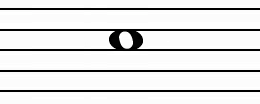


What is the name of the five lines and four spaces we write music on?
Staff
Clef
Rest
Measure

How do you call these symbols?
Clefs
Notes
Staff
Time Signature

What does this symbol mean?
Down bow
Up bow

What does this symbol mean?
Down bow
Up bow
In tone production and bow technique, what does W-A-S-P mean?
Weight, Angle, Speed, Point of contact
Weight, Angle, Size, Pressure
Weight, Accurate, Sound, Pressure
Weight, Accurate, Straight, Point of contact
What practice device do you need in tuning your instrument?
Metronome
Strings
Tuner
Timer
What practice device do you need in keeping a steady tempo?
Tuner
Bow
Timer
Metronome
A String player needs __________ to helps create friction between the bow hair and strings. It helps the bow grip the strings and produce sound.
Resin
Horse tail
Sound post
Rosin
Which bow motion creates an unpleasant tone production?
Circular Motion
Elliptical Motion
Curve motion
Linear motion
TENSION is a friend when...
we play fast, running passages.
we need to add weight to the bow for louder dynamics.
Which part of the sounding point is best for playing 'piano' (soft) dynamics?
Middle of the fine tuner/s and bridge.
Middle of the bridge and fingerboard.
Near the bridge.
Near the fingerboard.
Which part of the sounding point is best for playing 'forte' (loud) dynamics?
Middle of the fine tuner/s and bridge.
Middle of the bridge and fingerboard.
Near the bridge.
Near the fingerboard.
As a general rule in playing a string instrument, it is best to place the bow ___________________ .
between the tail piece and the bridge.
between the bridge and the edge of the fingerboard.
near the fingerboard.
near the bridge.
Which part of the bow do you play spiccato?
Tip / upper half
Middle
Frog
Balance point
The violin was first developed and perfected in _______.
Northern Itlay
France
Germany
Russia
Which name is NOT a famous string-instrument maker?
Amati
Guarneri
Ferrari
Stradivari

