wayground logo

Free Printable Worksheets

Font size

S
M
L
XL
Worksheets

Respiratory system

Total questions: 40

Worksheet time: 51mins

Name
Class
Date
1.
The two main jobs of the Respiratory System are
a)
Chewing and swallowing food
b)
Inhaling oxygen and exhaling carbon dioxide
c)
Sending blood through veins and arteries
d)
Protecting and comforting your Shiv Patella
2.
Swelling of the bronchi. It causes coughing, fever, and chest tightness.
a)
Allergies
b)
Bronchitis
c)
Asthma
d)
Pneumonia
3.
Inflammatory disease that causes the bronchi to become blocked or narrowed. (Not Bronchitis)
a)
Bronchitis
b)
Asthma
c)
Allergies
d)
Emphysema
4.
Disease in which the alveoli are damaged or destroyed. Strongly linked to smoking.
a)
Allergies
b)
Emphysema
c)
Asthma
d)
Pneumonia
5.
Disease in which tissue of the lungs is destroyed by the growth of a tumor.
a)
Allergies
b)
Emphysema
c)
Asthma
d)
Lung Cancer
6.
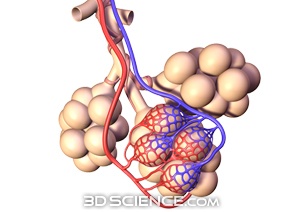
What are the tiny air sacs at the end of the Bronchioles, that transfer oxygen into the blood stream?
a)
Trachea
b)
Bronchi
c)
Alveoli
d)
Larynx
7.
The Trachea splits into 2 branches and each of these goes into 1 of the lungs.
a)
Bronchioles
b)
Alveoli
c)
Bronchi
d)
Esophagus
8.
The Bronchi branch out into many different smaller tubes which take oxygen to the alveoli. What are these tiny tubes called?
a)
Trachea
b)
Larynx
c)
Pharynx
d)
Bronchioles
9.
Another name for the throat is called the:
a)
Nasopharynx
b)
Pharynx
c)
Larynx
10.
When oxygen enters the body,lungs and capillaries and then CO2 leaves the body-this is known as:
a)
Cellular Respiration
b)
Internal Respiration
c)
External Respiration
11.
When oxygen goes in the body, to the muscles then carbon dioxide leaves muscles by blood to lungs- known as:
a)
External Respiration
b)
Internal Respiration
c)
Cellular Respiration
12.
What is the purpose of nose hairs?
a)
Fight disease
b)
No purpose
c)
Keep dust/particles out of nose
d)
Tickle the nose so you sneeze
13.
When you breathe, your lungs take in ___ and remove ___. 
a)
air/oxygen
b)
oxygen/carbon dioxide 
c)
carbon dioxide/waste 
d)
waste/air 
14.

Flap of tissue that covers the opening to the windpipe during swallowing

a)

Pharynx

b)

Trachea

c)

Epiglottis

15.
Given the following structures:
1. larynx
2. nasal cavity
3. pharynx
4. trachea
Which of the following is the correct order that air would flow during inhalation. 
a)
1,2,3,4
b)
2,3,1,4
c)
2,1,3,4
d)
4,2,3,1 
16.

Which part of the Respiratory System plays a major role in speech?

a)

nose

b)

pharynx

c)

larynx

d)

trachea

17.
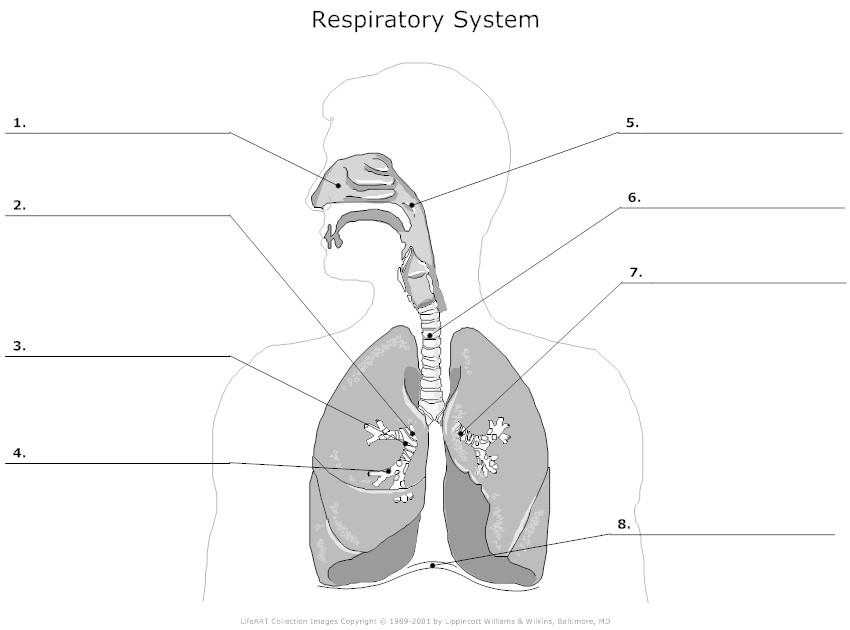
Name the structure labeled 8 
a)
lungs 
b)
trachea 
c)
diaphragm 
d)
alveoli 
18.

NUMBER 2:

a)

Pharynx

b)

Bronchi

c)

Alveoli

d)

Lungs

19.

NUMBER 6:

a)

Lungs

b)

Trachea

c)

Mouth

d)

Alveoli

20.

The organs lettered A and C are ....

a)

pharynx, trachea

b)

pharynx, epiglottis

c)

trachea, bronchi

d)

larynx, bronchi

21.
Label A is...
a)
Trachea
b)
Diagphragm
c)
Bronchus
d)
Alveolus
22.

When you exhale, the diaphragm

a)

moves upwards

b)

moves downwards

c)

flattens

d)

none of the above

23.

Which of the following is not part of the Respiratory System?

a)

Trachea

b)

Larynx

c)

Lungs

d)

Stomach

24.

Hair in your nose and mucus help to trap dust, bacteria, and other materials from going into your lungs when you breathe in.

a)

True

b)

False

25.

Your lungs have as much surface area as a ___________

a)

tennis court

b)

soccer field

c)

classroom desk

d)

kitchen table

26.

What part of the respiratory system is this?

a)

Trachea

b)

Lungs

c)

Nose

d)

Larynx

27.

Choose a disease of the respiratory system!

Escoge una enfermedad del Sistema Respiratorio

a)

Diarrhea

b)

Bread

c)

Asthma

d)

Laryngitis

28.

What type of cells carry oxygen in the blood?

a)

red blood cells

b)

white blood cells

29.

Which lung has 2 lobes?

a)

Right

b)

Left

30.

The only externally visible part of the respiratory system

a)

Eyes

b)

Nose

c)

Pharynx

d)

Larynx

31.

The arrow is pointing to...

a)

False vocal cords

b)

Glottis

c)

True vocal cords

d)

Trachea

32.

Chronic Obstructive Pulmonary Disease is caused by

a)

damaged alveoli limiting gaseous exchange

b)

Damaged diaphragm limiting lung volume

33.
Volume of air that remains in the lungs after maximum expiration
a)
Residual Volume
b)
Expiratory capacity
34.

Boyle's Law states that

a)

When temperature is changing, Volume and Pressure are inversely related.

b)

When temperature is changing, Volume and Pressure are directly related.

c)

When temperature is constant, Volume and Pressure are inversely related.

d)

When temperature is constant, Volume and Pressure are directly related.

35.

A disease caused by bacteria called Mycobacterium.

a)

Tuberculosis

b)

Coryza

c)

Cystic Fibrosis

d)

Pneumonia

36.

Unexpected death of an infant during sleep

a)

SIDS

b)

COPD

c)

Coryza

d)

Emphysema

37.

A genetic disorder that affects mostly the lungs, but also the pancreas, liver, kidneys, and intestine.

a)

Cystic Fibrosis

b)

Emphysema

c)

Asthma

d)

COPD

38.

A disease caused by damage to the Alveoli causing shortness of breath.

a)

Emphysema

b)

Tuberculosis

c)

Cystic Fibrosis

d)

Pneumonia

39.

A highly contagious respiratory illness caused by viruses that causes high fever, chills, and pain in the muscles

a)

Influenza

b)

Pneumonia

c)

Cystic Fibrosis

d)

Coryza

40.

An infection that inflames the air sacs in one or both lungs. The air sacs may fill with fluid or pus (purulent material), causing cough, difficulty breathing, and pain in the lungs.

a)

Pneumonia

b)

COPD

c)

Emphysema

d)

Asthma