
 Worksheets
Atomic Theory, Structure and Using the Periodic Table
Total questions: 46
Worksheet time: 53mins
Using a periodic table, determine which of the following pairs of elements would have the most similar properties: (SC.8.P.8.6)
(H) Hydrogen and (He) Helium
(N) Nitrogen and (Si) Silicon
(Ca) Calcium and (Fe) Iron
(Li) Lithium and (K) Potassium
Which of the following statements best describes the basic structure of an atom? (SC.8.P.8.7)
Electrons and protons are in motion around a nucleus that contains neutrons.
Neutrons are in motion around a nucleus that contains protons and electrons.
Protons are in motion around a nucleus that contains electrons and neutrons.
Electrons are in motion around a nucleus that contains protons and neutrons.
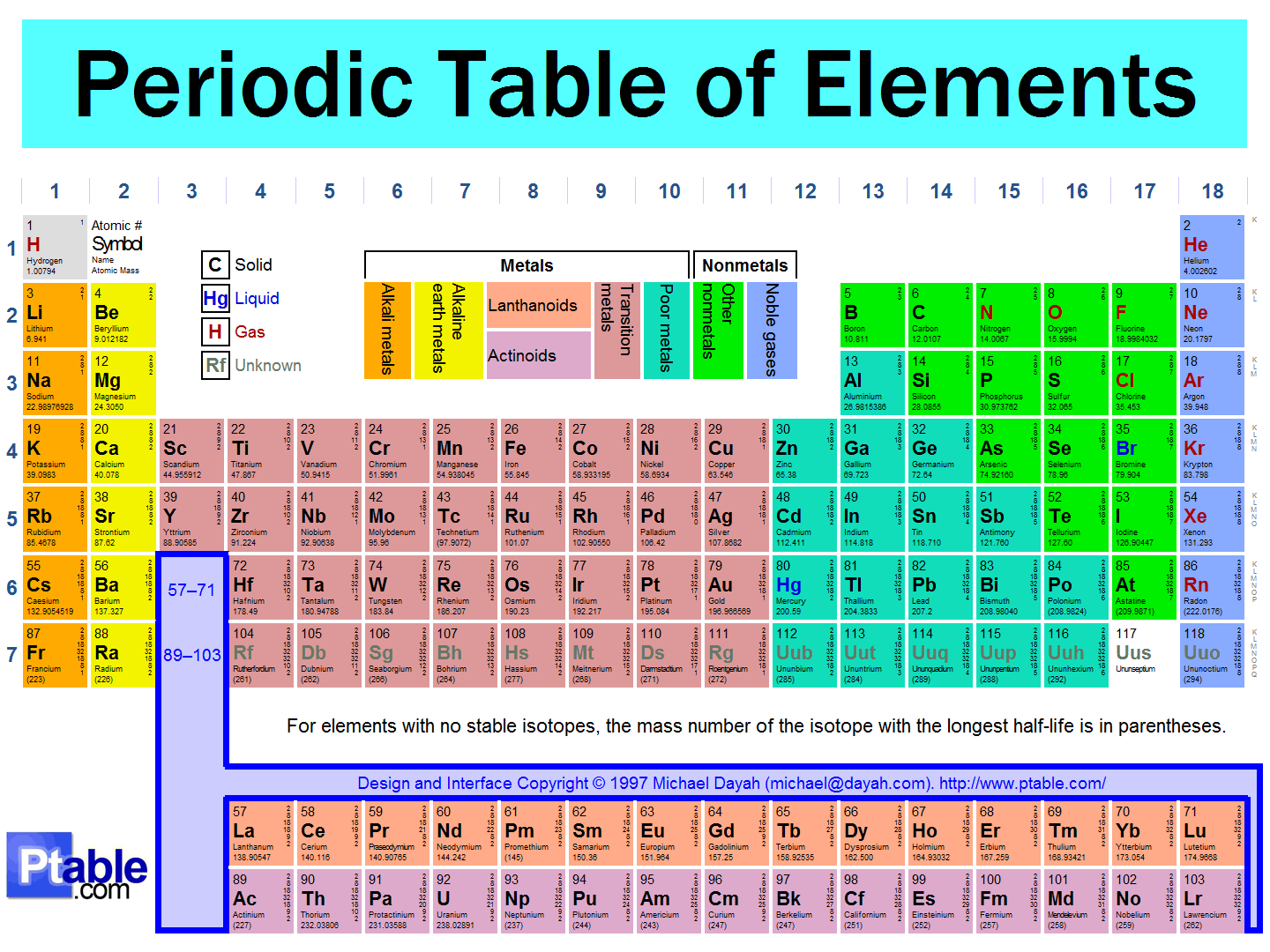
The horizontal (side to side) rows in the Periodic Table are called
groups
families
periods
atomic numbers

Why is the overall charge of an atom neutral (0)?
They have the same number of protons and neutrons.
They have the same number of protons and electrons.
They have the same number of electrons and neutrons.
146C has a half-life of 5730 years how many grams of a 4.0 g sample would be left after 3 half-lives?
1.0 g
0.5 g
0.38 g
None would be left


USE THE PERIODIC TABLE
How many valence electrons does carbon have?
4
12
6
14
USE THE PERIODIC TABLE
How many valence electrons does sodium have?
1
2
3
4
USE THE PERIODIC TABLE
Find the element that has 3 Valence Electrons and 2 energy levels.
Magnesium - Mg
Lithium - Li
Aluminum - Al
Boron - B
USE THE PERIODIC TABLE
Find the element that has 5 Valence Electrons and 4 energy levels.
Arsenic - As
Selenium - Se
Calcium - Ca
Vanadium - V

Is this the correct Lewis Dot Structure for Boron?
Yes
No, missing electrons
No, too many electrons
No, dots are in wrong place.

Is this correct way to draw the Lewis Dot Structure for Carbon?
Yes
No, too many electrons
No, not enough electrons
No, dots are in wrong places

This could be the dot diagram of
Mg
Cl
C
O

This is a correct dot diagram for carbon (C)
true
false
What is the maximum number of electrons that can fill up the 2nd energy level?
2
4
8
What is the maximum number of electrons that can fill up the 1st energy level?
2
4
8
What are the elements (Be, Mg, Ca,...) in group 2 called?
Alkali metals
Alkaline earth metals
Halogens
Nobel Gases
The elements on the Periodic Table are arranged in order of increasing...
mass number
atomic number
number of isotopes
number of valence electrons
Which of the following element is an example of Halogen
Sodium
Magnesium
Fluorine
Carbon
Which of the following is not an alkali metal?
Cesium
Francium
Hydrogen
Sodium
------ are poor conductors of heat and electricity
Transition metals
All metals
Non metals
Copper
Which of the follwing group of elements have 7 electrons in their outer most energy level?
Actinides
Noble gases
Lanthanides
Halogens
Elements of the same group have similar chemical properties
False
True
Not enough information
May be true

First person to propose the concept of an atom
Rutherford
Democritus
Dalton
Bohr
Name the path electron travel around the nucleus.
Ring
space
orbit
If an electron moves from lower energy level to higher energy level it is called
ground state
excited state
neutral state
3. How is the Quantum Mechanical Model (QMM) different from Bohr's model?
The QMM shows the probability of the electron's location.
The QMM shows the exact location of the electron.
Bohr's model shows the probability of the electron's location.
The QMM does not include a nucleus.
Which scientist developed the Quantum Mechanical?
E. Schroedinger
J. Dalton
W. Heisenberg
N. Bohr

