
 Worksheets
Transportation in plants
Total questions: 31
Worksheet time: 17mins
The function of transpiration is to transport _______ and ____________ from the roots to the leaves
water, mineral salts
food, nutrients
water, food
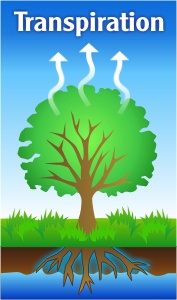
Why plants become wilt?
Less water evaporate from the plants
The plant loss excessive amount of water through transpiration
The stomata of the plants are closed
The weather are cool.
The function of transpiration is to transport _______ and ____________ from the roots to the leaves
water, mineral salts
food, nutrients
water, food
Which of the following indicates the pathway of water through a plant?
root hair cell --> xylem --> stomata
stomata --> root hair cell --> xylem
xylem --> stomata --> root hair cell
Root hairs help in absorption of water by
increasing the surface area
decreasing the surface area
holding the plant in the soil
none of the above
What is the function of waxy cuticle on the leaves surface?
Provide water for the plant through the leaves
Reduce the loss of water from the plants by evaporation
Protect the plants from danger
Which is true?
95% of water taken by the plant evaporates through transpiration
9% of water taken by the plant evaporates through transpiration
Evaporation through transpiration accounts only for 1% of all the water the plant takes in
Evaporation through transpiration is minuscule
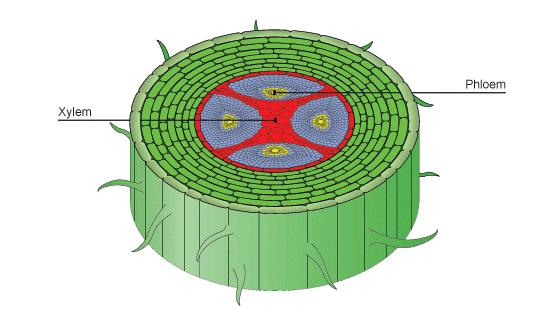
Specific type of plant tissue that transports water and minerals from the roots, through the stems, to leaves
vascular plant
nonvascular plant
xylem
phloem

Specific type of plant tissue that transports food (sugar) made in the leaves to the entire plant
vascular plant
nonvascular plant
xylem
phloem

Blood carries _________ from the lungs to the cells of the body.
Argon
Neon
Carbon Dioxide
None of these
Which of the following are parts of the heart?
Right Auricle
Left ventricle
Tricuspid Valve
Cerebrum
The red pigment in blood is called
Plasma
Arteries
Haemoglobin

Heart is located in the _____________
Brain Cavity
Chest
Chest Cavity
Beside's Kidney

The fluid part of blood is called-
Haemoglobin
White blood cells
Plasma
Which part of the blood has haemoglobin?
WBCs
RBCs
Blood platelets
Plasma
_____ is the muscular wall that devides the heart length wise-
Septum
Ventricle
Atrium
None
________ help in the clotting of blood.
WBCs
RBCs
Platelets
Blood Plasma
________ is the blood vessels which carry oxygen rich blood, from the heart, to all parts of the body.
Arteries
Veins
Systole
Xylem
Which of the following is not a function of blood?
Blood cells, especially the WBCs, help fight infections.
Blood helps to distribute the digested food to all parts of the body.
Circulation of blood helps to maintain the body temperature
Blood removes the carbon dioxide, produced during respiration.
The blood vessels, having thick elastic walls are called-
Arteries
Veins
Capillaries
Atria
Contraction of the heart muscles is also called-
Systole
Diastole
Which of the following indicates the pathway of water through a plant?
root hair cell --> xylem --> stomata
stomata --> root hair cell --> xylem
xylem --> stomata --> root hair cell

