
NEW
Font size
 Worksheets
Unit 3 & 7 Test Review
Total questions: 34
Worksheet time: 26mins


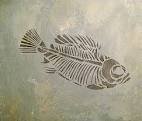
The remains of an organism studied by scientists is called a ____________.
paleontologist
fossil
dinosaur
shark
When something is _____________________ it no longer
exists.
extinct
preserved
endangered
rotting
Which is NOT a reason scientists study fossils?
They tell us how long a species existed on Earth.
To learn how organisms are related to each other.
How organisms communicated with each other.
Fossils tell scientists the types of environments that organisms lived in.
Which type of fossil is created when an organism gets trapped in tree resin?
Trace
Mold/Imprint
Amber
Cast
Which is NOT a way an organism could become a fossil?
It can be frozen in ice.
It can be quickly buried in sediment after death.
It can be trapped in the resin of a tree.
It can be left out in the sun to decompose.
An organism should be buried quickly after it dies if it has a chance of becoming a fossil
True
False
How do scientists learn about dinosaurs?
by studying fossils
by reading about them
by watching movies
by looking at pictures
A solid copy of the shape of an organism is...
a fossil record
a mold
a carbon film
a cast
What type of fossils provide evidence of the activities of ancient organisms?
molds and casts
petrified fossils
trace fossils
carbon films
A hollow area in sediment in the shape of an organism or part of an organism is.....
a cast
a mold
a trace fossil
a petrified fossil
an area describes the weather conditions in the area over a long period of time
fossil
trace fossil
uniformitarianism
climate
What book of the Bible gives the Creation account?
Exodus
John
Genesis
Psalms

This image is a made up image of which theory?
Darwinian Evolution
Creation
If something was created then reason would say that there must be a...
reader
scientist
painter
creator

This image supports which theory? Things reproducing after "their own kind"?
Darwinian Evolution
Biblical Creation
Where does it state in Genesis that God created all living things to reproduce after it kind? Psst, you can use a Bible for this question:)
Gen. 1:20-25
Gen. 5:20-21
Gen. 3:16
Gen 2: 20-22
Which order of events makes most sense according to the Biblical account?
Fall of mankind, creation, global flood, spread of civilizations.
Creation, fall of mankind, global flood, spread of civilizations.
Spread of civilizations, fall of mankind, creation, global flood.
Global flood, spread of civilizations, fall of mankind, creation.
Since no humans were around at the beginning of time we must have __________________ and look at the _______________ around us for answers.
facts; evidence
faith; evidence
hope; faith
science books; facts
Dinosaurs are NOT in the Bible?
True
False

Who was the Scientist most famous for his study of natural selection and evolution?
Theodor Schwann
Robert Hooke
Charles Darwin
Rudolf Virchow

What do you call a characteristic that allows an organism to survive in an environment?
variation
adaptation
selection
overproduction

Genesis tells us that God created the universe in 6 days and rested on the 7th day. What did God create on day 6?
Land animals and humans.
Birds and fish of the sea.
Sun and moon and all other starts and planets.
Light and darkness.

Genesis tells us that God created the universe in 6 days and rested on the 7th day. What did God create on day 5?
Light and darkness
Mammals
Sun and moon and all the starts and planets.
Birds of the air and fish of the sea.

Genesis tells us that God created the universe in 6 days and rested on the 7th day. What did God create on day 4?
Sun and the moon and all the starts and planets.
Land animals and humans
Trees and seas.
Light and darkness

Genesis tells us that God created the universe in 6 days and rested on the 7th day. What did God create on day 3?
Land and vegetation
Light and Darkness
Land Animals
Humans

Genesis tells us that God created the universe in 6 days and rested on the 7th day. What did God create and do on day 2?
He created light and darkness
Created and separated the waters
Stars of the sky
Animals on land

Genesis tells us that God created the universe in 6 days and rested on the 7th day. What did God create on day 1?
Animals
People
Oceans
Light and Darkness

