
 Worksheets
Environmental Science Culminating Assessment
Total questions: 45
Worksheet time: 40mins
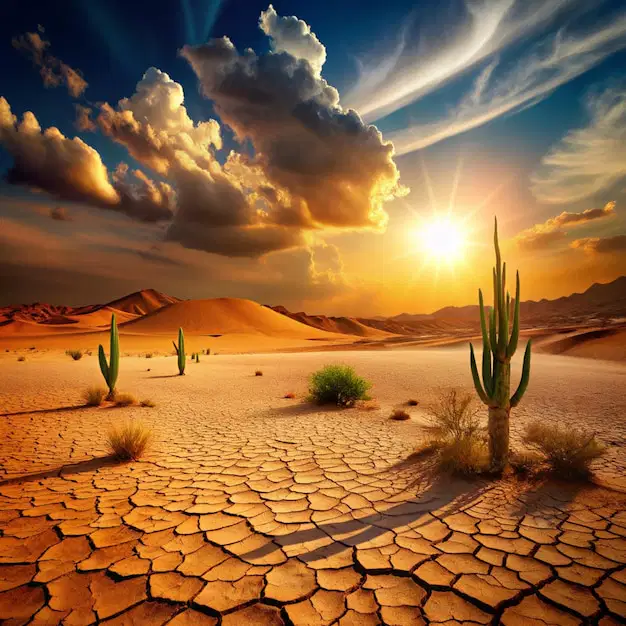
What is the name of the process that causes land to becomes more extremely dry like a desert because of human activity or climate change?
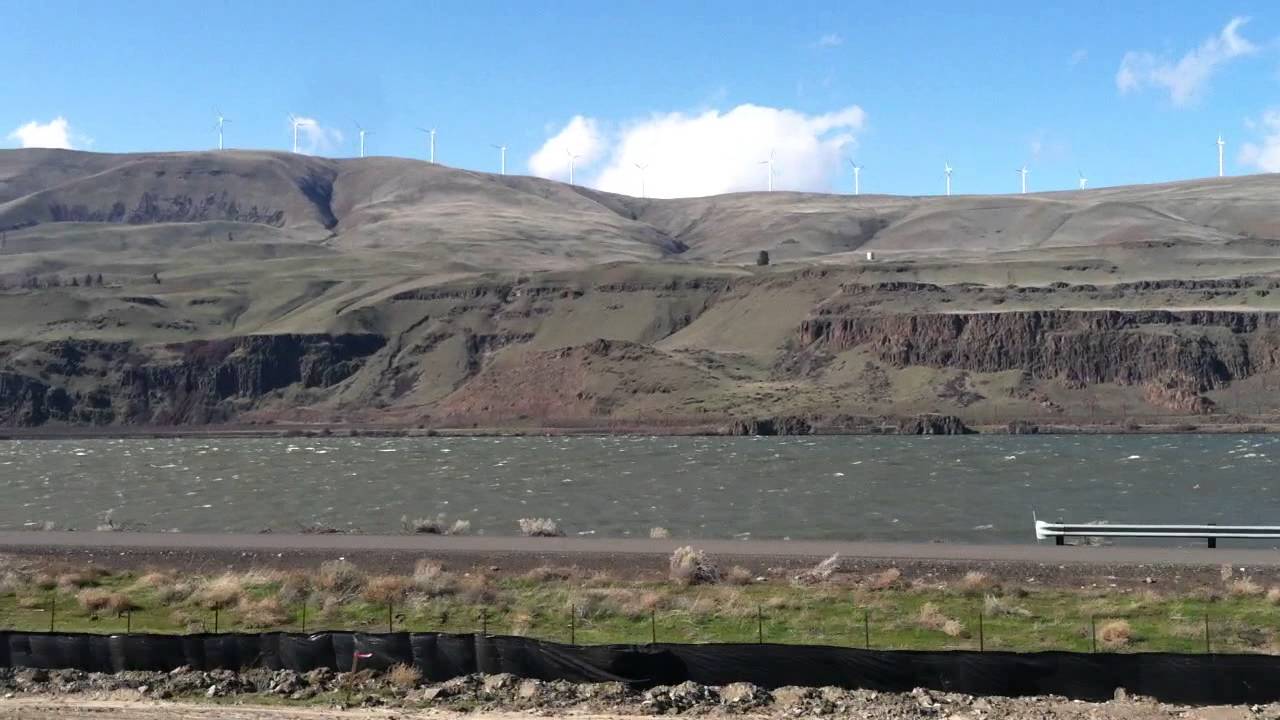
Energy can be classified into two major categories
A natural resource that is naturally formed much more slowly than we use it is called
renewable
nonrenewable
sustainable
ecological
Which of the following is an example of a nonrenewable natural resource?
wind energy
natural gas
geothermal energy
sunlight
What is the term for organisms, including plants and algae, that create their own food?
consumers
producers
legumes
decomposers
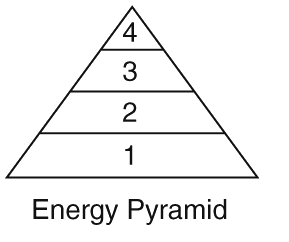
Level 1 on the pyramid
Producers
Primary Consumer
Secondary Consumer
Tertiary Consumer


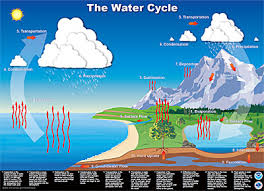

Which of the following is a nonrenewable resource?
Trees
Sun
Coal
Wind

Has permafrost; in the Arctic or Antarctic
taiga
savanna
desert
tundra


Which of the following organisms is a primary consumer?
grass
rabbit
fox
snake

The Arctic is known as an ocean surrounded by land, but Antarctica is known as...
a continent surrounded by continents
a large ocean covered in ice
land surrounded by oceans
The Arctic is known as an ocean surrounded by land, but Antarctica is known as...
a continent surrounded by continents
a large ocean covered in ice
land surrounded by oceans

What ocean is the black dot on?
Atlantic Ocean
Indian Ocean
Arctic Ocean
Pacific Ocean
What are the only large animals to live in the Antarctic region year-round?
ice cubes
snowshow crabs
geese
emperor penguins

Where do polar bears live?
Africa
Australia
Arctic
Florida
Science can change and is a continually ongoing process.
True
False
Which of these contains the steps of the scientific method in the correct order?
Ask a question, do background research, state your hypothesis, conduct an experiment, analyze data, make a conclusion
State your hypothesis, ask a question, do background research, conduct an experiment, analyze data, make a conclusion
Ask a question, state your hypothesis, do background research, conduct an experiment, make a conclusion, analyze data
State your hypothesis, ask a question, do background research, make a conclusion, conduct an experiment, analyze data
The __________________________________ is the organized way scientists answer questions and solve problems.
scientific method
scientific explanation
scientific notation
scientific guesses
When should you write a hypothesis?
After writing procedures
After making observations and doing research on a question/problem
After buying materials for an experiment
At the very beginning of the experiment
Choose the best-written hypothesis that answers the question:
Question: Why is my room warmer during the day than at night?
Sunlight is making my room warmer.
Mr. Nuzzo has the heat turned on in the morning.
If I close my blinds during the day, then my room will be cooler because sunlight cant get in.
Sunlight actually cools down a room.

True or False. Antarctica is a nation?
True
False

What hemispheres are Antarctica located in?
Northern and Eastern
Southern, Eastern, and Western
Southern and Eastern
Northern. Eastern, and Western

What is filling up in our atmosphere and leading to Earth warming up?
Carbon Dioxide
Carbon Monoxide
Carbon Fioxide
Carbon Trioxide
True or False. Antarctica is not difficult to travel too and many people vacation there every year.
True
False
How is Antarctica similar to space?
It is cold and without much sunlight.
It is cold and has little gravity.
It is a hard place for robots to work.
It is able to support plants and animals.

Brazil
Guyana
Chile

Uruguay
Argentina
Peru

Bolivia
Brazil
Colombia
Find Venezuela on the map


What ocean is east of Brazil?

Why is South America a geographically diverse continent?
Vast size, has a rainforest, mountain ranges, deserts and rivers

Nicaragua
Panamá
México
Guatemala

Cuba
Puerto Rico
República Dominicana
Costa Rica
What is the capital of El Salvador?
San Salvador
El Salvador
Managua
San Juan

What is the yellow box surrounding?
Caribbean Sea
Amazon River
Atlantic Ocean
Pacific Ocean

