wayground logo

Free Printable Worksheets

NEW

Font size

S
M
L
XL
Worksheets

Periodic Table - full unit

Total questions: 50

Worksheet time: 1hrs 16mins
Name
Class
Date
1.
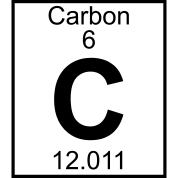
What does the 6 represent?
a)
atomic mass
b)
atomic number
c)
element name
d)
chemical symbol 
2.
What does 12.011 represent?
a)
atomic mass
b)
atomic number
c)
element name
d)
chemical symbol 
3.

the basic structural unit of matter

a)

atom

b)

matter

c)

element

d)

nucleus

4.

a collection of atoms of one type that cannot be broken down into simpler substances by ordinary chemical or physical means

a)

element

b)

subatomic particle

c)

electron

d)

matter

5.

the positively charged subatomic particle contained in the nucleus of an atom

a)

proton

b)

neutron

c)

electron

d)

matter

6.

a subatomic particle, contained in the nucleus of an atom, having the same mass as a proton but no electrical charge

a)

proton

b)

neutron

c)

electron

d)

matter

7.

a negatively charged subatomic particle that orbits the nucleus of an atom

a)

proton

b)

neutron

c)

electron

d)

matter

8.

the mass of an atom, calculated by adding the number of protons and neutrons in the nucleus of the atom

a)

element name

b)

element symbol

c)

atomic number

d)

atomic mass

9.
The atomic number of this pictured element is
a)
28
b)
58.6934
c)
Ni
d)
Nickel
10.
What is the atomic mass of Neon?
a)
10
b)
30
c)
10.18
d)
20.18
11.
How many protons are in this element?
a)
79
b)
196
c)
117
d)
Cannot be determined
12.
How many neutrons are in a Gold atom?
a)
79
b)
196
c)
118
d)
275
13.

Which elements are to the LEFT of the zigzag?

a)

metals

b)

nonmetals

c)

metalloids

14.

Which elements are colored red?

a)

nonmetals

b)

metals

c)

metalloids

15.
All of these properties describe metals except...
a)
malleable
b)
conductors
c)
brittle 
d)
shiny
16.
Which is an electron?
a)
A
b)
B
c)
C
17.

a row on the Periodic Table of Elements

a)

family

b)

period

c)

row

d)

isotope

18.

a grouping of elements based on similar properties, arranged by columns in the periodic table; also known as a family

a)

group

b)

period

c)

row

d)

isotope

19.

What are valence electrons?

a)

Any of an atom's electrons

b)

Electrons located on the first energy level

c)

Electrons not attached to any atom

d)

electrons located on the outer energy level

20.

What Element is in period 4, group 5A?

a)

Antimony

b)

Arsenic

c)

Tin

d)

Germanium

21.

How many electrons does Barium (Ba) have?

a)

13

b)

2

c)

71

d)

56

22.

Why are halogens so reactive?

a)

They want to get rid of their only valance electron

b)

They only need one more electron

c)

They are non reactive, they have a full shell

23.

How many valence electrons does a carbon atom have?

a)

8

b)

4

c)

2

d)

6

24.
Which is a halogen?
a)
Helium
b)
Chlorine
c)
Oxygen
d)
Neptune
25.
Which is an alkali metal?
a)
Magnesium
b)
Iron
c)
Sodium
d)
Europium
26.
In the modern periodic table elements are arranged by:
a)
atomic mass
b)
atomic number
c)
valence electrons
d)
number of isotopes
27.

Xenon is an example of

a)

Alkali Metal

b)

Alkali Earth Metal

c)

Halogen

d)

Noble Gase

28.

Which element is this?

a)

H

b)

He

c)

Li

d)

B

29.

What element is this?

a)

Sulfur

b)

Aluminum

c)

Argon

d)

Silicon

30.
a)
Periods
b)
Groups
31.

Why do atoms create bonds with other atoms?

a)

to get a full outer shell

b)

to make colorful compounds

c)

to find atoms with the same number of electrons

d)

because they are lonely

32.
Group on the periodic table that is naturally stable and does not react with other elements.
a)
Nobel Gases
b)
Alkali Metals
c)
Alkaline Earth Metals
d)
Halogens
33.
Atoms of the same element but with different numbers of neutrons.
a)
Ion
b)
Isotope
c)
Mass Number
d)
electron
34.

What is wrong with this Bohr Model?

a)

Nothing. It's fine.

b)

It has the wrong number of total electrons.

c)

It has the wrong number of electrons on the first energy level.

d)

It has the wrong number of electrons on the second energy level.

35.

What element is this?

a)

Boron

b)

Lithium

c)

Oxygen

d)

Sulfur

36.

How many valence electrons does this Bohr Diagram have?

a)

2

b)

7

c)

3

d)

17

37.
When does radioactive decay occur?
a)
When the nucleus of an isotope is unstable
b)
When the nucleus of an isotope is stable
c)
When the electrons of an isotope are spinning
d)
When the electrons of an isotope are shared with another isotope
38.
A helium nucleus with two protons and two neutrons is called a(n) ____.  
a)
alpha particle
b)
electroscope
c)
beta particle
d)
gamma ray
39.

An alpha particle is sometimes written as

a)

42He

b)

0-1e

c)

0+1 e

d)

10n

40.
Solve this equation for alpha decay.
20985At = ___ + 42He
a)
20583Bi
b)
20986Rn
c)
20781Tl
d)
20885At
41.
Solve this equation for alpha decay.
22688Ra = ___ + 42He
a)
22286Rn
b)
22689Ac
c)
22484Po
d)
22588Ra
42.
What is the product of the alpha decay of Gold-175?
a)
Ir-171
b)
Tl-179
c)
Au179
d)
Au171
43.
What makes something radioactive?
a)
elements with an atomic number above 81
b)
an unstable nucleus
c)
contaminated sewage
d)
It decays over time
44.
The splitting of a nucleus into smaller nuclei is
a)
fusion
b)
fission
c)
half-life
d)
gamma radiation
45.
Which type of nuclear radiation is being emitted here?
a)
alpha
b)
beta
c)
gamma
d)
none
46.
What particle completes this reaction?
a)
alpha particle
b)
beta particle
c)
gamma particle
d)
neutron
47.
Solve this equation for beta decay.
614C = ___ + -10e
a)
410Be
b)
714N
c)
210He
d)
613C
48.

When a substance undergoes beta decay

a)

The atomic number increases by 1

b)

The atomic number decreases by 2

c)

The atomic number does not change

49.
Negatively charged particles emitted from a nucleus at a high speed are ____.  
a)
alpha particle
b)
gamma rays
c)
beta particles
d)
X rays
50.
What does the symbol -10e represent
a)
alpha
b)
beta
c)
gamma
d)
the zero element