wayground logo

Free Printable Worksheets

Font size

S
M
L
XL
Worksheets

Matter, Atoms, & Isotopes

Total questions: 31

Worksheet time: 33mins

Name
Class
Date
1.

Subatomic particle with a negative charge

a)

proton

b)

electron

c)

neutron

d)

nucleus

2.

Subatomic particle with no charge

a)

proton

b)

neutron

c)

electron

d)

nucleus

3.

The smallest unit of matter that retains the identity of a substance

a)

atom

b)

isotope

c)

proton

d)

nucleus

4.

Anything that has mass and takes up space

a)

atom

b)

element

c)

matter

d)

molecule

5.

The number of protons in the nucleus of an atom

a)

atomic mass

b)

atomic number

c)

isotope

d)

nucleus

6.

equal to the number of protons plus neutrons in the nucleus of an atom

a)

atomic mass

b)

atomic number

c)

isotope

d)

valence electrons

7.

each of two or more forms of the same element that contain equal numbers of protons but different numbers of neutrons

a)

isotope

b)

cohesion

c)

molecule

d)

compound

8.

The nucleus of an atom consist of:

a)

electrons

b)

protons and electrons

c)

protons and neutrons

d)

neutrons and electrons

9.

Which of the following is NOT an example of matter?

a)

water

b)

air

c)

cake

d)

sunlight

10.

Which of the following states of matter has a definite volume and a definite shape?

a)

solid

b)

liquid

c)

gas

d)

plasma

11.

Which state of matter takes the shape of the container that it is in?

a)

solid

b)

liquid

c)

gas

d)

plasma

12.
What is the atomic mass of "F"
a)
9
b)
18
c)
17
d)
19
13.
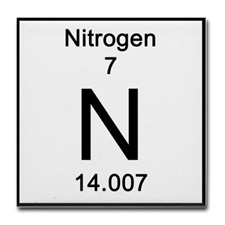
What is the number of protons that the element in this image contain?
a)
14
b)
7
c)
15
d)
18
14.

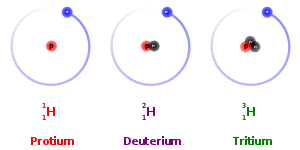
Different isotopes have...

a)

different masses

b)

different protons

c)

different electrons

15.
A neutral atom of the isotope 2612Mg would consist of
a)
12 protons, 26 neutrons, 26 electrons
b)
26 protons, 12 neutrons, 26 electrons
c)
26 protons, 14 neutrons, 14 electrons
d)
12 protons, 14 neutrons, 12 electrons
16.
Which of the following statements regarding subatomic particles is incorrect?
a)
Protons are positively charged particles and neutrons have no charge.
b)
The relative mass of the proton, electron and neutron the same.
c)
In a neutral atom the number of protons equals the number of electrons.
d)
Isotopes of an element have the same number of protons but a different number of neutrons.
17.
An atom is electrically neutral when
a)
protons and neutrons are the same
b)
protons and electrons are the same
c)
neutrons and electrons are the same
d)
neutrons balance the protons and electrons
18.
Isotopes of the same element have the same number of 
a)
protons
b)
neutrons
c)
electrons
d)
not enough information
19.
Which of the following particle pairs has approximately the same mass?
a)
protons and neutrons
b)
protons and electrons
c)
neutrons and electrons
d)
protons, neutrons and electrons
20.
A carbon isotope consists of 6 protons, 6 electrons and 8 neutrons.  What is the mass number for this isotope?
a)
12
b)
14
c)
6
d)
8
21.

Which number identifies the number of protons

a)

12

b)

24.305

c)

24

d)

24-12

22.
How many neutrons does the isotope of lithium have?
a)
8
b)
3
c)
4
d)
5
23.
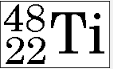
How many protons does this isotope of titanium have?
a)
48
b)
22
c)
26
d)
70
24.
In a correctly written symbol what would be located in the "A" position?
a)
number of neutrons
b)
atomic number
c)
number of electrons 
d)
mass number
25.
How many electrons are in an atom that has an atomic number of 34, an atomic mass of 74 and a charge of -2?
a)
34
b)
36
c)
2
d)
40
26.

Mass is a measurement of:

a)

the amount of particles a substance has.

b)

the space an object occupies

27.

Volume is a measurement of:

a)

the amount of particles a substance has.

b)

the space an object occupies

28.

Matter is anything that has:

a)

mass

b)

volume

c)

mass and volume

d)

substance

29.

How would you find the volume of an irregular shaped object?

a)

use a ruler to measure its dimensions

b)

water displacement

c)

use a balance/scale

d)

use a timer

30.

What is the density of a liquid if its volume is 125 mL and its mass is 50 g?

(D = M/V)

a)

2.5 g/mL

b)

175 g/mL

c)

0.4 g/mL

d)

6250 g/mL

31.
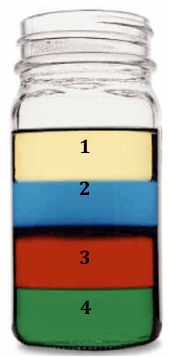
Put the liquids in order from most dense to least dense?
a)
4, 3, 2, 1
b)
1, 2, 3, 4
c)
3, 4, 2, 1, 
d)
4, 3, 1, 2