wayground logo

Free Printable Worksheets

Font size

S
M
L
XL
Worksheets

NSCHS_VAC2_Unit1_Quiz_ Wade Dean

Total questions: 55

Worksheet time: 44mins

Name
Class
Date
1.

Graphic elements and text should contrast with your backgrounds.

a)

True

b)

False

2.

Using color effectively in you presentation will create ...

a)

Contrast

b)

Visual issues

c)

Simplicity

3.

The more information and images you have on your slide the better.

a)

True

b)

False

4.

The placement of elements on the page so they are evenly distributed

a)

Balance

b)

Proximity

c)

Unity

d)

Contrast

5.

The difference between two or more elments is known as?

a)

Contrast

b)

Balance

c)

Proximity

d)

Unity

6.

The distance or area between or around things

a)

Space

b)

Texture

c)

Line

d)

Shape

7.
Visual movement is used by artists to direct viewers through their work, often to a certain point in the picture. This is called a...
a)
empty space
b)
back drop
c)
focal point
8.
The principle of emphasis is used by artists to create dominance & focus in their work.  Your eye is drawn to which color?
a)
red 
b)
green
9.
What is COMPOSITION?
a)
The application of color theory in a design.
b)
The arrangement of visual information in an art piece.
c)
The demonstration of an art technique or skill.
d)
The consideration of craftsmanship in an art piece.
10.
Which of the following is NOT a reason why composition is important to the Graphic Arts?
a)
A good composition engages the viewer visually.
b)
A good composition helps the viewer find information quickly.
c)
A good composition keeps the viewer interested.
d)
A good composition is done quickly and timely.
11.
Which Principle of Design fits this definition?
"The consideration of weight and importance in an art piece." 
a)
Balance
b)
Unity
c)
Proportion
d)
Movement
12.
What type of Balance is demonstrated when the visual weight is even on both sides?
a)
Symmetric Balance
b)
No Balance
c)
Asymmetric Balance
d)
Radial Balance
13.
What type of Balance is demonstrated when the visual weight is heavier on one side than the other?
a)
Symmetric Balance
b)
Radial Balance
c)
No Balance
d)
Asymmetric Balance
14.
What type of Balance is demonstrated when the visual weight is distributed from the center-outward.
a)
Symmetric Balance
b)
Radial Balance
c)
No Balance
d)
Asymmetric Balance
15.
Which Principle of Design fits this definition?
"The path in which the viewer's eye travels across the work of art."
a)
Movement
b)
Emphasis
c)
Pattern
d)
Unity
16.
Which Principle of Design fits this definition?
"The repeating of an object or symbol."
a)
Variety
b)
Repetition
c)
Emphasis
d)
Pattern
17.
What photography technique creates a composition guide by dividing the picture plane into thirds (horizontally & vertically) - and placing the subject matter on one of the intersections?
a)
Balance
b)
Composition
c)
The Rule of Thirds
d)
The Principles of Design
18.
Which Principle of Design fits this definition?
"A visual element that catches the viewer's attention."
a)
Variety
b)
Proportion
c)
Emphasis
d)
Unity
19.
What is another name for white space?
a)
Holy space
b)
Blank space
c)
Outer space
d)
Negative space
20.
What is the purpose of white space?
a)
To make the composition look bright
b)
To define and separate different sections
c)
To make the composition look empty
d)
To hurt people's eyes
21.
Why is composition important?
a)
it give works structure and make it easier to navigate
b)
it smells good
c)
it gives you answers
d)
it lets you cheat
22.
When the frame is divided into nine imaginary sections creating reference points which act as guides for framing the image.
a)
Horizon Line
b)
Noseroom
c)
Leadroom
d)
The Rule of Thirds
23.
Which option is NOT used to create contrast?
a)
Use more than 1 style of text
b)
Use color
c)
Use a monochromatic color scheme
d)
Use objects of different sizes
24.
What is Composition?
a)
All the things in the design.
b)
Structure of design
c)
Visual beauty
d)
The content
25.
What is contrast?
a)
When one item is different from another
b)
When two colors are the same
c)
When a composition has negative space
d)
The foundation of a work
26.
What type of Balance is this image an example of ?
a)
Symmetrical
b)
Asymmetrical
c)
Formal
d)
Symmetrical & Formal
27.
Emphasis refers to the part of art which is what?
a)
The most colorful
b)
In the center
c)
The most dominant
28.
Can a black and white painting such as this painting by Franz Kline show emphasis?
a)
Yes
b)
No
29.
This painting demonstrates which principle?
a)
Contrast of color
b)
Contrast of shape
c)
Contrast of color & shape
d)
Sunset
30.
Line, color, value, texture, shape, form, and space are considered...
a)
elements of design
b)
principles of design
31.
Balance, pattern, movement, emphasis, rhythm, unity, and contrast are considered...
a)
principles of design
b)
elements of design
32.
Rhythm is the __________ of visual movement--colors, shapes, or lines.  Fill in the missing word.
a)
repetition
b)
stopping
c)
replacing
33.
Visual movement is used by artists to direct viewers through their work, often to a certain point in the picture. This is called a...
a)
empty space
b)
back drop
c)
focal point
34.
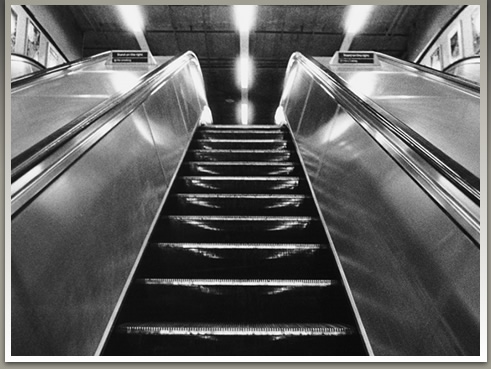
The element of space has depth, width, and height.  Actual space is a ___-dimensional volume that can be empty or filled with objects. Choose the best answer based on the image provided.
a)
1
b)
2
c)
3
35.
This image is a good example of which element?
a)
movement
b)
pattern
c)
line
d)
form
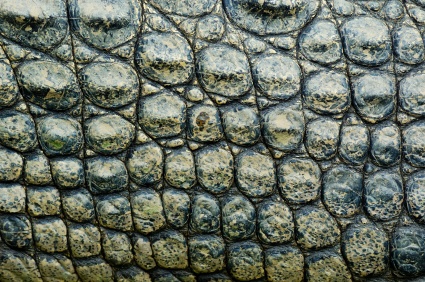
36.
The image is a good example of which element?
a)
pattern
b)
texture
c)
shape
d)
emphasis
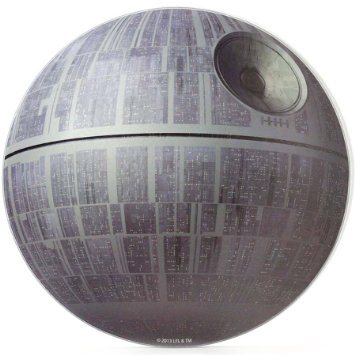
37.
This image is a good example of which element?
*hint- three dimensional
a)
rhythm
b)
contrast
c)
form
d)
shape
38.
This image is a good example of which element?
a)
value
b)
balance
c)
emphasis
d)
color
39.
__________ is the equal distribution of visual weight in a design.
a)
emphasis
b)
balance
c)
space
d)
value
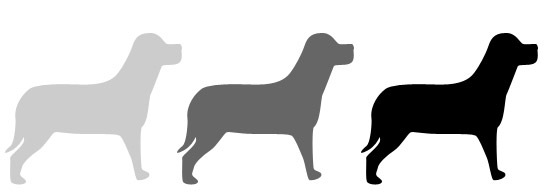
40.
This image is a good example of which element?
a)
pattern
b)
unity
c)
space
d)
color
41.
_________ refers to the area around a shape or form.
a)
space
b)
color
c)
unity
d)
emphasis
42.
This image is a good example of what principle?
a)
space
b)
emphasis
c)
line
d)
texture
43.

What is collage?

a)

the art of making two- or three-dimensional representative or abstract forms, especially by carving stone or wood or by casting metal or plaster.

b)

the action or skill of using paint, either in a picture or as decoration.

c)

a type of fine-grained natural soil material that contains hydrous aluminium phyllosilicates that develops plasticity when wet.

d)

the technique in which pieces of paper, photographs, fabric and other materials are arranged and stuck down onto another surface

44.

Which of these is NOT a collage?

a)
b)
c)
d)
45.

What does composition mean?

a)

a rigid structure that surrounds something such as a picture

b)

the arrangement of elements within a work of art.

c)

a furnace or oven for burning, baking, or drying, especially one for calcining lime or firing pottery.

d)

able to stick fast to a surface or object; sticky.

46.

What does mixed-media mean?

a)

a term used to describe artworks composed from a combination of different media or materials

b)

one type of watermedia, paint consisting of natural pigment, water, a binding agent, and sometimes additional inert materia

c)

a word used to describe a collage made from the same photograph, repeated

d)

a term used to capture the personality of a person or group of people by using effective lighting, backdrops, and poses.

47.

Which of these is NOT collage?

a)
b)
c)
d)
48.

Choose which type of collage best defines the image below.

a)

Cut-and-paste

b)

Digital

49.

Collage

a)

a picture made by gluing different materials - like paper and fabric shapes - onto a flat background.

b)

where you go to school after high school.

c)

a picture made by drawing with a pencil.

50.

Mixed media

a)

a technique of using a tool to scratch into paper coated with black ink.

b)

a technique of painting with thick paint.

c)

a technique that uses two or more art materials in a single composition.

51.

Variety

a)

to do everything the same way.

b)

when parts of an artwork are different to make the artwork more visually interesting.

c)

to create a crisp, clean edge on an art material with scissors, knife, or a saw.

52.

Arrangement

a)

what something is made of

b)

gives a softer, less-defined edge to an art material and is made by ripping the material with one’s hands.

c)

an artwork made by placing parts together

53.

Materials

a)

what something is made of.

b)

shapes that have names and are usually the same on both sides; examples include circles, squares, rectangles, triangles, diamonds, ovals, etc.

c)

curvy shapes that usually look like things found in nature.

54.

Background

a)

the front area/layer of an artwork.

b)

what collage materials are attached to.

c)

a collage created from more than one type of material.

55.
a)

Drawing

b)

Painting

c)

Collage