
 Worksheets
4 Simple Machines, and Efficiency
Total questions: 40
Worksheet time: 30mins

Simple machines change the size and __________ of forces.
color
direction
work
property

Which person in the picture does MORE WORK moving a 100 N ice block to a height of 1 meter above the ground.
Lifting it up directly or moving it up the inclined plan?
Lifting it up directly the 1 meter height
Moving it up the 5 meter length ramp
Both would require the SAME AMOUNT of work
Neither requires work (W=Fd) to be done
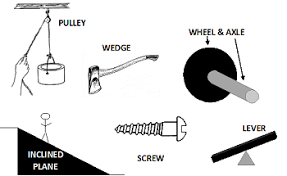
Wheels, levers, pulleys, ramps, screws, and wedges are forms of _______________________.
potential energy
simple machines
chemical changes
dark matter

The 'ratio' of Output force to Input force is called:
Mechanical advantage
Efficiency
Pressure
Work
What is the Mechanical Advantage for a machine that requires 10 N of input force to lift an object with a weight of 40 N?
400
4
40
0.25
Select two complex (compound) machines?


How many type of simple machines are there?
1
2
4
6

A bicycle is which of the following?
A complex machine
A very efficient machine
A combination of several simple machines
All answers
Which of the following is an inclined plane?


Which of the following is a wedge?


Which of the following is a lever?


Which ramp will require the least amount of force?
A
B
C
D

What should they do to make it easier for the mouse to pick up the elephant?
The elephant should move closer to the middle.
The mouse should move closer to the middle.

Select two simple machines that wheel barrow is made of?
lever
pulley
inclined plane
wheel and axle


The above image is an example of ________ class lever?
Class 2
Class 3
Class 1

A boy uses this simple machine to lift a load. How does this machine help the boy to do work?
by changing the direction
by reducing total work
by decreasing distance
by reducing effort force

The above image is a diagram of class_____ lever.
1
3
2


An ax head is a simple machine called a wedge. How can you make the cutting edge more efficient?
make it longer
make it shorter
make sharper
make it more rounded

Which of the following statements is true for the picture.
B - is the fulcrum, A - is the effort, C - is the resistance
B - is the resistance, A - is the fulcrum, C - is the effort
B - is the resistance, C - is the fulcrum, A - is the effort
B - is the fulcrum, A - is the resistance, C - is the effort

In the picture, if the distace from a to b is 20 cm, and the distance from a to c is 80 cm, the then Ideal Mechanical Advantage is ___________________ ( Remember IMA = Effort Distance /Resistance Distance)
20
4
1/4
80

This 2000 N weight is raised 1 meter by pulling 4 meters of rope. What force was required to pull the rope?

Which model will require the least amount of force?
pulley 1
pulley 2
pulley 3
pulley 4

Which inclined plane requires the most effort to push the ball to the top?
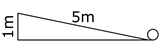
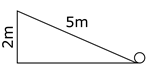
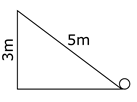
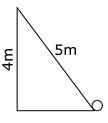
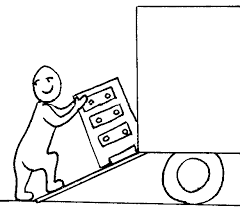
How does using an inclined plane make lifting a load easier?
it makes the mass levitate upward
it increases the effort needed to lift a mass
it decreases the effort needed to lift a mass
it doesn't help


What is the Gear Ratio (pictured) based on the ratio of Output:Input?
3:1
12:36
1:3
1:6

The relationship between the numbers of teeth on two meshing gears used to transmit motion. It reflects the change in mechanical advantage resulting from the gears.
Gear pitch
Tooth decay
Gear ratio
aspect pitch
Picture: Input gear (Effort) has 20 teeth. Output (load) gear has 80 teeth.
MA = Output gear # / Input gear #
What is the MA of the picture (in simplest terms)?
20:80
4:1
20:4
1:4

# of teeth input gear = 8
# of teeth output gear = 40
What is the gear ratio (in lowest terms)?
5:1
40:8
1:5
8:40

# of teeth input gear = 30
# of teeth output gear = 60
What is the gear ratio (in lowest terms)?
1:2
3:2
2:1
2:5

# of teeth input gear = 20
# of teeth output gear = 80
What is the gear ratio (in lowest terms)?
40:10
20:5
4:1

Gear A is turned 12 times. How many turns does Gear C experience?
24 turns
12 turns
4 turns
Cannot be determined (not enough information)

What is the Efficiency of the machine pictured?
Efficiency = Work Output / Work Input
125%
75%
50%
25%

Where does MOST of the 'fuel energy' go into when explaining efficiency of an automobile?
Heat energy (heating up the moving parts and engine)
Kinetic energy (moving the car and its passengers)
Friction with the ground and air
Idling (sitting still while engine running)

