

Wayground logo

Free Printable Worksheets

Font size

S
M
L
XL
Worksheets

Mom exam- G11

Total questions: 82

Worksheet time: 4hrs 50mins
Name
Class
Date
1.
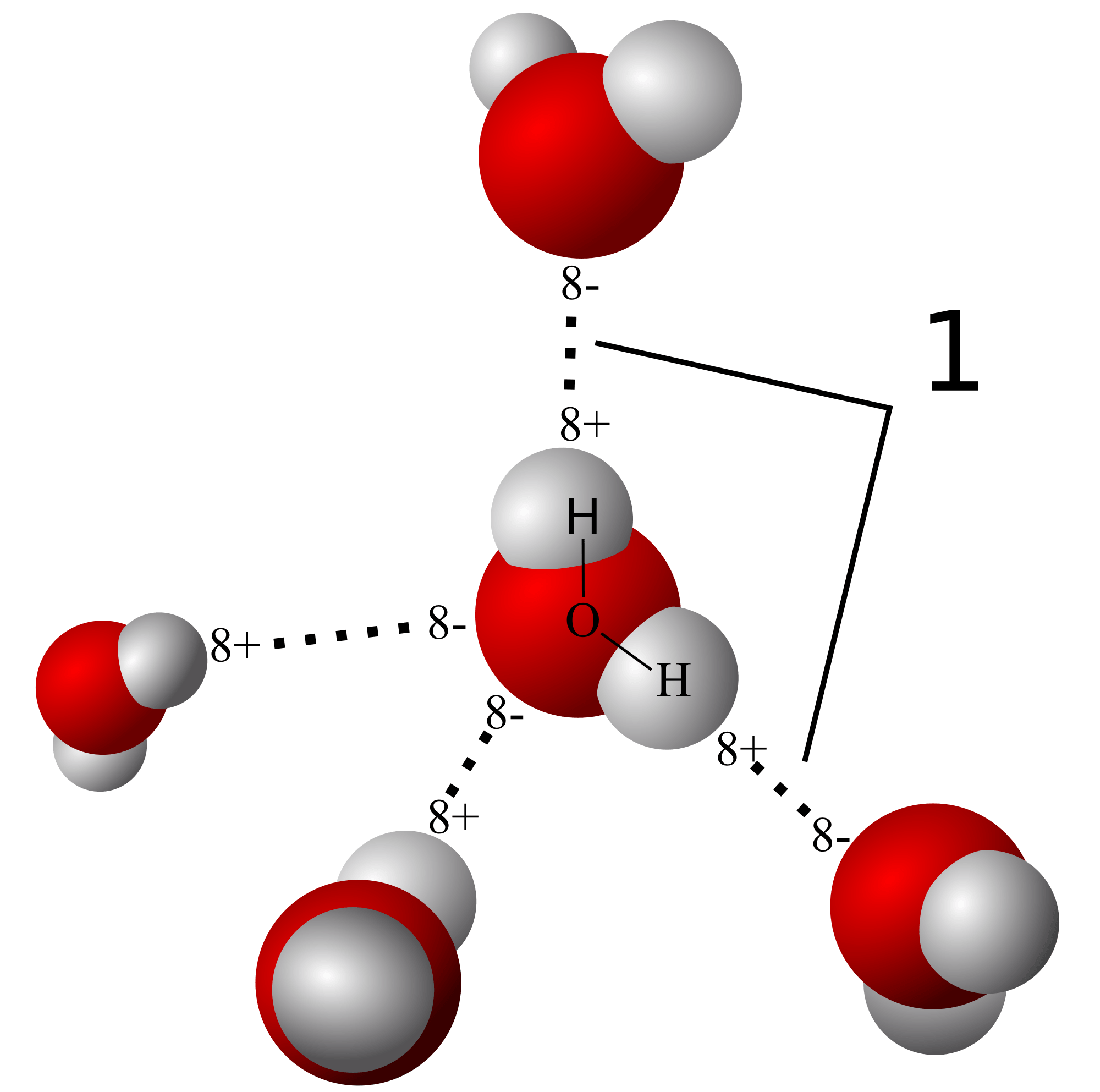
Attractions between water molecules are called
a)
Covalent bonds
b)
Ionic bonds
c)
Polar bonds
d)
Hydrogen bonds
2.
What is the reason why oil and water don't mix?
a)
Oil is too heavy to mix with water
b)
Water can only mix with polar molecules 
c)
Water can only mix with non-polar molecules
d)
Oil is too light to mix with water 
3.
Water is a universal solvent because it...
a)
It can be found anywhere
b)
It freezes when it gets cold
c)
floats when frozen
d)
Dissolves most substances
4.
Which end of the water molecule has a slightly positive charge?
a)
the oxygen end
b)
the hydrogen end
c)
both ends are slightly positive
d)
neither end is positive
5.
The ___ is the thing being dissolved.
a)
solute
b)
solvent
c)
mixture
d)
suspension
6.
Contains the maximum amount of dissolved solute
a)
unsaturated solution
b)
supersaturated solution
c)
saturated solution
7.
What is a solvent?
a)
The substance that does the dissolving in a solution.
b)
The substance that is being dissolved in a solution.
c)
The mixing of different substances.
d)
The process in which neutral molecules lose or gain electrons
8.
This is the part of a solution that dissolves
a)
Solute
b)
Solvent
c)
Solution
d)
Mixture 
9.
salt water is a 
a)
compound
b)
element
c)
heterogeneous mixture
d)
solution
10.
Another name for a homogeneous mixture is 
a)
an element.
b)
a solution.
c)
a compound.
11.

Which of the following is NOT TRUE about Heterogeneous Mixtures?

a)

They will settle out over time

b)

Individual particles are often distinguishable

c)

Solutions are a type of heterogenous mixture

d)

Emulsions, Suspensions, and Collides are types of Heterogeneous Solutions.

12.
Water is essential for life. Its special properties make water the single most important molecule in plant life. Which of the following properties of water enables it to move from the roots to the leaves of plants?
a)
Water expands as it freezes.
b)
Water is an excellent solvent.
c)
Water exhibits cohesive behavior.
d)
Water is able to moderate temperature.
13.
 Small insects can walk across the surface of calm water. Their feet push the surface of the water down slightly, somewhat like a person walking across a trampoline, but they do not break the surface. What is the best explanation for why this happens?
a)
The insects are light enough so that they do not break the hydrogen bonds holding the water molecules together
b)
The insects actually use their wings to hover slightly above the water's surface and they only skim it with their feet
c)
The insects' feet are non-polar, so they are repelled by the polar water molecules and are pushed away from the water's surface
d)
The insects are small enough to see the individual water molecules, so they are able to step carefully from one molecule to the next
14.
A florist places a bouquet of white carnations in water containing blue dye. After a time, the flowers turn blue. What process helped the carnations to change color?
a)
Specific heat 
b)
Surface tension
c)
Cohesion and adhesion of water molecules 
d)
Formation of covalent bonds between hydrogen and oxygen molecules
15.
 Which of the following characteristics of water is not a result of hydrogen bonding?
a)
adhesive strength
b)
capillarity
c)
cohesive strength
d)
All of the above are a result of hydrogen bonding.
16.
substance that dissolves the solute
a)
solution
b)
solvent
c)
saturation
d)
so
17.
What type of mixture separates upon standing?
a)
Solution
b)
Alloy
c)
Colloid
d)
Suspension
18.
type of mixture that doesn't separate on its own but still contains undissolved particles
a)
solution
b)
colloid
c)
suspension
19.
Sand floating in water, but most of the sand is settled at the bottom this an example of which type of mixture?
a)
A solution
b)
A colloid
c)
A suspension
d)
A compound
20.
A mixture whose particles are larger than the size of a molecule but smaller than particles that can be seen with the naked eye is known as a __.
a)
solution
b)
suspension
c)
colloid
d)
solvent
21.
The most commonly used solvent in food is ___
a)
sodium chloride
b)
vinegar
c)
water 
d)
citric acid
22.

In an experiment, a student added sodium acetate to a fixed volume of water. Eventually, the student reached a point at which no more sodium acetate dissolved. The student then warmed the solution until no crystals of sodium acetate were visible. The solution was then allowed to cool slightly. The diagram below shows the student’s observations.

Which of the following terms describes solution C ?

a)

Saturated

b)

Supersaturated

c)

unsaturated

d)

Crystallization

23.

Which of the following statements best describes a mixture?

a)

The combination of two substances in different physical states

b)

A nonchemical combination of two or more substances

c)

A chemical combination of two or more substances

d)

A substance composed of only one type of atom or molecule

24.

Order the following mixtures according to the size of the particles found in them, from smallest to largest.

a)

Solutions, suspensions, colloids

b)

Solutions, colloids, suspensions

c)

Suspensions, colloids, solutions

d)

Colloids, solutions, suspensions

e)

Colloids, suspensions, solutions

25.

in carbonated drink what is the types of solute and solvent respectively ?

a)

liquid - gas

b)

gas - gas

c)

gas - liquid

d)

liquid - liquid

26.

An example of a nonelectrolyte is

a)

sugar water

b)

salt water

c)

sodium chloride

d)

Hydrochloric Acid

27.

Which solution would be least likely to carry an electric current?

a)

NaCl

b)

HCl

c)

C6H12O6

d)

KClO3

28.

Which of the following is a non-electrolyte?

a)

CaO

b)

NaOH

c)

BaCl2

d)

Br2

29.
If an electrical current can run through a solution, it is said to contain
a)
magic
b)
nonelectrolytes
c)
electricity
d)
electrolytes
30.

Which of the following containers most likely contains sugar?


A B

a)

Container A because it forms ions.

b)

Container B because it forms ions.

c)

Container A because it does not form ions.

d)

Container B because it does not form ions.

31.

Four chemical solutions are shown above. Which of the following solutions would correspond to a strong electrolyte?

a)

IV

b)

III

c)

II

d)

I and II

32.

Which solution is a weak electrolyte?

a)

ethanol

b)

KCl

c)

Acetic Acid

33.
A dissolved solute that does not form ions is:
a)
a nonelectrolyte
b)
a weak electrolyte
c)
a strong electrolyte
d)
insoluble
34.

This lightbulb are placed into a beaker containing an aqueous solution and it glows brightly. From this observation, you can conclude the solution is probably —

a)

The solution is a strong electrolyte and dissociated fully

b)

The solution is a weak electrolyte and dissociated fully

c)

The solution is a non-electrolyte and dissociated fully

d)

The solution is kool-aid

35.

What do solutions that conduct electricity contain that makes them different from

solutions that do not conduct electricity?

a)

A. Molecules

b)

B. Atoms

c)

C. Free-moving ions( + and -)

d)

D. Solutes

36.
__________ are made up of solutes and solvents.
a)
Solutions
b)
Suspension
c)
Colloid
d)
mixtures
37.
When a solution is saturated:
a)
No additional material will dissolve in it
b)
You need to stir it more 
c)
Two materials have combined to create a clear liquid
d)
Crystals form 
38.

How do you know when you have a saturated solution?

a)

You don't see anymore material in the solution. It has dissolved.

b)

The material dissolves and no more will dissolve because you see it collect at the bottom.

c)

The solution is bubbling and cloudy.

d)

The solution is clear and there is nothing at the bottom.

39.

Two liquids that can be mixed together but separate shortly after are:

a)

immiscible

b)

insoluble

c)

miscible

d)

soluble

40.

More solute can be dissolved in a(n) ____________ solution.

a)

saturated

b)

supersaturated

c)

suspended

d)

unsaturated

41.

Two substances that are soluble in each other in any proportion are said to be:

a)

insoluble

b)

immiscible

c)

miscible

d)

soluble

42.

Oil does not dissolve in water. Which term would best describe a mixture of oil and water?

a)

miscible

b)

immiscible

c)

saturated

d)

unsaturated

43.

A ______________ solution contains more dissolved solute than a saturated solution at the same temperature.

a)

saturated

b)

supersaturated

c)

suspended

d)

unsaturated

44.

___________________ solutions are very stable.

a)

saturated

b)

supersaturated

c)

suspended

d)

unsaturated

45.

What does "like dissolves like" mean?

a)

polar solvents dissolve in polar solutes

b)

polar solutes dissolve in polar solvents

c)

non-polar solvents dissolve in polar solutes

d)

non-polar solutes dissolve in polar solvents

46.
What is a "homogeneous mixture of two or more substances in a single phase"?
a)
Solution
b)
Solvent
c)
Solute
d)
Compound
47.
An electrolyte is...
a)
The rapid, random movement of particles in colloidal dispersion.
b)
A substance that dissolves in water and conducts electric current.
c)
A substance that dissolves in water and does not conduct electric current.
d)
The solution process when water is the solvent.
48.
A nonelectrolyte is...
a)
The rapid, random movement of particles in colloidal dispersion.
b)
A substance that dissolves in water and conducts electric current.
c)
A substance that dissolves in water and does not conduct electric current.
d)
The solution process when water is the solvent.
49.

a)

A

b)

B

c)

C

d)

D

e)

E

50.

a)

A

b)

B

c)

C

d)

D

e)

E

51.
a)
Substance A because HCl dissociates into H+ and Cl- ions in water
b)
Substance B because HCl is a covalent compound that does not produce ions in water
c)
Substance A because HCl is a covalent compound that does not produce ions in water
d)
Substance B because HCl dissociates into H+ and Cl- ions in water
52.
An example of a nonelectrolyte is
a)
sugar water
b)
salt water
c)
sodium chloride
d)
hydrogen chloride
53.

A homogenous mixture is characterized by-----. Tick all what applies

a)

Having fixed composition

b)

Having a uniform composition

c)

Forming one phase

d)

Looking clear

54.
What is the molarity of 4 grams of sodium chloride (NaCl) in 3,800 mL of solution?
a)
0.018 M
b)
0.018 m
c)
1.052 M
d)
1.052 m
55.
How many moles of NaCl are present in a solution with a molarity of 8.59M and 125 mL of solution?
a)
1.074 mol
b)
62.7 mol
c)
1.07 mol
d)
62.7 grams
56.
What mass of solute is needed to make 75.0 g of a 3.4% solution?
a)
2.55 g
b)
22 g
c)
0.05 g
57.
What is unsaturated?
a)
A solution with more solute than solvent
b)
A solution with less than the maximum amount of solutes 
c)
A solution with the  perfect balance of solutes and solvents
d)
A solution with solids at the bottom
58.
Solubility refers to the ____ of solute that can dissolve in a certain volume or mass of solvent, at a certain temperature.
a)
Volume
b)
Proportion
c)
Mass
d)
Particles
59.

As we dilute a solution.....

a)

The volume increases and the molarity (M) increases

b)

The volume increases and the molarity (M) decreases

c)

The volume decreases and the molarity (M) increases

d)

The volume decreases and the molarity (M) decreases

60.

How many mL of stock solution of 2M NaCl do you need to prepare 100 mL of 0.150M NaCl?

a)

7.5 mL

b)

15 mL

c)

1333 mL

d)

200 mL

61.

If I have 340 mL of a 0.5 M NaBr solution, what will the concentration be if I add 560 mL more water to it?

a)

.188 M

b)

3.78 M

c)

.389 M

d)

1.76 M

62.
What is the molality of a solution containing 1.3 mol in 13.4 kg of solution?
a)
9.7 m
b)
17.42 m
c)
0.097 m
63.
What is the concentration, in percent by volume, of 15.3 mL of solute in 2.65 L of solution?
a)
0.58%
b)
0.0058%
c)
5.8%
64.
What is the volume of solution needed to make a 3.5% by volume solution using 2.0mL of solvent?
a)
57 mL
b)
0.57 mL
c)
7 mL
65.
What is the mole fraction of ethanol when 0.504 mol of ethanol are mixed with 4.06 mol of water?
a)
0.110
b)
0.124
c)
0.097
66.
What is the mole fraction of MgF2 in a solution  that has 0.321 mol of MgF2 dissolved in 4.44 mol of water?
a)
0.0674
b)
0.0722
c)
1.425
67.
At approximately what temperature does the solubility of sodium chloride, NaCl, match the solubility of potassium dichromate, K2Cr2O7?
a)
60 ºC
b)
30 ºC
c)
50 ºC
d)
83 ºC
68.
How many grams of K2Cr2O7, are soluble in 100 g of water at 95 ºC?
a)
83 grams
b)
75 grams
c)
40 grams
d)
12 grams
69.
Which substance is MOST soluble at 0 ºC?
a)
KI
b)
NaNO3
c)
NaCl
d)
Ce2(SO4)3
70.
Which solute does not increase in solubility as temperature rises?
a)
NH3
b)
NaNO3
c)
KNO3
d)
NaCl
71.
When 20 grams of potassium chlorate, KClO3, is dissolved in 100 grams of water at 80 ºC, the solution can be correctly described as:
a)
supersaturated
b)
saturated
c)
unsaturated
72.
At approximately what temperature does the solubility of sodium chloride, NaCl, match the solubility of potassium dichromate, K2Cr2O7?
a)
60 ºC
b)
30 ºC
c)
50 ºC
d)
83 ºC
73.
How many grams of K2Cr2O7, are soluble in 100 g of water at 95 ºC?
a)
83 grams
b)
75 grams
c)
40 grams
d)
12 grams
74.
Which solute does not increase in solubility as temperature rises?
a)
NH3
b)
NaNO3
c)
KNO3
d)
NaCl
75.
How many more grams of KNO3 dissolve at 50 ⁰C compared to 0 ⁰C?
a)
85 g
b)
15 g
c)
70 g
d)
100 g
76.
How many grams of SO2 can dissolve at 50 ⁰C?
a)
5 g
b)
10 g
c)
20 g
d)
39 g
77.

Using the supplied solubility curve diagram, determine which compound listed below is least soluble at 70°C.

a)

NH4Cl

b)

NaCl

c)

KCl

d)

KNO3

78.

The the supplied solubility curve shows that when 79 grams of NaNO3 is dissolved in 100 grams of water at 10°C, that a saturated solution will be formed.

a)

True

b)

False

79.

Which of the below form miscible liquids?

a)

Toulene and water

b)

Toulene and carbon tetrachloride

c)

Oil and water

d)

Toulene and ethanol

e)

Ethanol and carbon tetrachloride

80.

What is true about solutions? Tick all what applies

a)

They are classified as heterogenous mixtures

b)

They scatter light

c)

Their particles' size is less than 0.1 nm

d)

They form clear mixtures

e)

They are stable

81.

Solution equilibrium is attained when ------------------

4 lines
82.

The three type of interactions that takes place in solution formation are:

4 lines